
Introduction
If you love fresh homemade bread but have a small kitchen, choosing the best compact bread makers for small kitchens can be surprisingly difficult. Many bread machines are designed with larger countertops in mind, and their footprint can make an already crowded kitchen feel even tighter. The good news is that compact bread makers now offer practical ways to make fresh loaves, dough, cakes, jams and other recipes without giving up a large section of your counter.
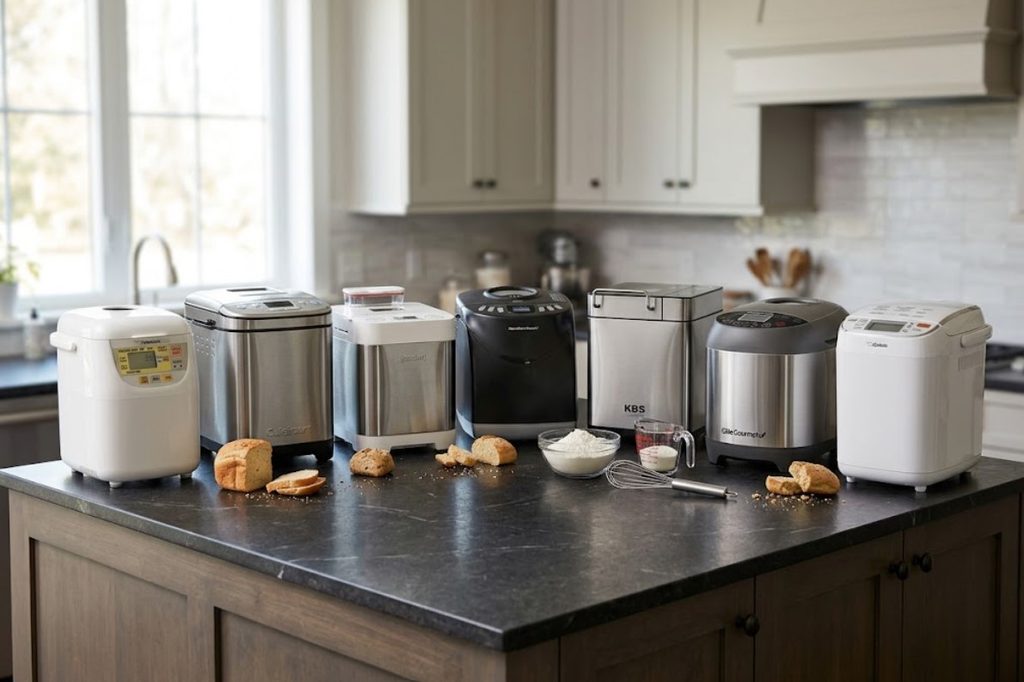
The best compact bread makers balance countertop size, loaf capacity, useful programs, ease of use and storage. Some are designed specifically for 1-pound loaves and small households, while others use a vertical design to provide larger loaf capacity without taking up as much horizontal space. In this guide, we compare seven space-saving options and explain who each one may suit best.
Quick Comparison: Best Compact Bread Makers
| Bread Maker | Best For | Loaf Capacity | Standout Feature |
| Zojirushi Home Bakery Mini BB-HAC10 | Best Overall Compact Pick | 1 lb | Slim design and small loaf size |
| Cuisinart Compact Automatic CBK-110NAS | Best Full-Size Versatility | Up to 2 lb | Vertical design and 12 programs |
| Dash Everyday Bread Maker | Best Stylish Small-Kitchen Pick | 1–1.5 lb | Compact footprint and 12 presets |
| Hamilton Beach 2 Lb. Bread Maker 29982MN | Best Value | Up to 2 lb | 12 programs and three loaf sizes |
| KBS MBF-010 | Best Feature-Rich Compact Option | 1–2 lb | 17 programs and ceramic pan |
| Elite Gourmet EBM8103 | Best Budget Versatility | 1–2 lb | 19 preset functions |
| Zojirushi Home Bakery Maestro BB-SSC10 | Best Premium Compact Pick | 1 lb | 15 courses and automatic add dispenser |
Dimensions and specifications can vary slightly by model, retailer or regional version, so check the manufacturer’s current listing before purchasing.
What Makes a Bread Maker Good for a Small Kitchen?
A bread maker being labeled “compact” does not automatically mean it will be ideal for your kitchen. The actual footprint, shape, loaf capacity and storage requirements matter more than the word compact on the box.
1. Countertop footprint
Start by measuring the space where you plan to use the machine. Pay attention to width and depth, not just overall size. A bread maker that is narrow but very deep may still be difficult to place on a shallow countertop.
Vertical designs can be particularly useful because they can provide reasonable loaf capacity without spreading as far across the counter.
2. Loaf size
Smaller households may not need a 2-pound loaf. A 1-pound machine can make more practical portions for one or two people and may reduce the amount of bread left over.
Zojirushi, for example, describes its 1-pound bread makers as being intended for smaller households, with its compact models producing a vertical 1-pound loaf.
3. Storage
Think about where the machine will go when you are not using it. A compact bread maker with a convenient handle can be easier to move into a cabinet or pantry, although you should allow the machine to cool completely before storing it.
4. Programs
More programs are not always better. Look for settings that you are genuinely likely to use, such as basic bread, whole wheat, dough, quick bread, gluten-free, or jam.
5. Cleaning
A removable bread pan and kneading paddle can make cleanup easier. Dishwasher-safe accessories can be particularly convenient, but always follow the manufacturer’s cleaning instructions.
If you are new to bread machines, it is also useful to understand how the appliance actually works before choosing a model. Our guide, What Is a Bread Maker? Types, Uses, Benefits & Complete Buying Guide (2026), explains the basic types, functions, and benefits in more detail.
1. Zojirushi Home Bakery Mini BB-HAC10 — Best Overall Compact Bread Maker
Best for: Singles, couples, and very small kitchens
Loaf size: 1 lb
Dimensions: 8.5 × 11.25 × 12.25 inches
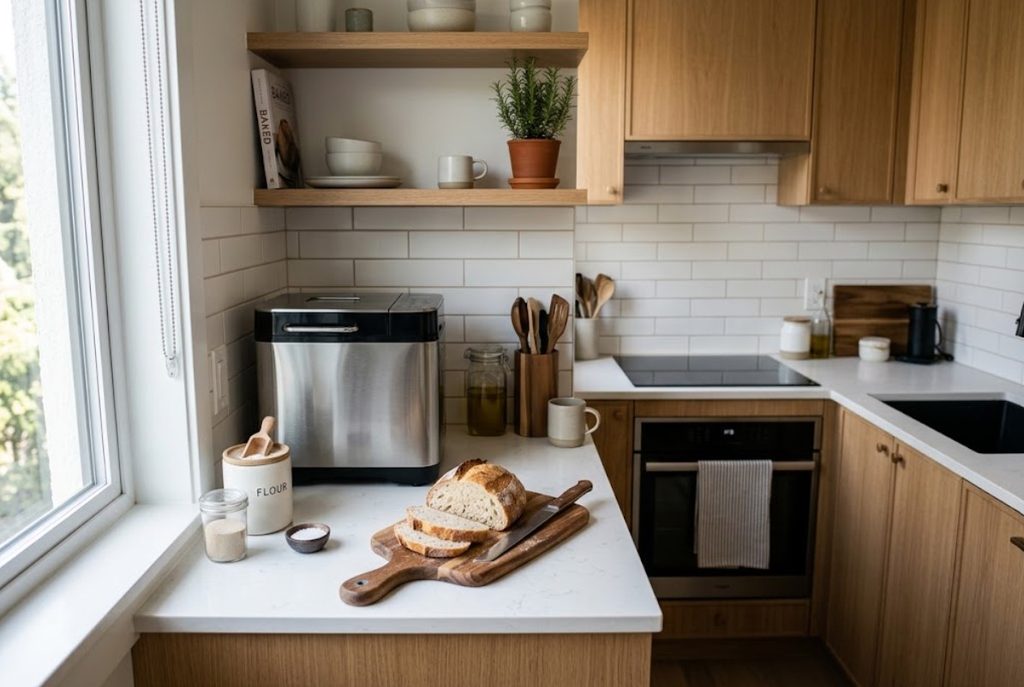
The Zojirushi Home Bakery Mini BB-HAC10 is one of the clearest examples of a bread maker designed specifically around the needs of smaller households. Zojirushi lists it as a 1-pound bread maker with a compact, slim design intended for kitchens with limited countertop space.
Its biggest advantage is that it does not try to imitate a large family-size bread machine. Instead, it focuses on making smaller loaves while keeping the machine relatively narrow. That makes it especially appealing for apartment kitchens, small counters, and households where a full 2-pound loaf would be excessive.
The BB-HAC10 includes several useful programs, including basic bread, soft bread, French bread, dough, cookie/pasta dough, cake, jam and quick bread. It also has three texture choices—regular, firm and soft—and a 13-hour delay timer. Zojirushi says its quick cycle can prepare bread in under two hours.
Another advantage is its 450-watt electrical rating, which is relatively modest compared with some larger machines. Its 1-pound capacity also makes portion size more appropriate for smaller households.
One limitation is important to know: the manufacturer states that the BB-HAC10 is designed for a maximum 1-pound recipe and should not be used with recipes exceeding that capacity.
Why choose it?
Choose the BB-HAC10 if space and smaller loaf size are your highest priorities. It is especially attractive if you would rather bake fresh bread more frequently than store a large loaf for several days.
2. Cuisinart Compact Automatic Bread Maker CBK-110NAS — Best Full-Size Versatility
Best for: Small kitchens that still need larger loaf capacity
Loaf size: Up to 2 lb
Design: Vertical baking pan
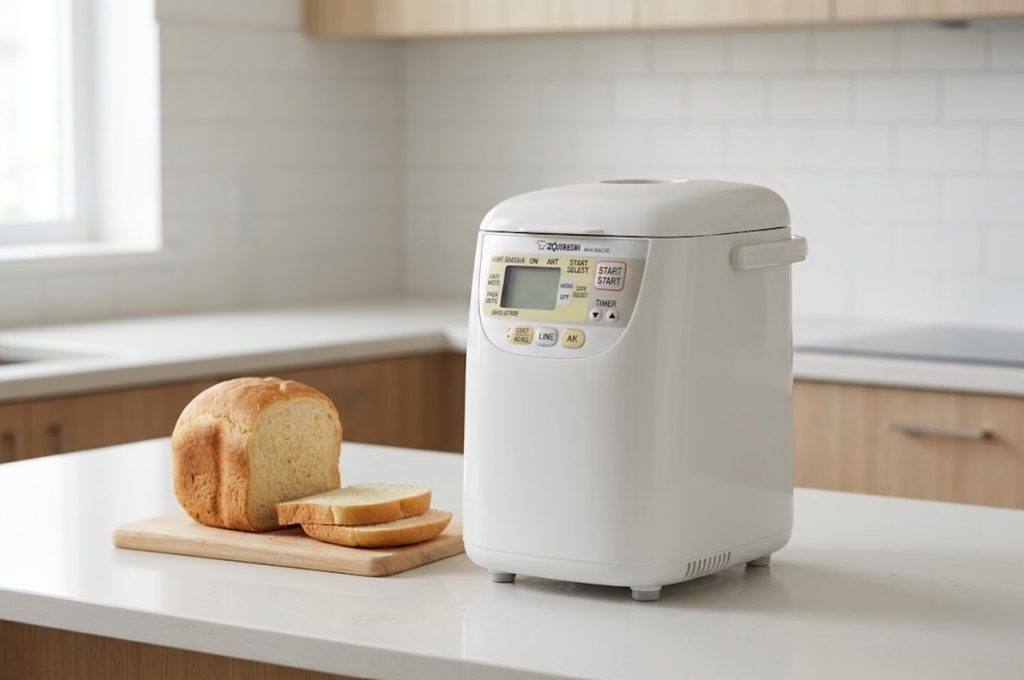
The Cuisinart Compact Automatic Bread Maker is a strong option for shoppers who want the convenience of a compact design without limiting themselves to a tiny loaf.
The current CBK-110NAS version is designed around a vertical form factor. Cuisinart describes it as a compact bread maker capable of baking up to a 2-pound loaf, while offering 12 preprogrammed options and three crust shades. Its listed dimensions are approximately 10.5 × 13.5 × 13.75 inches.
The machine automatically handles mixing, kneading, rising, baking, and keeping the bread warm. Its programs include options for white, French, whole wheat, ultra-fast, sweet, gluten-free, artisan dough, dough, jam, packaged mix, cake and bake-only functions.
That variety makes it more versatile than many small 1-pound machines. The 13-hour delay-start timer is also useful if you want bread ready around breakfast or when you return home.
One point deserves attention when shopping: older CBK-110 listings can still appear online and Cuisinart identifies the original CBK-110 as discontinued. The newer CBK-110NAS is the version you should verify when comparing current availability.
Why choose it?
The Cuisinart makes sense when counter space is limited but you still want the flexibility of 1-, 1.5- and 2-pound loaves.

3. Dash Everyday Bread Maker — Best Stylish Small-Kitchen Pick
Best for: Small kitchens and users who want a compact, approachable machine
Loaf size: 1–1.5 lb
Dimensions: 11 × 9.1 × 10.4 inches
The Dash Everyday Bread Maker takes a different approach to compact design. Instead of concentrating on a tiny 1-pound loaf, it offers a 1- to 1.5-pound capacity while maintaining a relatively small footprint.
Dash lists dimensions of 11 × 9.1 × 10.4 inches and a weight of 9.5 pounds for the current model.
It offers 12 baking presets covering options such as white, French, whole wheat, ultra-fast, sweet, gluten-free, artisan, jam, and cake. It also includes a 13-hour delay timer and pause function.
A particularly useful feature for people who enjoy adding ingredients is its ingredient-drop function. This lets you add toppings or mix-ins at the appropriate stage instead of having to monitor the machine constantly.
The compact footprint is one of its strongest selling points. At about 9.1 inches wide, it can be easier to accommodate on a crowded counter than many traditional bread machines.
Why choose it?
The Dash is a good match for someone who wants a relatively small machine, moderate loaf capacity and a straightforward collection of useful programs.
4. Hamilton Beach 2 Lb. Bread Maker 29982MN — Best Value
Best for: Budget-conscious households
Loaf size: Up to 2 lb
Dimensions: 11.2 × 11.4 × 13.9 inches
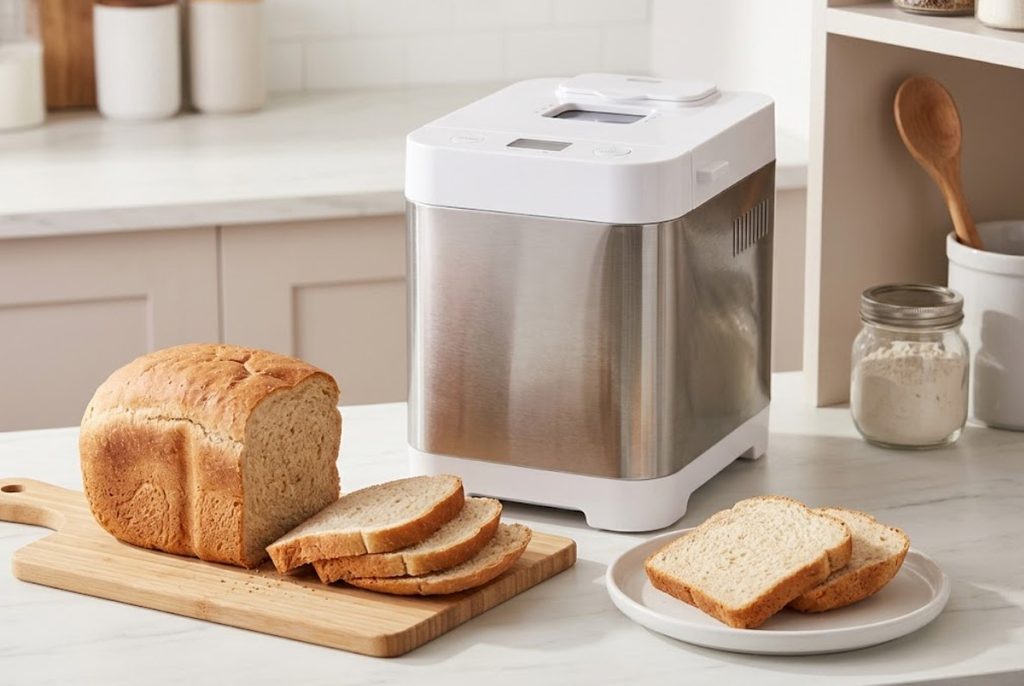
Hamilton Beach’s 29982MN is worth considering if you want a relatively affordable bread maker while still having the flexibility of a larger loaf.
Hamilton Beach lists the model with 12 program cycles, three loaf sizes, three crust settings, automatic keep-warm functionality, and an ingredient-addition alert. The listed dimensions are 11.2 inches high, 11.4 inches wide and 13.9 inches deep.
That footprint is not as small as the Zojirushi Mini or Dash, but it remains reasonable for a bread maker capable of producing larger loaves. The three loaf sizes are particularly useful because you can choose a smaller loaf when needed instead of always making the maximum amount.
The 29982MN also has a beginner-friendly approach: add ingredients, select a program, and start the machine. Its automatic keep-warm feature can help when you are not able to remove the loaf immediately.
There is an important purchasing consideration, however. Hamilton Beach currently marks the older 29882 model as no longer available, while its newer 29982MN is listed in the company’s bread-maker range.
Why choose it?
Choose the Hamilton Beach if value and flexibility matter more than having the absolute smallest footprint.

5. KBS MBF-010 — Best Feature-Rich Compact Option
Best for: Users who want many functions in one appliance
Loaf size: 1, 1.5, and 2 lb
Dimensions: Approximately 13.58 × 9.76 × 12.21 inches
The KBS MBF-010 is an interesting choice because it combines a relatively narrow footprint with a broad set of features.
The manufacturer’s current product listing gives dimensions of approximately 13.58 inches wide, 9.76 inches deep, and 12.21 inches high. It offers three loaf sizes—1, 1.5 and 2 pounds—and 17 menu options.
Its feature set goes beyond basic bread making. The model includes settings associated with bread, dough, gluten-free recipes, sourdough, pizza dough, jam, yogurt and cake. It also has a 15-hour delay timer, a one-hour keep-warm function and power-interruption recovery.
The ceramic nonstick bread pan is another notable feature. For people who want an appliance that can handle more than basic sandwich bread, the KBS offers an appealing combination of versatility and moderate counter depth.
However, there is a trade-off. At around 14.7 pounds, it is not something most people will want to move around constantly. Therefore, measure your counter carefully and decide whether it will have a permanent home.
Why choose it?
The KBS is best for shoppers who want a feature-rich bread machine but still need to control the depth of the appliance on a smaller

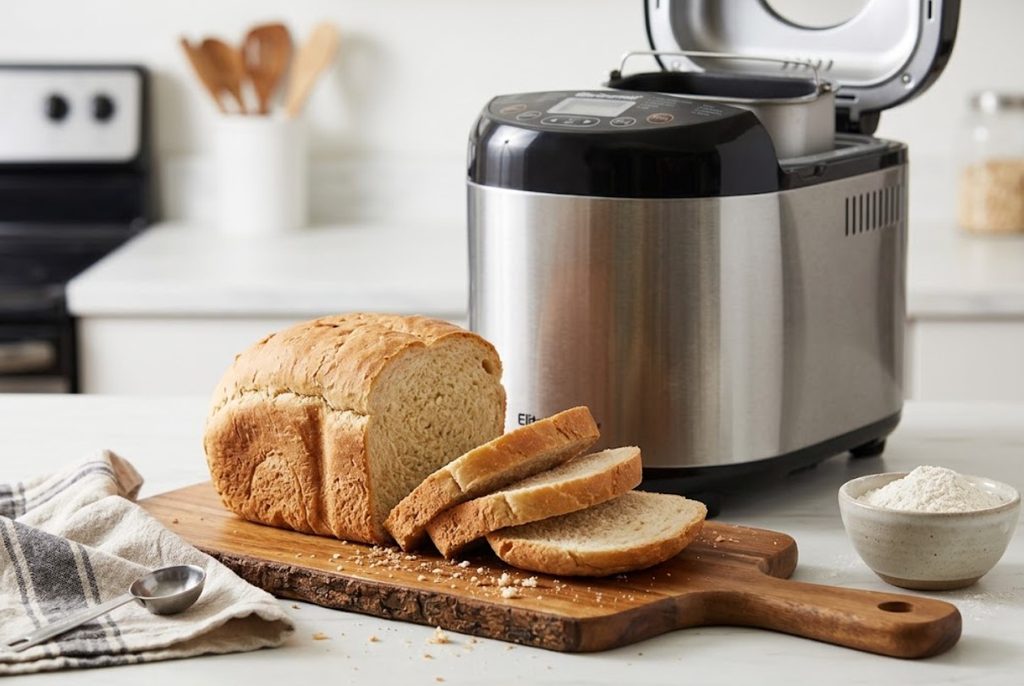
6. Elite Gourmet EBM8103 — Best Budget Versatility
Best for: Budget shoppers who want multiple functions
Loaf size: 1, 1.5, and 2 lb
Dimensions: Approximately 13.98 × 11.89 × 9.45 inches
The Elite Gourmet EBM8103 is another practical choice for people who want several bread-making functions without moving into the premium price range.
Available specifications list the EBM8103 with 19 preset functions, 1-, 1.5-, and 2-pound loaf capacity, a 15-hour delay timer, and a 60-minute keep-warm function. The listed dimensions are approximately 13.98 inches deep, 11.89 inches wide and 9.45 inches high.
Its relatively low height can be useful under certain cabinets, although the machine’s depth means you should measure your countertop from front to back before buying.
The 19 preset functions give it an impressive range for its category. In addition to bread programs, the machine is designed for different types of dough and other preparations. The removable nonstick bread pan also makes routine cleaning easier.
Because this is a larger-capacity machine, it is not the best choice if your only goal is the smallest possible footprint. Instead, think of it as a compact-by-functionality option—you get several capabilities in one appliance while retaining three loaf-size choices.
Why choose it?
Consider the Elite Gourmet if you want many preset options and different loaf sizes while keeping the purchase budget relatively controlled.
7. Zojirushi Home Bakery Maestro BB-SSC10 — Best Premium Compact Pick
Best for: Serious small-household bakers
Loaf size: 1 lb
Dimensions: 8.875 × 12.5 × 13.625 inches
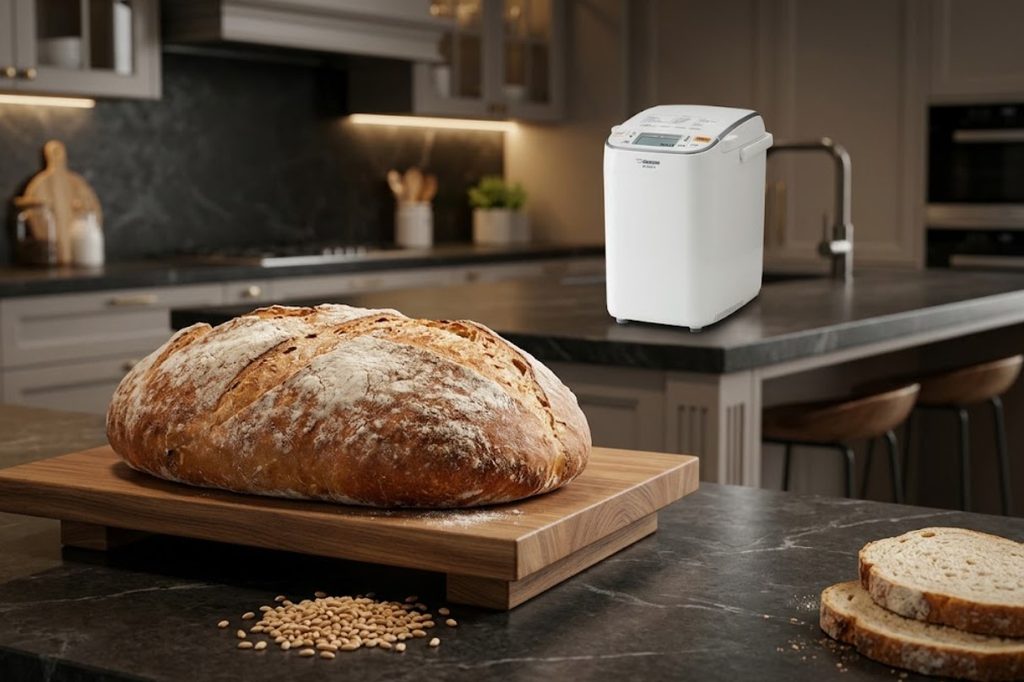
If you want a premium compact bread maker and are comfortable paying more for additional control and specialty programs, the Zojirushi Home Bakery Maestro BB-SSC10 deserves consideration.
The BB-SSC10 produces a 1-pound vertical loaf and measures approximately 8.875 inches wide, 12.5 inches deep and 13.625 inches high.
Its program list is considerably more extensive than the smaller Zojirushi Mini. Zojirushi lists 15 course selections plus three homemade memory settings. The courses include white, European, whole wheat, multigrain, gluten-free, salt-free, sugar-free, vegan, bread/pizza dough, pasta dough, cake and jam.
The Maestro also includes an automatic add dispenser, allowing ingredients such as nuts and other additions to be introduced automatically. Its double heaters are designed to support the baking process and crust development.
The three homemade memory settings are particularly interesting for experienced users who want to customize kneading, rising and baking times.
There is a major distinction between the Maestro and Mini: although both produce 1-pound loaves, the Maestro offers significantly more specialized programs and features. Zojirushi specifically identifies the Maestro and Mini as its smaller breadmakers.
Why choose it?
Choose the Maestro if you want a premium 1-pound bread maker with specialty dietary programs, an automatic ingredient dispenser and more customization.
How to Choose the Right Compact Bread Maker
With seven different options, the best machine ultimately depends on how much space you have and how much bread you actually need.
Choose a 1-pound model if you have very limited space
If your kitchen is extremely small, the Zojirushi BB-HAC10 is the most purpose-built option in this list. Its 1-pound capacity and slim footprint make it particularly suitable for singles and couples.
The Zojirushi Maestro BB-SSC10 also produces a 1-pound loaf, but it is aimed more toward users who want advanced programs and customization.
Choose a 1.5-pound model for a middle ground
A 1.5-pound machine can be a useful compromise for small families. The Dash Everyday Bread Maker is particularly interesting here because its 1- to 1.5-pound capacity combines with a relatively compact footprint.
Choose a 2-pound model if flexibility matters
If you sometimes need more bread, a 2-pound-capable machine may actually be more economical than buying a tiny machine and discovering that it cannot handle your preferred recipes.
The Cuisinart, Hamilton Beach, KBS, and Elite Gourmet models all provide larger loaf options, although their exact dimensions and feature sets differ.
If you are specifically interested in easy-to-use machines for someone new to bread making, you can also see Best Bread Makers for Beginners: 7 Easy-to-Use Picks for Homemade Bread for another selection of beginner-focused models.
Tips for Saving Even More Counter Space
Buying a compact bread maker is only part of the solution. How you use and store it can make a major difference in a small kitchen.
Measure before ordering
Measure the available width, depth, and height. Also check the clearance above the machine, especially if the lid needs to open vertically.
Keep the machine near an outlet
Moving a heavy bread maker every time you use it can quickly become annoying. If possible, choose a location where the power cord can reach the outlet without an extension cord.
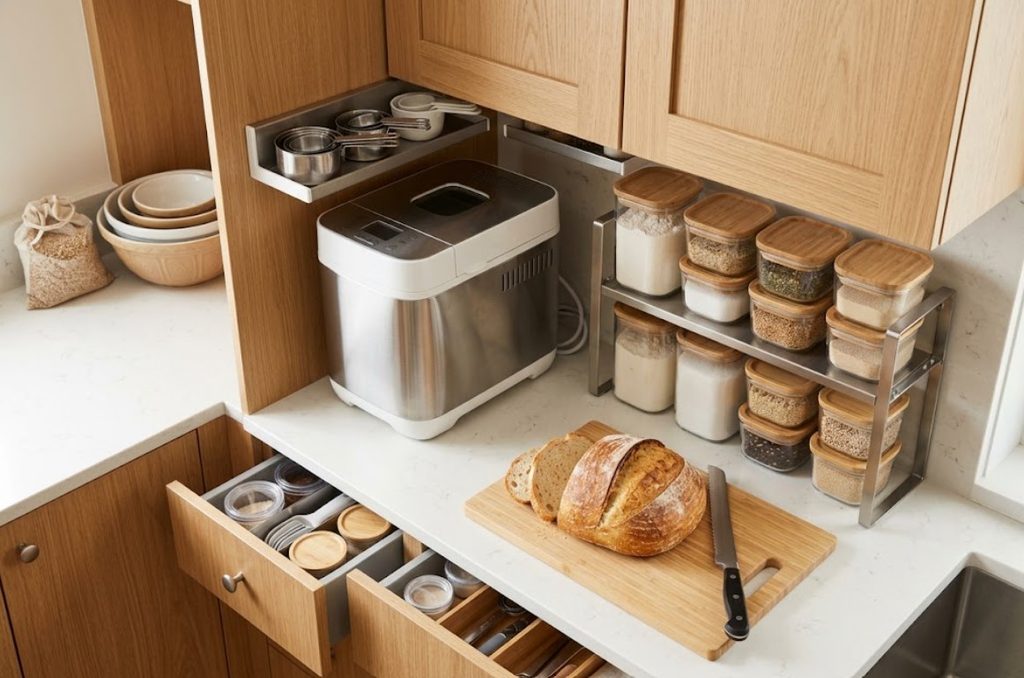
Store ingredients vertically
Instead of keeping large bags of flour and bread ingredients across your counter, use labeled containers in a cabinet or pantry. This preserves the space around the bread maker.
Don’t automatically buy the largest model
A 2-pound capacity may sound attractive, but if you normally bake only one small loaf, the larger machine may take up unnecessary space.
Consider your storage habits
If you plan to put the bread maker away after every use, look for a manageable weight and convenient handles. If it will stay on the counter, prioritize the smallest practical footprint.
Compact Bread Maker vs. Oven: Which Is Better for a Small Kitchen?
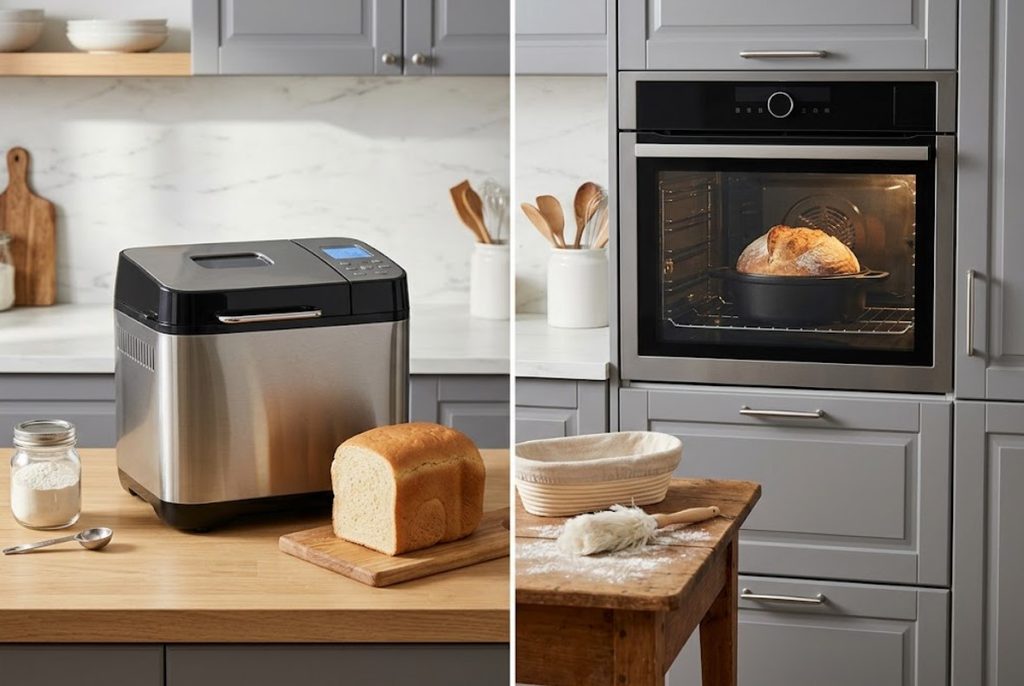
A bread maker and an oven serve different purposes. A bread maker is designed to automate mixing, kneading, rising, and baking, while an oven gives you greater control over shaping, crust and the final baking environment.
For a small kitchen, the bread maker can be particularly convenient because one appliance performs several bread-making steps without requiring a separate mixer, proofing setup, or large work surface.
However, an oven remains valuable when you want unusual loaf shapes, artisan-style baking, or more creative control.
For a deeper comparison of these two approaches, see Bread Maker vs. Oven: 7 Key Differences and Which Is Better?. It explains how the two options compare in convenience, time, texture, flexibility, cost and other important areas.
If you want more information about bread-baking techniques and recipes check out the best “bread-baking techniques and recipes” .
Are Compact Bread Makers Worth It?
A compact bread maker can be worth buying when you regularly want homemade bread but do not have enough space—or enough household demand—for a large bread machine.
The biggest advantage is convenience. Once ingredients are measured and added, the machine can handle much of the repetitive work. For smaller households, choosing the correct loaf size can also reduce unnecessary leftovers.
The biggest mistake is assuming that every compact machine is equally compact. Some are narrow but tall, others are shallow but wide and some offer larger loaf capacities that make them physically bigger. Always compare the actual dimensions before purchasing.
Another important consideration is the type of bread you want to make. If you mainly want basic white, whole-wheat, or sandwich bread, a simpler model may be sufficient. If you want gluten-free, vegan, multigrain, sourdough-related, dough, cake, or jam functions, paying attention to the program list becomes much more important.
Our Top Picks at a Glance
For the smallest practical footprint, the Zojirushi Home Bakery Mini BB-HAC10 is the standout choice because it was specifically designed around a 1-pound loaf and limited counter space.
For a compact machine with larger loaf capacity, the Cuisinart Compact Automatic Bread Maker is a stronger option because its vertical design supports up to a 2-pound loaf while maintaining a relatively counter-friendly shape.
For a moderate-capacity compact machine, the Dash Everyday Bread Maker offers a useful 1- to 1.5-pound range and a small footprint.
For value, the Hamilton Beach 29982MN offers multiple loaf sizes and useful automatic programs without targeting the premium end of the market.
For features and versatility, the KBS MBF-010 stands out with 17 programs, three loaf sizes, and a relatively narrow depth.
For budget-oriented versatility, the Elite Gourmet EBM8103 provides 19 preset functions and three loaf sizes.
And for a premium compact experience, the Zojirushi Home Bakery Maestro BB-SSC10 provides a 1-pound loaf with specialty programs, automatic ingredient dispensing, and homemade memory settings.
Frequently Asked Questions
What is the best bread maker for a very small kitchen?
The Zojirushi Home Bakery Mini BB-HAC10 is one of the strongest choices for a very small kitchen because it is specifically designed for a 1-pound loaf and has a slim footprint of approximately 8.5 inches wide.
Are compact bread makers good for families?
They can be, but it depends on the loaf size. A 1-pound bread maker is better suited to singles, couples, or small households, while families may prefer a compactly designed machine that can still make 1.5- or 2-pound loaves.
Does a compact bread maker make smaller bread?
Not necessarily. Some compact machines use vertical designs to reduce the amount of counter space they occupy while still producing larger loaves. The Cuisinart CBK-110NAS, for example, can make up to a 2-pound loaf despite its compact vertical design.
Can I make dough in a compact bread maker?
Yes. Many of the models in this guide include dough programs. These can be useful for pizza dough, rolls, and other recipes where you want the bread maker to handle mixing and kneading before you finish the recipe separately.
How much counter space does a bread maker need?
It depends on the model. Width can range from relatively narrow designs such as the Zojirushi BB-HAC10 to larger footprints on 2-pound machines. Always check the manufacturer’s dimensions and leave enough clearance to open the lid and safely operate the machine.
Should I choose a 1-pound or 2-pound bread maker?
Choose a 1-pound machine if you usually bake for one or two people and want the smallest footprint. Choose a 2-pound-capable machine if you have a larger household or want the flexibility to make different loaf sizes.
Is a premium compact bread maker worth the extra money?
It can be if you will actually use the additional features. Specialty programs, automatic ingredient dispensing, customized courses and additional controls can be valuable for frequent bakers. If you mainly want basic bread, a less expensive model may offer better value.
Final Verdict
The best compact bread maker for a small kitchen depends on the balance between physical space and bread capacity. The Zojirushi Home Bakery Mini BB-HAC10 is the strongest choice when minimum footprint and smaller 1-pound loaves are the priority, while the Cuisinart CBK-110NAS is more appealing when you need larger loaves without moving to a traditionally wide bread machine. The Dash is a practical middle ground, while Hamilton Beach and Elite Gourmet provide value-oriented flexibility.
For shoppers who want more advanced functions, the KBS MBF-010 and Zojirushi Maestro BB-SSC10 offer broader feature sets. Before buying, measure your available counter space, decide how much bread your household actually needs, and choose programs based on the recipes you realistically plan to make. A genuinely space-saving bread maker should not simply be small—it should fit your kitchen, your household and your baking habits without becoming another appliance that takes over the counter.