
Introduction
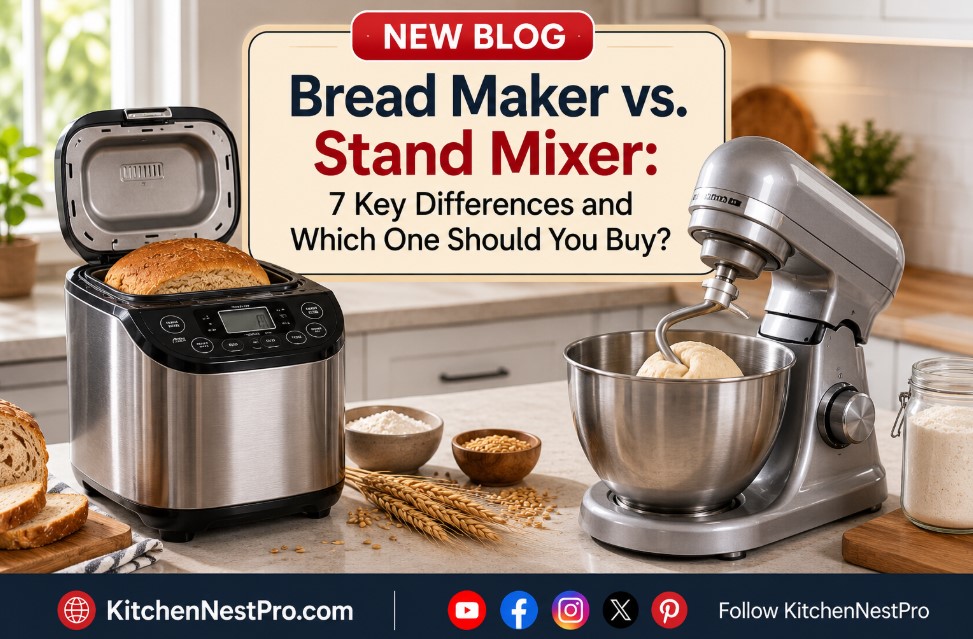
Choosing between a bread maker and a stand mixer can be confusing because both appliances can help you prepare homemade bread dough. However, they are designed for different jobs. A bread maker is built to automate much of the bread-making process, often handling mixing, kneading, rising and baking inside one machine. A stand mixer, on the other hand, is primarily a powerful mixing appliance that uses attachments such as a dough hook to knead dough, while the shaping, rising and baking stages are usually handled separately.
The better choice depends on what you want from your kitchen appliance. If your priority is convenience and having a machine make a loaf from start to finish with minimal supervision, a bread maker may be the better option. If you want greater control over dough preparation, recipes, shapes and other types of baking, a stand mixer may be more useful. In this guide, we compare a bread maker vs. stand mixer across seven important differences so you can decide which appliance fits your kitchen, baking style, budget and everyday needs.
Bread Maker vs. Stand Mixer: Quick Comparison
| Feature | Bread Maker | Stand Mixer |
| Main purpose | Automated bread making | Mixing, kneading, whipping and general baking |
| Kneading | Automatic | Requires dough-hook attachment |
| Rising | Often automated and temperature controlled | Usually done separately |
| Baking | Many models bake inside the machine | Requires separate oven |
| Bread shape | Usually limited to machine’s pan | Highly flexible |
| Other food preparation | Depends on model | Usually very versatile with attachments |
| Convenience | Very high for bread | High, but requires more steps |
| Recipe control | Moderate to high depending on model | High |
| Best for | Easy homemade bread | Flexible baking and dough preparation |
1. Bread Maker vs. Stand Mixer: Their Main Purpose Is Different
The first and most important difference is what each appliance is actually designed to do.
A bread maker is a specialized appliance created primarily for making bread. You generally add the ingredients to the baking pan, select a program and allow the machine to perform several stages automatically. Depending on the model, these stages can include mixing, kneading, proofing, shaping within the pan, baking and keeping the finished loaf warm.
A stand mixer has a broader purpose. Its main job is to mix ingredients efficiently, and it can knead yeast dough when equipped with a dough hook. It can also be useful for cake batter, cookie dough, frosting, whipped cream, meringue and many other preparations. However, the stand mixer normally does not take the dough through the entire bread-making process.
This difference matters because the two appliances solve different kitchen problems. If you frequently make standard sandwich bread and want to reduce hands-on work, a bread maker is purpose-built for that task. If you want one appliance that can support many different baking projects, a stand mixer generally provides greater flexibility.
A bread maker can therefore be thought of as an automated bread-making system, while a stand mixer is better understood as a versatile preparation tool.

If you want a broader introduction to the appliance itself before choosing between these machines, “What Is a Bread Maker? Types, Uses, Benefits & Complete Buying Guide (2026)” provides useful background on how bread makers work and what features buyers should consider.
2. Kneading and Dough Preparation Work Differently
Both appliances can knead bread dough, but the way they do it is different.
A stand mixer normally uses a dough hook to mix and knead the ingredients inside its bowl. You choose the mixing speed and determine how long the dough should be worked. This gives you considerable control over the dough-development process. You can stop the mixer, inspect the dough, adjust ingredients and continue kneading when necessary.
A bread maker performs the kneading automatically according to the selected program. Once the ingredients are added and the cycle begins, the machine’s kneading paddle mixes and works the dough without requiring you to monitor it continuously.
Kneading is important because it helps develop gluten, which gives yeast dough the strength and structure needed to retain gas during fermentation. Both a stand mixer with a dough hook and a bread machine’s dough cycle can perform this job.
The difference is control versus automation. A stand mixer gives you more direct control over speed, kneading time, dough consistency and recipe adjustments. A bread maker gives you convenience because the machine determines the kneading process as part of its selected program.
For beginners, the bread maker’s automated approach can be especially attractive. For experienced bakers who like to examine dough development and adjust recipes during mixing, the stand mixer may be more satisfying.

3. Rising and Proofing: Automation vs. Manual Control
Rising is another major difference between a bread maker and a stand mixer.
After kneading, yeast dough needs time to ferment and rise. In a bread maker, the rising stage is normally incorporated into the selected program. Many machines create a controlled environment that helps maintain suitable conditions while the dough rises.
A stand mixer does not normally provide this complete proofing environment. Once the mixer finishes kneading, you usually transfer or leave the dough in a suitable container, cover it and allow it to rise separately. You may need to choose an appropriate warm location and monitor the dough yourself.
This makes a bread maker particularly convenient in kitchens where temperature conditions vary. A bread machine can provide a more consistent environment during the programmed rising stages. Zojirushi, for example, describes its bread makers as handling kneading and rising automatically as part of the bread-making process.
The stand mixer approach gives you more freedom. You can decide how long the dough ferments, where it rises, and how you want to handle different recipes. That flexibility is useful for bakers who experiment with long fermentation, sourdough, enriched doughs or artisan-style breads.

4. Baking: The Bread Maker Can Often Do It for You
This is one of the biggest differences between these appliances.
Many bread makers are designed to continue beyond kneading and rising and actually bake the loaf inside the same machine. After you add ingredients and select the appropriate course, the appliance can complete the programmed stages without requiring you to transfer the dough to an oven.
A stand mixer does not normally bake the dough. Its job ends after preparation or kneading. You must shape the dough, allow it to undergo the necessary proofing stages and then bake it in a separate oven.
This creates a very different workflow.
With a bread maker, the basic process can be:
Add ingredients → Select program → Knead → Rise → Bake → Remove loaf
With a stand mixer, it is closer to:
Add ingredients → Mix → Knead → Proof → Shape → Proof again if required → Bake in oven → Cool
Neither process is automatically better. It depends on the kind of bread you want.
Bread makers are particularly convenient for everyday sandwich-style loaves and recipes designed for the machine’s baking pan. They can also reduce the amount of equipment and active work involved.
A stand mixer is better suited to people who enjoy shaping their own loaves and using an oven to create different crusts, forms and finishes.

This is also where “Bread Maker vs. Oven: 7 Key Differences and Which Is Better?” can help readers who are deciding whether a bread maker’s built-in baking system is preferable to traditional oven baking.
5. Bread Shape and Baking Control Are Very Different
If you care about the appearance and shape of your bread, a stand mixer gives you considerably more freedom.
A bread maker normally uses a fixed baking pan. The shape of the finished loaf is determined largely by the dimensions and design of that pan. Some models use vertical pans, while others produce more traditional rectangular loaves. You generally cannot choose any shape you want.
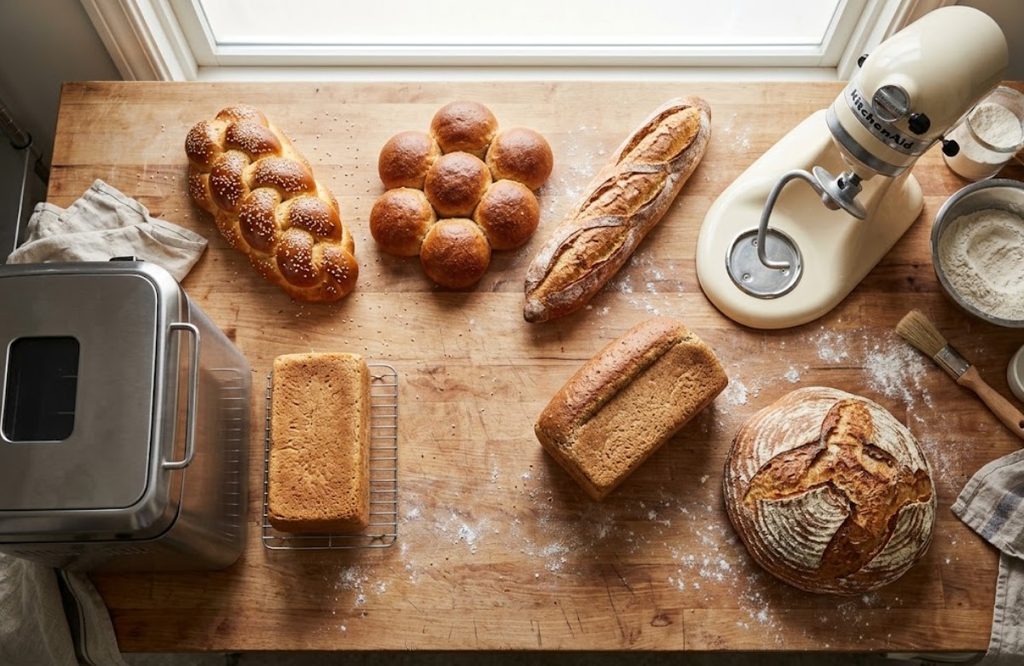
A stand mixer has no built-in bread-baking pan, which means you are free to shape the dough however you like after kneading and proofing. You can create sandwich loaves, rolls, buns, braided breads, baguette-style shapes, pizza dough and many other preparations before baking them in an appropriate pan or on a baking surface.
This makes the stand mixer particularly attractive to people interested in artisan baking or visually distinctive bread.
A bread maker can still offer flexibility through dough-only programs. Some machines allow you to use the dough cycle for kneading and rising, remove the dough, shape it yourself and then bake it in an oven. This effectively lets you use the bread maker as a dough-preparation appliance rather than relying on its built-in pan.
Therefore, the choice isn’t always “bread maker or oven.” A bread maker can sometimes work together with an oven when you want both automation and shaping flexibility.
6. Versatility: Stand Mixer Usually Wins
When it comes to overall kitchen versatility, the stand mixer generally has the advantage.
A bread maker is specialized. Its strongest applications are bread, dough, and, depending on the model, recipes such as pizza dough, cake, jam, pasta dough or other programmed preparations. The exact capabilities depend on the model.
A stand mixer is designed for a much wider range of kitchen tasks. With the appropriate attachments, it can mix cake batter, knead bread dough, beat eggs, whip cream, prepare cookie dough, make frosting and handle many other recipes. Some models can also accept optional attachments for tasks such as grinding, slicing, shredding or making pasta.
That versatility can make a stand mixer a better long-term investment for households that regularly bake different foods rather than primarily making bread.
However, versatility isn’t always the same thing as convenience. A stand mixer may do more things, but it generally requires you to manage the recipe’s individual stages. A bread maker may do fewer things, yet it can be exceptionally convenient when its specific function matches your needs.
If you are comparing mixers more broadly, “What Is a Mixer? Types, Uses, Benefits & Complete Buying Guide (2026)” explains the different types of mixers and the jobs they are designed to handle.

7. Convenience, Counter Space, Cleanup and Everyday Use
The final difference combines several practical factors that matter in real kitchens: convenience, space, cleanup and how much attention the appliance requires.
A bread maker can be extremely convenient because many of the bread-making stages happen inside a single enclosed chamber. You typically add ingredients directly to the baking pan, select a program, and let the machine handle the cycle. This can mean fewer bowls, fewer transfers and less hands-on work.
A stand mixer is also convenient compared with kneading by hand, but it normally creates more steps. You need the mixer bowl and attachment and after kneading you still need another container or surface for proofing, plus a pan or baking surface and an oven for baking.
Cleanup can also differ. A bread maker generally has a removable baking pan and kneading paddle that need to be cleaned after use. A stand mixer requires cleaning the bowl and dough hook, along with any surfaces or containers used during the remaining preparation stages.
Counter space is another consideration. Neither appliance is necessarily tiny, but their shapes and storage requirements differ. If your kitchen has limited counter space, a compact bread maker may be easier to dedicate to one location, especially if you mainly want homemade bread.
That makes size an important consideration when buying. If space is your biggest concern, “Best Compact Bread Makers for Small Kitchens: 7 Space-Saving Picks” is a useful next step because it focuses specifically on compact bread-making options.
A bread maker can also be helpful when your schedule is busy. Many models include delay timers, allowing you to schedule a bread cycle so the loaf can be ready around breakfast or another planned time.

Bread Maker vs. Stand Mixer: Which Is Better for Beginners?
For a beginner whose main goal is to make homemade bread with as little complication as possible, a bread maker is usually the easier starting point.
The biggest advantage is that the machine brings multiple stages together. Instead of learning every step independently, you can follow a bread-maker recipe, measure the ingredients accurately, select the appropriate program and let the machine perform much of the work.
This doesn’t mean beginners cannot use stand mixers. In fact, a stand mixer can be an excellent tool for learning how dough behaves because you can observe its texture during mixing and kneading. You also gain experience with proofing, shaping and oven baking.
However, the learning curve is generally more involved because you are responsible for more stages.
If you are buying your first bread-making appliance specifically to produce regular homemade loaves, look for a bread maker with simple controls, reliable programs, multiple loaf-size options if needed and a dough cycle.

For additional beginner-focused recommendations, “Best Bread Makers for Beginners: 7 Easy-to-Use Picks for Homemade Bread” can help readers compare easier-to-use models before making a purchase.
Bread Maker vs. Stand Mixer for Experienced Bakers
Experienced bakers may prefer a stand mixer because it provides more control.
A stand mixer lets you decide how a dough is mixed and kneaded, how long it ferments, how it is shaped and how it is baked. This can be important when working with recipes that require specific techniques or unusual fermentation schedules.
However, experienced bakers should not dismiss bread makers. A bread maker’s dough cycle can be an excellent way to automate kneading and the first rise. The dough can then be removed, shaped by hand and baked in a conventional oven.
King Arthur Baking specifically describes this approach as a useful way to use a bread machine for dough preparation while retaining control over shaping and oven baking.
For detailed guidance on dough development and baking techniques, an authoritative baking resource such as King Arthur Baking can be useful when adapting recipes between a stand mixer, bread machine and traditional hand preparation.
Bread Maker vs. Stand Mixer for Small Kitchens
If you have limited kitchen space, the decision becomes more personal.
A bread maker may be the better choice if bread is the main thing you want to make. You can dedicate the appliance to bread production and avoid needing a separate mixer, dough container and additional bread-making equipment for many everyday recipes.
A stand mixer can occupy a larger footprint, but it may replace several other preparation tools if you use it frequently for cakes, cookies, whipped foods and different types of dough.
Think about frequency rather than simply appliance size. A smaller bread maker that you use several times a week may be more valuable than a larger stand mixer that sits unused. Conversely, if you bake several different foods every week, the versatility of a stand mixer may justify its counter space.
Can a Bread Maker Replace a Stand Mixer?
Not completely.
A bread maker can replace some of the stand mixer’s bread-dough functions, especially mixing and kneading. Depending on the model, it can also take care of proofing and baking.
But a bread maker does not usually offer the same broad range of mixing and whipping capabilities as a stand mixer.
The reverse is also true: a stand mixer can prepare bread dough very effectively, but it generally cannot replace the automated bread-making and built-in baking functions of a bread maker.
If your household primarily wants bread, the bread maker may be enough. If your household regularly makes cakes, cookies, frosting, whipped cream and many kinds of dough, a stand mixer may be the more useful all-purpose appliance.
Can You Use a Bread Maker and Stand Mixer Together?
Yes, and this can actually be a useful combination for serious home bakers.
For example, you could use a stand mixer when you want maximum control over mixing and kneading, then use your oven for baking. On another day, you could use a bread maker’s dough cycle to automate kneading and the first rise, then remove the dough and shape it yourself.
This gives you the advantages of both approaches.
The combination can be especially useful if your family eats bread regularly but you also enjoy experimenting with different baked goods. You don’t necessarily have to choose one appliance forever; the better decision is to buy the appliance that solves your biggest current problem.
What Should You Buy?
Choose a bread maker if:
- You mainly want homemade bread.
- You prefer automation.
- You want the machine to handle kneading and rising.
- You want built-in baking.
- You prefer minimal hands-on preparation.
- You want delay-timer convenience.
- You have limited baking experience.
- You want a dedicated bread-making appliance.
Choose a stand mixer if:
- You bake many different foods.
- You want maximum recipe control.
- You enjoy shaping bread yourself.
- You make cakes, cookies, frosting, and whipped foods.
- You want one versatile mixing appliance.
- You regularly experiment with dough.
- You already own a reliable oven and prefer traditional baking.
Choose both if:
- You make bread frequently.
- You also bake a wide range of foods.
- You want automation for everyday loaves.
- You want manual control for special recipes.
- Your budget and kitchen space allow both appliances.

7 Key Differences at a Glance

| Difference | Bread Maker | Stand Mixer |
| 1. Main purpose | Dedicated bread-making | General mixing and baking preparation |
| 2. Kneading | Automatic | Dough hook and user-controlled |
| 3. Rising | Often automated | Usually separate |
| 4. Baking | Often built in | Requires oven |
| 5. Shape | Limited by baking pan | Highly flexible |
| 6. Versatility | More specialized | Generally more versatile |
| 7. Convenience | Excellent for automated bread | Excellent for flexible preparation |
Frequently Asked Questions
Is a bread maker better than a stand mixer for making bread?
It depends on your priorities. A bread maker is usually better for convenience because it can automate kneading, rising and baking. A stand mixer is better if you want greater control over dough preparation, shaping and baking.
Can a stand mixer knead dough as well as a bread maker?
Yes. A stand mixer equipped with a suitable dough hook can effectively knead yeast dough. The main difference is that the stand mixer normally handles the kneading stage rather than the entire bread-making cycle.
Does a bread maker make better bread than a stand mixer?
Neither appliance automatically guarantees better bread. Results depend on the recipe, ingredients, measurements, fermentation, machine settings, shaping, and baking method. A bread maker prioritizes convenience, while a stand mixer gives you greater control over the later stages.
Can I make pizza dough with a bread maker?
Many bread makers include a dough or pizza-dough program, but the exact capabilities depend on the model. A dough cycle can be useful because it can mix, knead and provide an initial rise before you remove and shape the dough.
Is a stand mixer worth buying if I already have a bread maker?
It can be worth it if you regularly make foods that require mixing, whipping, or different types of dough. If you only make bread, however, your bread maker may already cover most of your needs.
Is a bread maker worth buying if I already have a stand mixer?
It can be worthwhile if you value automation and want the ability to make a loaf with minimal supervision. A bread maker can also serve as a convenient dough-preparation and proofing appliance.
Which one is better for a small kitchen?
If bread is your primary goal, a compact bread maker can be a practical choice. If you need one appliance for many types of baking, a stand mixer may provide better overall value despite requiring more counter space.
Which is easier to clean?
A bread maker often involves a removable baking pan and kneading paddle, while a stand mixer requires cleaning the bowl and dough hook plus the additional equipment used for proofing and baking. The exact cleanup effort varies by recipe and appliance.
Final Verdict
A bread maker and a stand mixer are not really competing appliances in every situation because they are designed around different priorities. A bread maker is the stronger choice when your main goal is convenient homemade bread with automated kneading, rising, and often baking. It is especially attractive to beginners, busy households and people who want a simple repeatable bread-making routine. A stand mixer is the stronger choice when flexibility and control matter more. It can knead bread dough while also handling cake batter, cookies, whipped foods, frosting and many other recipes.
If you make bread frequently and want the simplest path from ingredients to a finished loaf, choose a bread maker. If you want a versatile baking appliance and enjoy controlling the dough and baking process yourself, choose a stand mixer. And if you love both convenience and experimentation, using a bread maker for automated dough preparation alongside a stand mixer or oven-based baking workflow can give you the best of both worlds.