
Introduction
Preparing homemade cakes, bread, cookies, pizza dough and desserts becomes much easier when you have the right kitchen appliance. One of the most useful tools for baking enthusiasts and home cooks is the mixer. Instead of spending time and energy mixing ingredients by hand, a mixer can quickly combine, whip, beat and knead ingredients with consistent results.
But what is a mixer and why is it considered an essential appliance in many modern kitchens? Whether you’re an experienced baker or just starting your cooking journey, understanding how mixers work and what they can do will help you choose the right model for your needs.
Kitchen mixers come in various styles, from lightweight hand mixers for simple recipes to powerful stand mixers capable of kneading heavy bread dough and mixing large batches of ingredients. Many models also support additional attachments, making them versatile appliances for preparing everything from whipped cream to pizza dough.
In this complete guide, you’ll learn what a mixer is, how it works, the different types available, their advantages and disadvantages, common uses, maintenance tips, safety advice and practical buying recommendations. By the end of this article, you’ll have all the information needed to choose the best mixer for your kitchen.

What Is a Mixer?
A mixer is an electric kitchen appliance designed to combine, beat, whip and knead ingredients quickly and evenly. It uses a powerful electric motor to rotate specialized attachments such as beaters, whisks or dough hooks, making food preparation faster and more consistent than mixing by hand.
Mixers are widely used for preparing cake batter, cookie dough, bread dough, whipped cream, frosting, pancake batter, mashed potatoes and many other recipes. They are popular among home cooks, baking enthusiasts and professional chefs because they save time while delivering smooth and uniform results.
There are several types of mixers available, including hand mixers, stand mixers, and commercial mixers, each designed for different cooking and baking needs. Hand mixers are lightweight and portable, while stand mixers are more powerful and suitable for larger or heavier mixing tasks.
Unlike blenders, which are mainly used for chopping and pureeing foods, mixers are specifically designed to combine ingredients without breaking them down completely. This makes them ideal for baking, where proper texture and consistency are essential.
Whether you’re making a simple batch of cupcakes or kneading dough for homemade bread, a quality mixer can improve efficiency and produce more reliable results.

Mixer vs. Blender: What’s the Difference?
Many people confuse mixers and blenders because both are common kitchen appliances. However, they are designed for different purposes.
| Mixer | Blender |
| Mixes, beats, whips and kneads ingredients | Blends, crushes, chops and purees ingredients |
| Best for baking and dough preparation | Best for smoothies, soups, sauces and shakes |
| Uses beaters, whisks or dough hooks | Uses sharp rotating blades |
| Does not finely chop ingredients | Breaks ingredients into a smooth liquid or puree |
| Ideal for cake batter, frosting and bread dough | Ideal for fruits, vegetables and ice-based drinks |
Understanding this difference helps you choose the right appliance for your cooking needs. In many kitchens, both a mixer and a blender complement each other rather than replace one another.

Why Are Mixers So Popular?
Mixers have become one of the most valuable appliances for anyone who enjoys baking or cooking because they simplify food preparation and deliver consistent results.
Some of the main reasons for their popularity include:
- Mix ingredients quickly and evenly.
- Save time compared to manual mixing.
- Reduce physical effort.
- Produce smoother batters and dough.
- Handle heavy mixing tasks with ease.
- Support multiple attachments for different recipes.
- Suitable for beginners as well as experienced bakers.
Whether you’re baking occasionally or every week, a mixer helps improve efficiency while ensuring professional-quality results.

How Does a Mixer Work?
A kitchen mixer may look simple from the outside, but inside it contains a powerful electric motor and specially designed attachments that make mixing fast, efficient and consistent.
Once plugged in and switched on, the motor rotates the selected attachment at different speeds, allowing ingredients to combine evenly with minimal effort from the user.
Here’s how a typical mixer works step by step.
1. Adding Ingredients
The first step is placing the ingredients into a mixing bowl. Depending on the recipe, this may include flour, eggs, butter, milk, sugar, chocolate or other baking ingredients.
For stand mixers, the bowl is securely attached to the machine. With a hand mixer, you can use almost any mixing bowl.
2. Selecting the Attachment
Different recipes require different mixing tools.
Common attachments include:
- Flat Beater – Ideal for cake batter, cookie dough, mashed potatoes, and general mixing.
- Whisk Attachment – Best for whipping cream, egg whites, and light mixtures.
- Dough Hook – Designed for kneading bread dough, pizza dough and other heavy mixtures.
Choosing the correct attachment improves both efficiency and final texture.
3. Choosing the Speed
Most mixers offer multiple speed settings.
For example:
- Low speed for folding dry ingredients.
- Medium speed for cake batter.
- High speed for whipping cream or egg whites.
Starting slowly helps prevent ingredients like flour or sugar from splashing out of the bowl.
4. Mixing Process
As the motor rotates the attachment, ingredients are gradually combined into a smooth and even mixture.
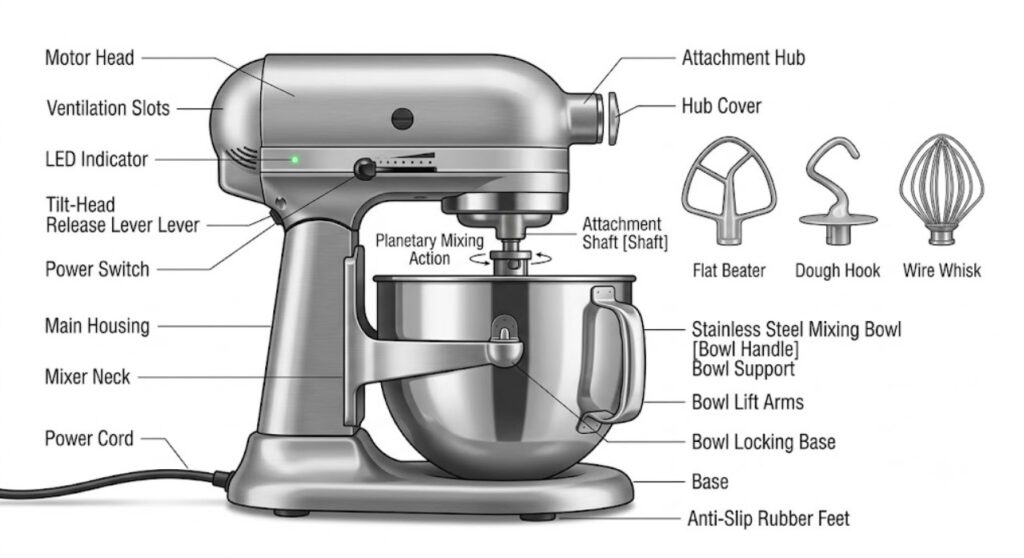
Stand mixers often use a planetary mixing action, where the attachment rotates while moving around the bowl. This ensures every part of the bowl is reached without requiring manual stirring.
5. Completing the Recipe
Once the desired consistency is achieved, simply switch off the mixer, remove the attachment and continue with the recipe.
Whether you’re preparing cake batter, cookie dough, frosting or bread dough, the mixer produces uniform results in much less time than mixing by hand.

Main Parts of a Mixer
Understanding the major components of a mixer helps you operate and maintain it correctly.
Motor Housing
The motor housing contains the electric motor that powers the mixer.
A stronger motor generally provides better performance when mixing thick dough or large batches.
Mixing Bowl
The mixing bowl holds all the ingredients during operation.
Most stand mixers include stainless steel bowls, although some models offer glass or ceramic bowls.
Flat Beater
The flat beater is the most commonly used attachment.
It is perfect for:
- Cake batter
- Brownie batter
- Cookie dough
- Mashed potatoes
- Frosting
Whisk Attachment
The whisk incorporates air into mixtures.
It is commonly used for:
- Whipped cream
- Egg whites
- Meringue
- Light frosting
Dough Hook
The dough hook kneads heavy dough automatically.
It is ideal for:
- Bread
- Pizza dough
- Cinnamon rolls
- Bagels
This saves considerable time and effort compared to kneading by hand.
Speed Control
Speed controls allow users to adjust the mixing intensity according to the recipe.Many mixers offer between 5 and 12 speed settings.
Tilt Head or Bowl Lift Mechanism
Stand mixers usually feature either:
- Tilt-head design, where the mixer head lifts upward for easy access.
or
- Bowl-lift design, where the bowl moves upward toward the mixing attachment.
Both systems make adding ingredients and changing attachments simple.
Power Cord
The power cord supplies electricity to the motor.
Always keep the cord dry and avoid wrapping it tightly around the mixer after use.
Types of Mixers
Kitchen mixers come in different designs to suit various cooking and baking needs.
1. Hand Mixer
A hand mixer is lightweight, portable and easy to use.
Instead of sitting on a countertop, it is held by hand while mixing ingredients in a bowl.
Best For
- Beginners
- Small kitchens
- Occasional baking
Advantages
- Affordable
- Lightweight
- Easy to store
- Suitable for simple recipes
However, it requires the user to hold the appliance throughout the mixing process.

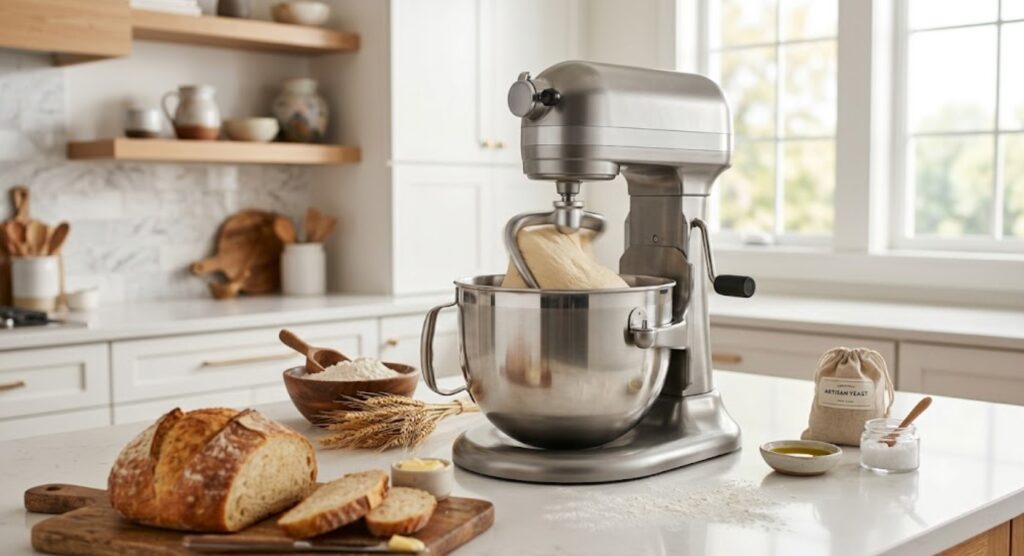
2. Stand Mixer
A stand mixer is larger, more powerful, and sits on the kitchen countertop.
Unlike a hand mixer, it operates hands-free, allowing you to add ingredients while it mixes.
Best For
- Regular baking
- Bread making
- Large recipes
- Serious home bakers
Advantages
- Powerful motor
- Hands-free operation
- Large mixing capacity
- Supports multiple attachments
- Excellent for heavy dough
Stand mixers are often considered the best choice for anyone who bakes frequently.
3. Spiral Mixer
A spiral mixer is commonly used in commercial bakeries and restaurants.
Instead of rotating the dough hook around the bowl, the bowl rotates while the spiral hook gently kneads the dough.
Best For
- Bread shops
- Pizza restaurants
- Commercial bakeries
Advantages
- Excellent gluten development
- Handles large quantities of dough
- Prevents dough from overheating
- Highly durable

4. Planetary Mixer
A planetary mixer is a type of stand mixer in which the mixing attachment rotates on its own axis while simultaneously moving around the mixing bowl, similar to how planets orbit the sun. This unique motion ensures that every part of the bowl is reached, resulting in thorough and even mixing.
Planetary mixers are commonly found in bakeries, restaurants, cafés and home kitchens because they can handle a wide variety of recipes.
Best For
- Home bakers
- Professional bakeries
- Cake shops
- Restaurants
Advantages
- Excellent mixing performance
- Even ingredient distribution
- Supports multiple attachments
- Ideal for cakes, cookies, frosting and bread dough
- Highly versatile
5. Commercial Mixer
A commercial mixer is a heavy-duty appliance designed for businesses that prepare large quantities of food every day. These mixers have powerful motors, large-capacity bowls and durable construction to withstand continuous use.
Commercial mixers are commonly used in:
- Bakeries
- Hotels
- Restaurants
- Cafés
- Catering businesses
Advantages
- Extremely powerful motor
- Large mixing capacity
- Durable construction
- Suitable for continuous operation
- Saves time in commercial kitchens

Common Uses of a Mixer
A mixer is one of the most versatile appliances in the kitchen. It can be used for a wide variety of cooking and baking tasks.
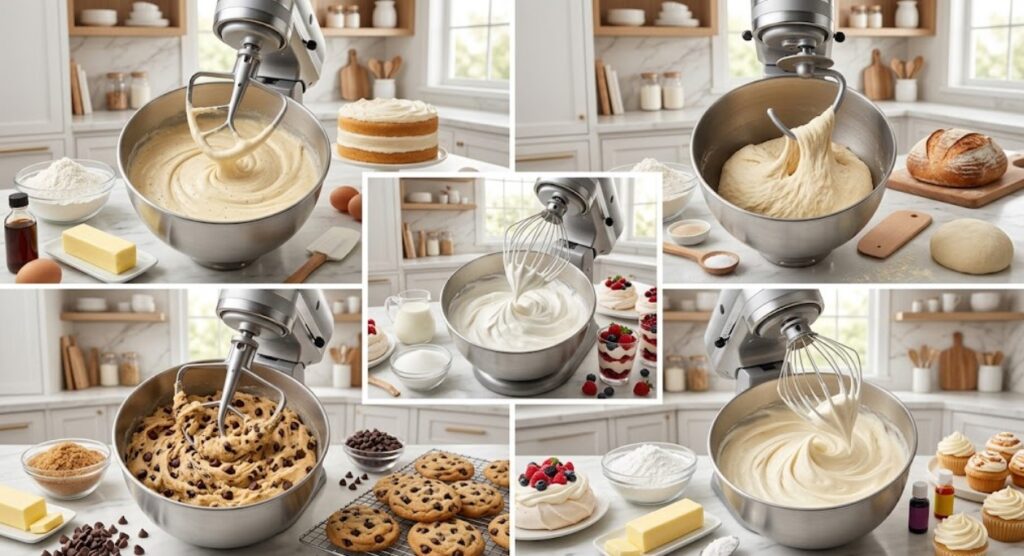
Preparing Cake Batter
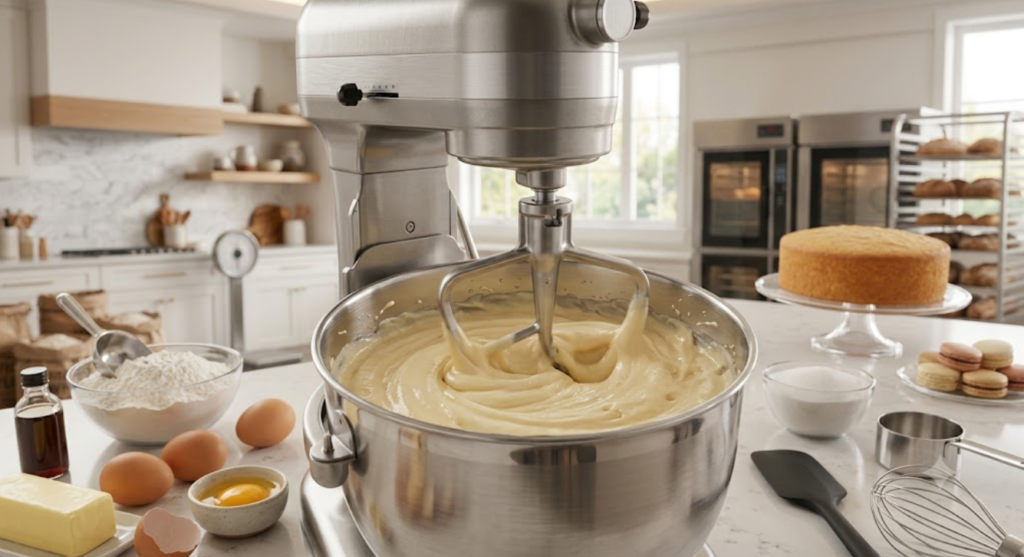
Mixers combine flour, eggs, butter, sugar, and milk into a smooth, lump-free batter, making cake preparation quick and easy.
Mixing Cookie Dough
Cookie dough often becomes thick and difficult to mix by hand. A mixer blends all ingredients evenly without requiring much effort.
Kneading Bread Dough
Using a dough hook, stand mixers can knead bread dough efficiently, helping develop gluten for soft, fluffy bread.
Making Pizza Dough
A mixer makes preparing homemade pizza dough much easier by producing a smooth, elastic dough with minimal effort.
Whipping Cream
The whisk attachment quickly incorporates air into heavy cream, creating light and fluffy whipped cream for desserts.
Beating Egg Whites
For recipes like meringues and soufflés, a mixer beats egg whites into stiff peaks much faster than manual whisking.
Preparing Frosting
Buttercream and cream cheese frosting become smooth and creamy when prepared using a mixer.
Making Pancake and Waffle Batter
Mixers blend wet and dry ingredients evenly, resulting in smooth batters for pancakes and waffles.
Mashing Potatoes
Many stand mixers can prepare creamy mashed potatoes without lumps, saving both time and effort.
Advantages of Using a Mixer
A mixer offers many benefits that make food preparation faster, easier, and more enjoyable.
Saves Time
Mixers combine ingredients much faster than manual mixing, allowing you to prepare recipes in less time.
Produces Consistent Results
The powerful motor and specialized attachments ensure ingredients are mixed evenly every time.
Reduces Physical Effort
Mixing thick dough or whipping cream by hand can be tiring. A mixer handles these tasks effortlessly.
Perfect for Baking
Mixers are essential for achieving the correct texture in cakes, cookies, pastries, bread and other baked goods.
Handles Heavy Dough
Powerful stand mixers can knead bread and pizza dough that would otherwise require significant manual effort.
Multiple Attachments
Many mixers include different attachments, allowing one appliance to perform several tasks.
Easy to Use
Modern mixers feature simple controls and multiple speed settings, making them suitable for beginners and experienced cooks alike.

Disadvantages of a Mixer
Although mixers are highly useful, there are a few limitations to consider.
Higher Cost
Stand mixers with powerful motors and multiple attachments are generally more expensive than hand mixers.
Requires Storage Space
Large stand mixers occupy considerable countertop or cabinet space, which may be challenging in small kitchens.
Can Be Noisy
Powerful motors may produce noticeable noise, especially when mixing thick dough.
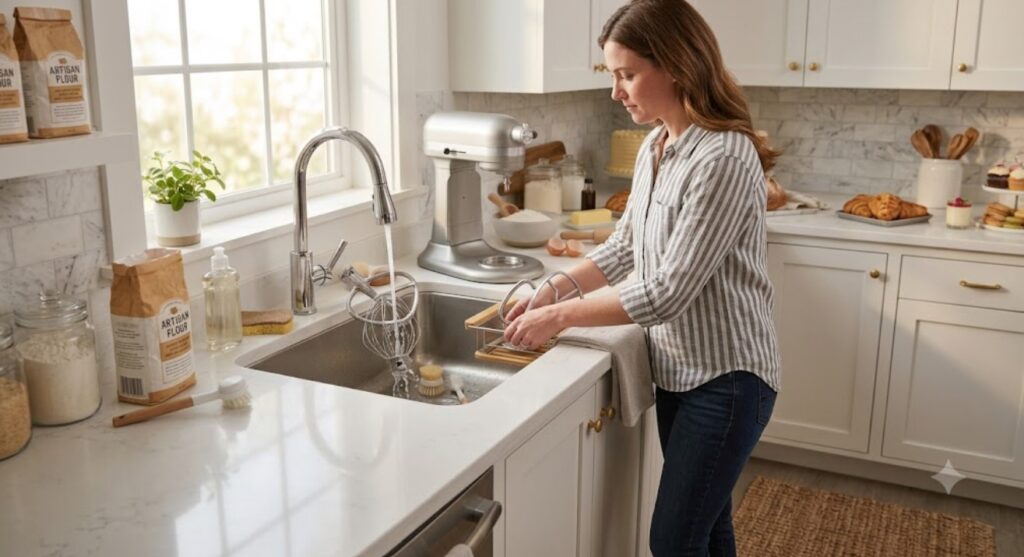
Cleaning Takes Time
The bowl and attachments should be washed after every use to maintain hygiene and performance.
Electricity Required
Unlike manual mixing tools, electric mixers require a power source to operate.
How to Choose the Best Mixer
Choosing the right mixer depends on your cooking habits, kitchen space and budget. Whether you bake occasionally or prepare homemade bread every week, selecting the right model will make your cooking experience much easier.
Here are the most important factors to consider before buying a mixer.
1. Motor Power
Motor power determines how well the mixer handles different mixing tasks.
- 200–300 watts: Suitable for light mixing and whipping.
- 300–500 watts: Good for most home baking.
- 500+ watts: Ideal for bread dough, pizza dough, and heavy mixing.
A more powerful motor generally provides better performance and durability.
2. Bowl Capacity
Choose a bowl size that matches your household needs.
- 2–3 liters: Singles or couples
- 4–5 liters: Average families
- 6 liters or more: Large families or frequent baking
A larger bowl allows you to prepare bigger batches without overflowing.
3. Number of Speed Settings
Different recipes require different mixing speeds.
Look for mixers with multiple speed options, such as:
- Low speed for folding ingredients
- Medium speed for cake batter
- High speed for whipping cream and egg whites
Some premium mixers also include a pulse or soft-start feature to reduce ingredient splatter.
4. Included Attachments
A versatile mixer should include multiple attachments, such as:
- Flat beater
- Dough hook
- Wire whisk
Some premium models also support optional accessories like pasta makers, meat grinders or vegetable slicers.
5. Build Quality
A durable mixer lasts longer and performs better.
Look for:
- Stainless steel mixing bowl
- Strong metal gears
- Stable base
- Durable motor housing
Good build quality is especially important if you bake frequently.
6. Ease of Cleaning
Choose a mixer with removable attachments and dishwasher-safe accessories for easier cleanup.
7. Noise Level
Some mixers operate more quietly than others. If you often bake early in the morning or late at night, a quieter model can be a better choice.
8. Budget and Warranty
Compare features within your budget and choose a model with a reliable warranty and good customer support.

Cleaning and Maintenance Tips
Proper care helps keep your mixer working efficiently and extends its lifespan.
Clean the Attachments After Every Use
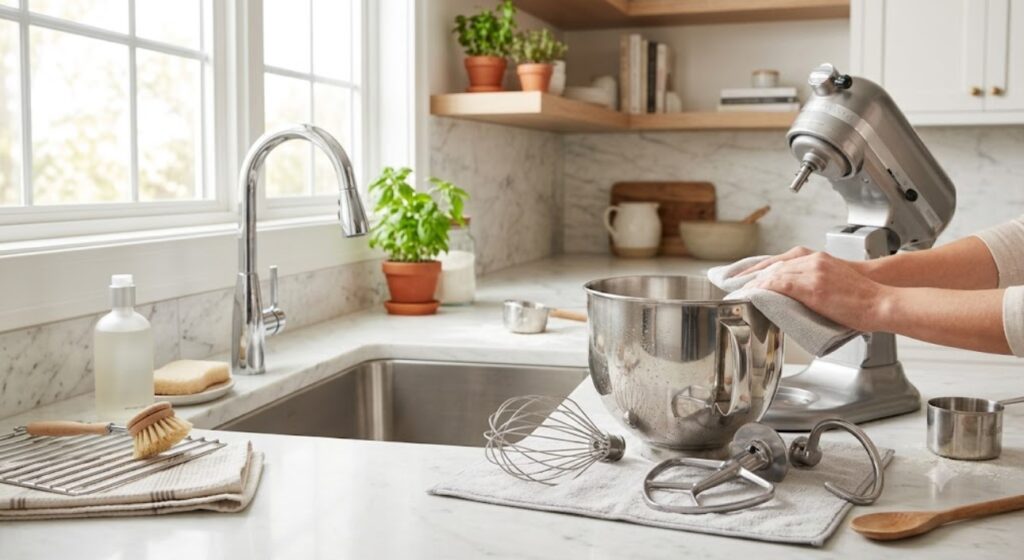
Wash the beaters, whisk, dough hook and mixing bowl immediately after use with warm water and mild dish soap.
Many modern attachments are dishwasher-safe, but always check the manufacturer’s instructions.
Wipe the Motor Housing
Never immerse the motor housing in water.
Instead, wipe it with a soft, damp cloth to remove flour, batter or food splashes.
Dry All Parts Thoroughly
Ensure every component is completely dry before reassembling the mixer to prevent rust or moisture damage.
Store Properly
Keep the mixer in a clean, dry place and store the attachments together to avoid losing them.
Inspect the Power Cord
Check the power cord regularly for signs of wear or damage. Replace it if necessary.
Safety Tips
Using a mixer safely helps prevent accidents and protects the appliance.
- Read the instruction manual before first use.
- Always unplug the mixer before changing attachments.
- Keep fingers and utensils away from moving beaters.
- Never overload the mixer with excessively thick dough beyond its capacity.
- Place the mixer on a stable, flat surface before use.
- Keep children away while the mixer is operating.
- Do not operate the mixer with wet hands.
- Switch off the mixer before lifting the mixer head or removing the bowl.
Frequently Asked Questions (FAQs)
What is a mixer?
A mixer is an electric kitchen appliance used to combine, beat, whip and knead ingredients for baking and cooking.
What is the difference between a mixer and a blender?
A mixer combines ingredients using beaters or dough hooks, while a blender uses sharp blades to chop and puree food into smooth liquids.
Can a mixer knead bread dough?
Yes. Most stand mixers equipped with a dough hook can knead bread and pizza dough efficiently.
Which mixer is best for baking?
Stand mixers are generally the best choice for regular baking because they are powerful, hands-free and capable of handling heavy dough.
Can I whip cream with a mixer?
Yes. Using the whisk attachment, a mixer can quickly whip cream into a light and fluffy texture.
How long does a kitchen mixer last?
With proper care and regular maintenance, a quality mixer can last 10 years or more, depending on the brand and frequency of use.
Conclusion
A mixer is one of the most valuable appliances for anyone who enjoys baking or preparing homemade meals. It simplifies tasks such as mixing cake batter, kneading bread dough, whipping cream and preparing frosting, all while saving time and reducing physical effort.
Now that you understand what a mixer is, how it works, the different types available, their advantages, limitations, and the key features to consider, you can confidently choose a model that suits your kitchen and cooking style.
Whether you’re a beginner experimenting with simple recipes or an experienced baker preparing bread every week, investing in the right mixer can improve efficiency, deliver consistent results and make cooking more enjoyable.
Also Read:
The U.S. Food & Drug Administration (FDA) also recommends safe food handling and proper cleaning of kitchen equipment.