
Introduction
For millions of people around the world, a cup of freshly brewed coffee is the perfect way to start the day. Instead of waiting in long café lines or spending money on takeaway coffee every morning, many households now rely on a coffee maker to prepare delicious coffee quickly and conveniently.
But what is a coffee maker and why has it become one of the most popular kitchen appliances? Whether you’re a coffee lover, a busy professional or someone looking to upgrade your kitchen, understanding how a coffee maker works can help you choose the right model for your needs.
Modern coffee makers come in many styles, from simple drip machines to advanced espresso makers with programmable settings. They can brew rich, flavorful coffee in just a few minutes while offering convenience, consistency, and a café-like experience at home.
In this comprehensive guide, you’ll learn what a coffee maker is, how it works, the different types available, their benefits and drawbacks, essential features to consider, cleaning and maintenance tips, safety advice and practical buying recommendations. By the end of this article, you’ll have all the information you need to confidently choose the best coffee maker for your home or office.
What Is a Coffee Maker?
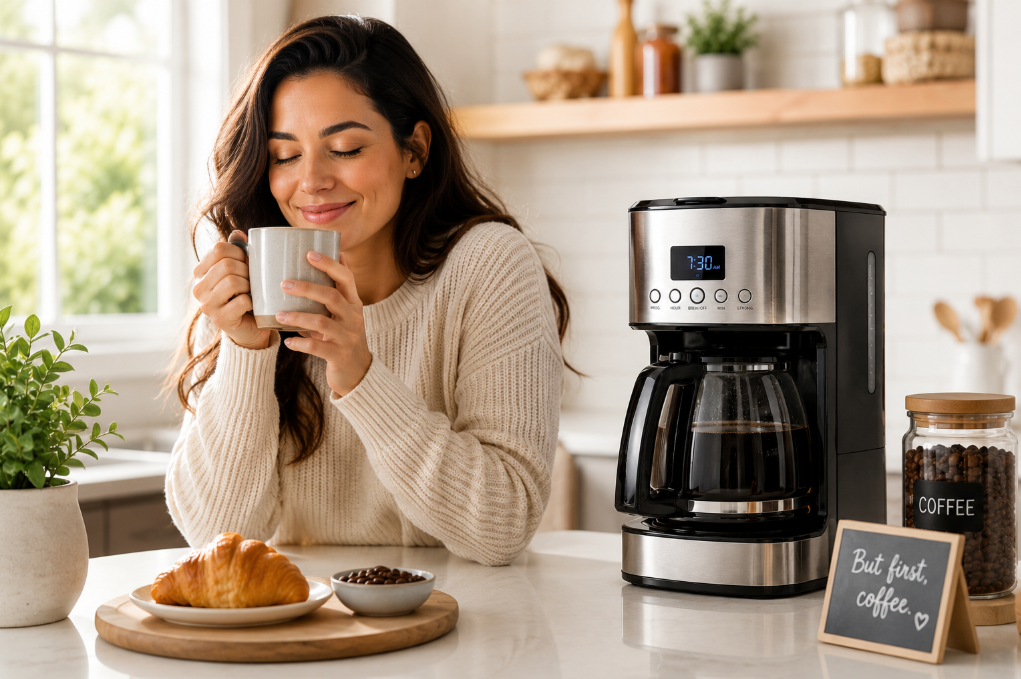
A coffee maker is an electrical kitchen appliance designed to brew coffee automatically by heating water and passing it through ground coffee beans. The brewing process extracts the coffee’s flavor, aroma and natural oils, producing a fresh cup of coffee in just a few minutes.
Unlike traditional methods that require manual boiling and filtering, a coffee maker simplifies the entire brewing process. Most modern machines only require you to add water and ground coffee, press a button and wait while the appliance does the rest.
Coffee makers are available in various sizes and designs to suit different preferences. Some machines prepare a single cup for one person, while others can brew multiple cups at once for families, offices or gatherings. Advanced models also include programmable timers, adjustable brew strength, built-in grinders, milk frothers and smart features that allow users to customize their coffee experience.
Today, coffee makers are found in homes, offices, hotels, cafés and workplaces worldwide because they offer convenience, consistency, and the ability to enjoy freshly brewed coffee whenever you want.
Why Is a Coffee Maker So Popular?
Coffee makers have become an essential appliance because they make preparing coffee faster, easier and more consistent than manual brewing methods.
Some of the main reasons for their popularity include:
- Fresh coffee in just a few minutes.
- Consistent taste and brewing quality.
- Easy operation with one-touch controls.
- Saves money compared to buying coffee daily from cafés.
- Available in many styles and price ranges.
- Suitable for both home and office use.
- Modern machines offer programmable and smart features.
For many coffee drinkers, a coffee maker is more than just a kitchen appliance—it’s a daily convenience that helps save time while delivering a high-quality cup of coffee whenever it’s needed.

How Does a Coffee Maker Work?
Although different coffee makers use slightly different brewing methods, the basic process is similar across most machines. A coffee maker heats water and allows it to pass through ground coffee beans, extracting their flavor, aroma and natural oils before collecting the brewed coffee in a cup or carafe.
Here’s how the brewing process works step by step:
1. Water Is Added
Fresh water is poured into the machine’s water reservoir. The amount of water determines how many cups of coffee the machine can prepare.
2. Ground Coffee Is Added
Ground coffee is placed inside a filter basket or reusable filter. The quality and amount of coffee grounds directly affect the flavor and strength of the brewed coffee.
3. Water Is Heated
When the coffee maker is switched on, an internal heating element quickly heats the water to the ideal brewing temperature, usually between 90°C and 96°C (195°F–205°F).
4. Brewing Begins
The hot water flows evenly over the coffee grounds. As it passes through, it dissolves the coffee’s natural flavors, oils and aroma.
5. Fresh Coffee Is Collected
The brewed coffee drips into a glass carafe, thermal carafe, or directly into a cup, depending on the type of coffee maker.
The entire brewing process usually takes 3–10 minutes, depending on the machine and the amount of coffee being prepared.
Main Parts of a Coffee Maker
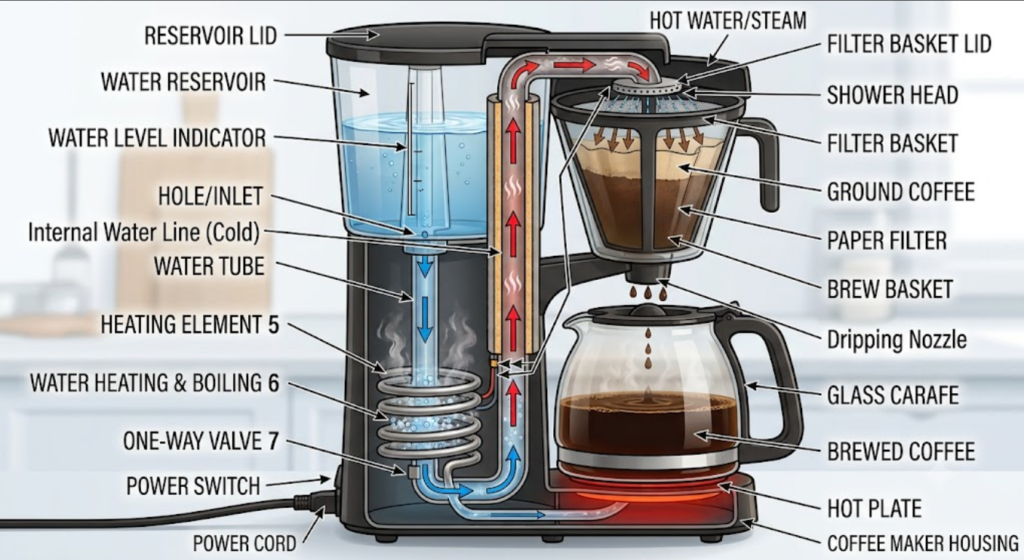
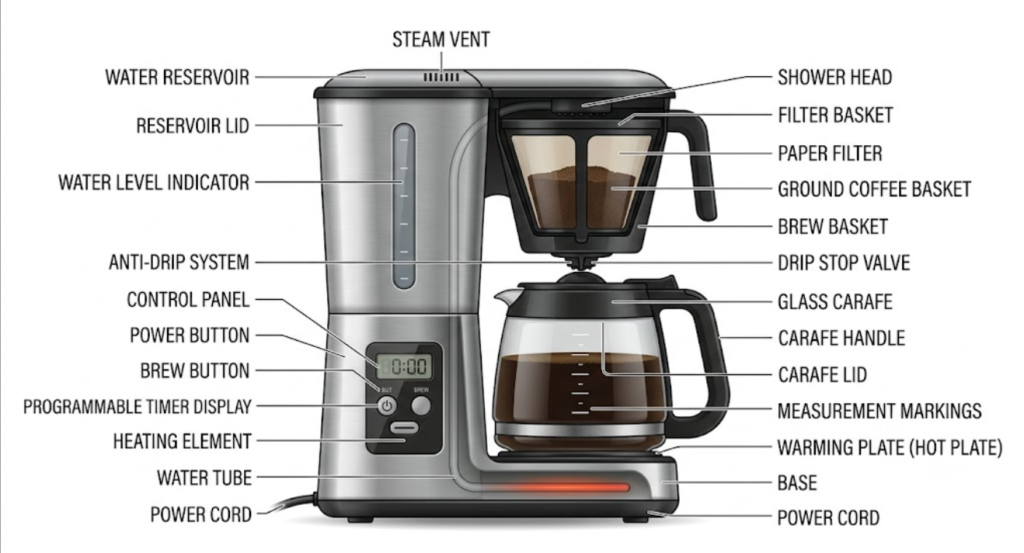
Understanding the different parts of a coffee maker helps you use and maintain it properly.
Water Reservoir
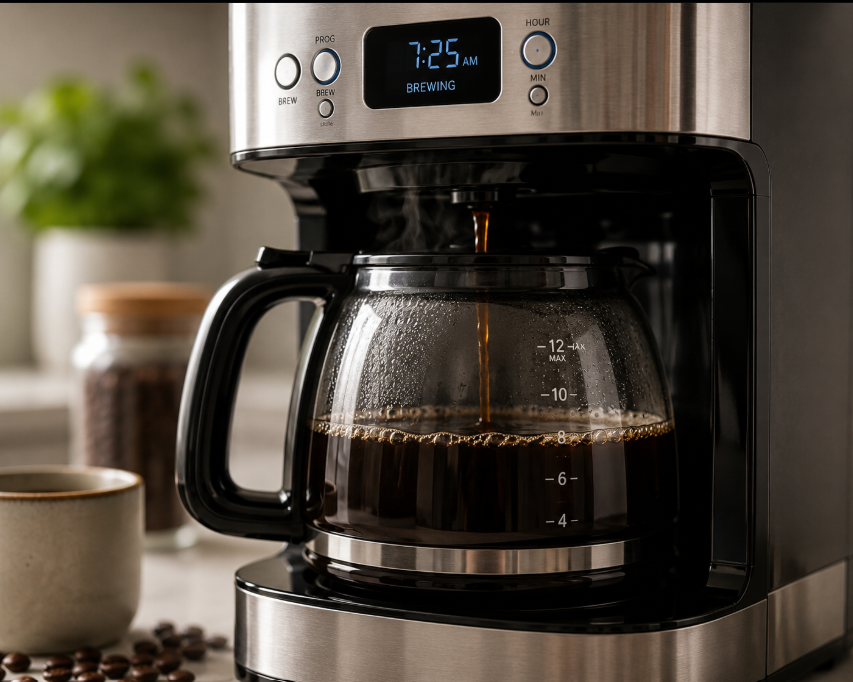
The water reservoir stores the fresh water used during brewing. Most coffee makers include measurement markings that indicate the number of cups.
Filter Basket
The filter basket holds the coffee grounds. Some machines use disposable paper filters, while others include reusable metal or mesh filters.
Heating Element
Located inside the coffee maker, the heating element raises the water to the correct brewing temperature.
Shower Head
The shower head distributes hot water evenly across the coffee grounds to ensure consistent extraction.
Carafe
The carafe collects the freshly brewed coffee. It may be made of glass or stainless steel, depending on the model.
Warming Plate
Many drip coffee makers include a warming plate beneath the glass carafe to keep coffee hot after brewing.
Control Panel
Modern coffee makers often include a digital control panel with features such as:
- Brew timer
- Clock
- Strength selector
- Auto-start
- Auto shut-off
These functions make brewing more convenient and customizable.
Types of Coffee Makers
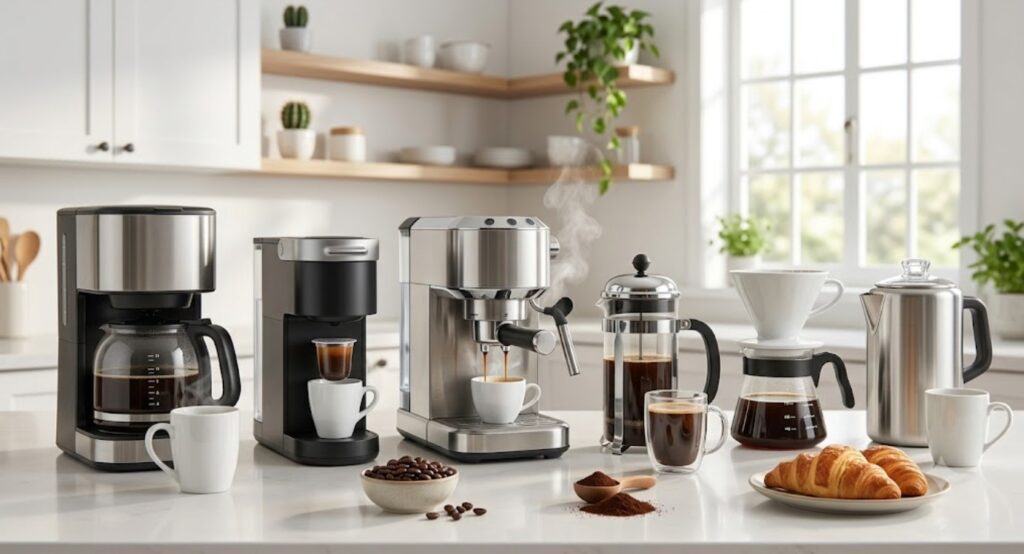
Not every coffee maker is designed for the same purpose. Some focus on speed and convenience, while others prioritize rich flavor and specialty coffee. Choosing the right type depends on your budget, preferred coffee style and daily routine.
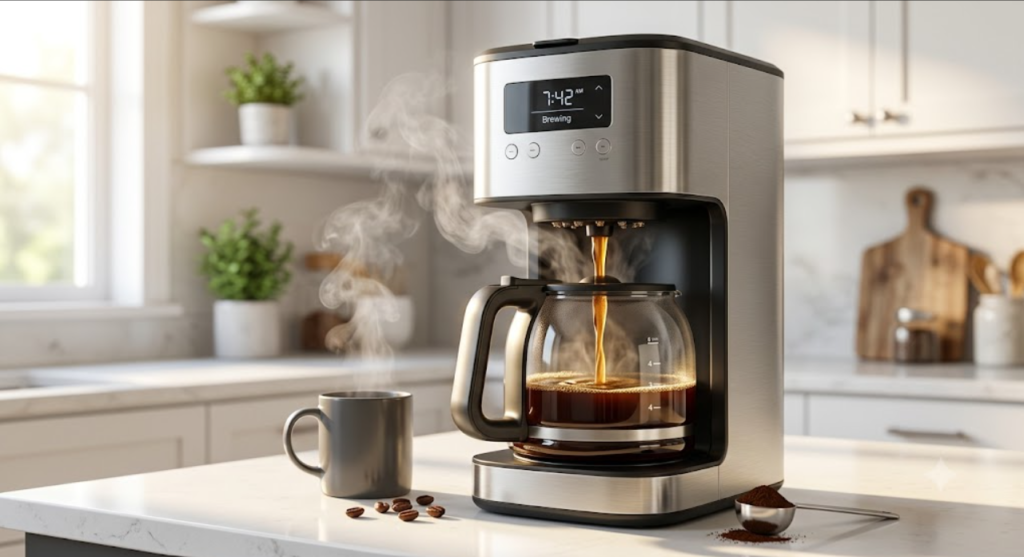
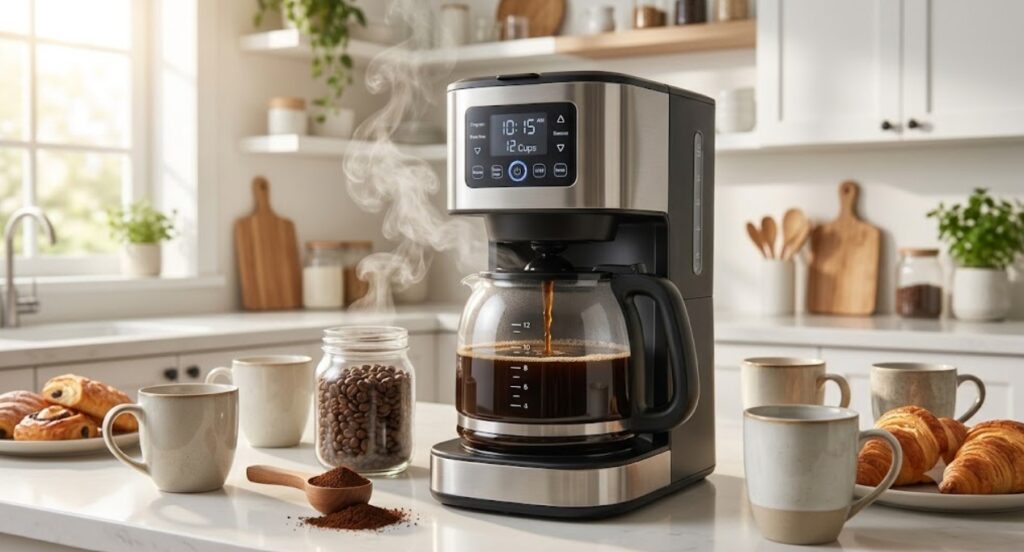
1. Drip Coffee Maker
A drip coffee maker is the most common type found in homes. It automatically heats water and drips it over ground coffee before collecting the brewed coffee in a carafe.
Best For:
- Families
- Everyday coffee drinkers
- Brewing multiple cups
Advantages:
- Easy to use
- Affordable
- Brews several cups at once
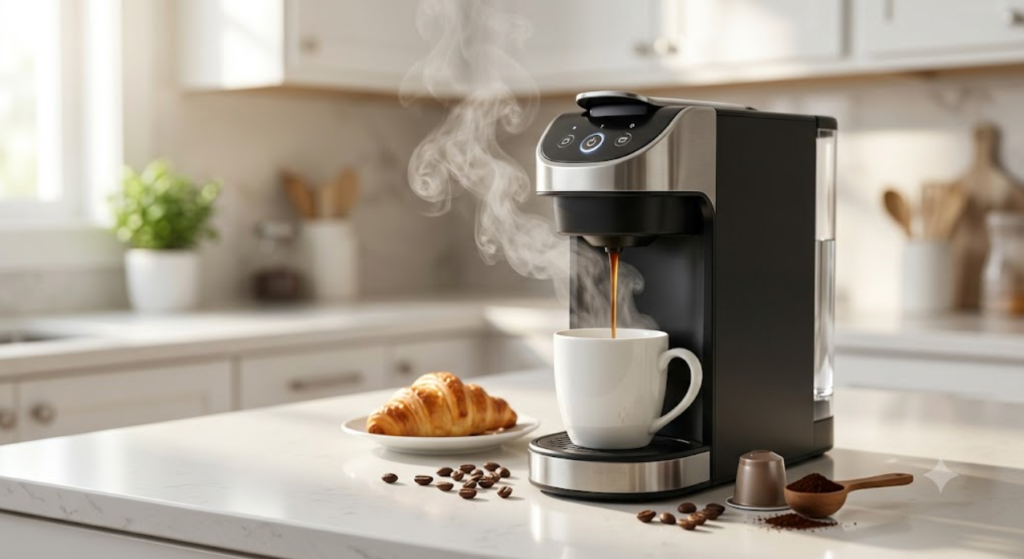
2. Single-Serve Coffee Maker
Single-serve machines prepare one cup of coffee at a time using coffee pods or capsules. They are fast, convenient and ideal for individuals.
Best For:
- Busy professionals
- Students
- Small households
Advantages:
- Fast brewing
- Minimal cleanup
- Consistent taste
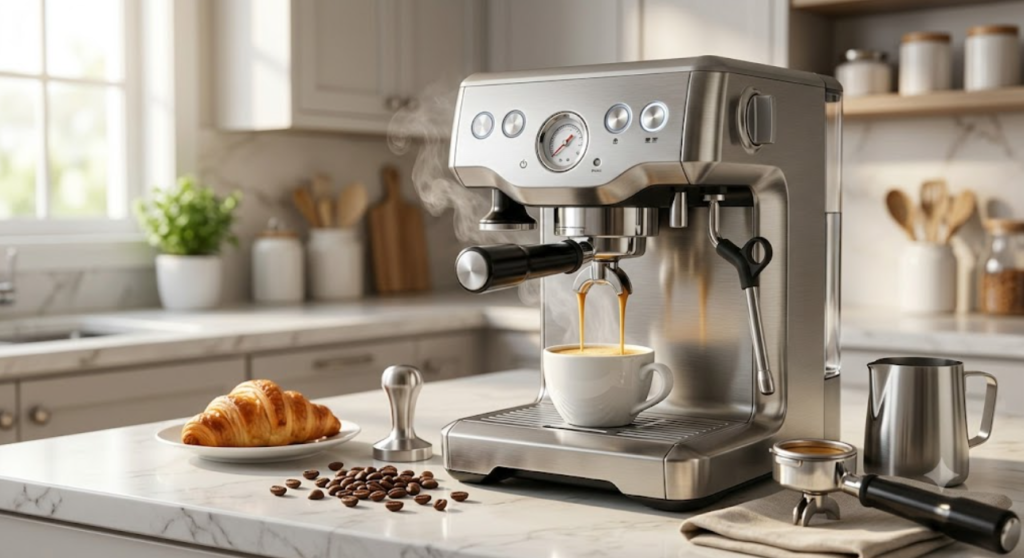
3. Espresso Machine
Espresso machines force hot water through finely ground coffee under high pressure, producing a rich and concentrated espresso with a layer of crema.
These machines are popular among coffee enthusiasts who enjoy cappuccinos, lattes and other espresso-based drinks.
Best For:
- Coffee lovers
- Home baristas
- Specialty coffee drinks
4. French Press
A French Press is a manual coffee brewing device that uses a plunger and metal mesh filter to separate coffee grounds from the brewed coffee. Unlike electric coffee makers, it doesn’t require electricity, making it a great choice for travel or camping.
To brew coffee, coarse coffee grounds are mixed with hot water and allowed to steep for about four minutes. The plunger is then pressed down slowly, separating the grounds from the coffee.
Best For
- Coffee enthusiasts
- Camping and travel
- Rich, full-bodied coffee
Advantages
- No electricity required
- Affordable
- Produces rich, flavorful coffee
- Easy to carry

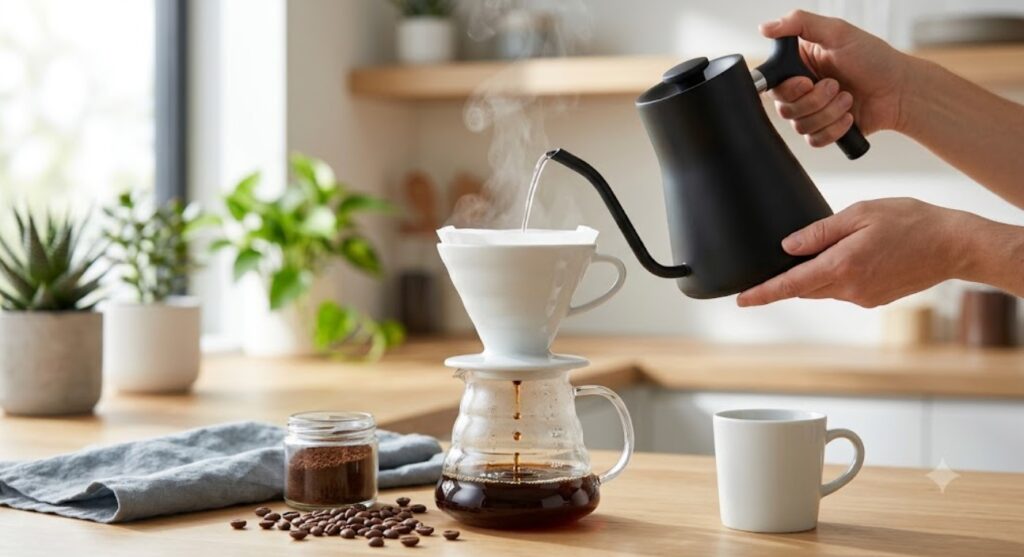
5. Pour-Over Coffee Maker
A pour-over coffee maker is a manual brewing method where hot water is slowly poured over coffee grounds held in a paper or metal filter.
This method gives users complete control over brewing time and water flow, producing clean, aromatic coffee with excellent flavor.
Best For
- Coffee lovers
- Specialty coffee
- Manual brewing
Advantages
- Excellent flavor
- Simple design
- Affordable
- Easy to clean
6. Percolator
A percolator repeatedly circulates boiling water through coffee grounds until the desired strength is reached.
Although less common today, many people still appreciate the strong flavor produced by a percolator.
Best For
- Strong coffee lovers
- Camping
- Traditional coffee brewing
Advantages
- Strong coffee
- Durable design
- Large brewing capacity

Common Uses of a Coffee Maker
A coffee maker is one of the most versatile appliances in any kitchen. While its primary purpose is brewing coffee, it can support a variety of daily routines.
Some of the most common uses include:
Brewing Morning Coffee
Many people use a coffee maker every morning to prepare fresh coffee before work or school.
Serving Guests
Coffee makers allow you to prepare several cups at once, making them ideal when entertaining family and friends.
Office Use
Coffee machines are commonly found in offices, providing employees with quick access to freshly brewed coffee throughout the day.
Making Specialty Drinks
Some advanced coffee makers can prepare:
- Espresso
- Cappuccino
- Latte
- Americano
- Macchiato
especially when equipped with a milk frother.

Advantages of Using a Coffee Maker
Coffee makers have become a favorite kitchen appliance because they combine convenience, speed and consistent results.
1. Saves Time
Instead of preparing coffee manually, a coffee maker can brew several cups within minutes.
2. Easy to Use
Most modern machines require only three simple steps:
- Add water
- Add coffee grounds
- Press Start
3. Consistent Taste
Coffee makers maintain the correct brewing temperature and timing, producing consistent flavor with every cup.
4. Saves Money
Preparing coffee at home is generally more economical than purchasing coffee from cafés every day.
5. Programmable Features
Many modern coffee makers include useful features such as:
- Automatic brewing
- Brew strength adjustment
- Timers
- Auto shut-off
- Keep-warm function
6. Large Capacity
Many drip coffee makers can brew 8–12 cups in a single cycle, making them ideal for families and offices.
Disadvantages of a Coffee Maker
Although coffee makers offer many benefits, they also have some drawbacks.
Regular Cleaning Required
Coffee makers should be cleaned regularly to prevent mineral buildup and maintain coffee quality.
Electricity Required
Most coffee makers depend on electricity and cannot operate during power outages.
Initial Cost
High-end espresso machines and smart coffee makers can be expensive.
Counter Space
Some coffee makers occupy significant kitchen counter space, especially models with built-in grinders or large water reservoirs.
Ongoing Costs
Depending on the type of coffee maker, you may need to purchase:
- Coffee beans
- Ground coffee
- Paper filters
- Coffee pods
- Cleaning solutions
How to Choose the Best Coffee Maker
Choosing the right coffee maker depends on your coffee preferences, budget, household size and the features you value most. With so many models available, it’s important to compare your options before making a purchase.
1. Decide Your Coffee Style
Think about the type of coffee you enjoy most.
- Drip Coffee Maker – Best for brewing multiple cups for families.
- Single-Serve Coffee Maker – Ideal for one person and quick brewing.
- Espresso Machine – Perfect for espresso, cappuccino, and latte lovers.
- French Press – Great for rich, full-bodied coffee.
- Pour-Over Coffee Maker – Best for those who enjoy manual brewing and precise flavor control.
2. Consider Capacity
Choose a coffee maker based on how much coffee you need.
- 1–2 cups: Single-serve machine
- 4–6 cups: Small drip coffee maker
- 8–12 cups: Large family coffee maker
3. Look for Useful Features
Modern coffee makers offer features that improve convenience, such as:
- Programmable timer
- Auto shut-off
- Brew strength adjustment
- Built-in grinder
- Milk frother
- Thermal carafe
- Touchscreen controls
4. Easy Cleaning
A coffee maker with removable parts and dishwasher-safe components is easier to clean and maintain.
5. Set Your Budget
Coffee makers are available in every price range. Choose a model that offers the features you need without paying for extras you won’t use.
Cleaning and Maintenance Tips
Proper maintenance keeps your coffee maker working efficiently and ensures every cup tastes fresh.
Daily Cleaning
- Empty used coffee grounds.
- Wash the carafe and filter basket.
- Wipe the exterior with a soft cloth.
Weekly Cleaning
- Wash removable parts with warm, soapy water.
- Clean the water reservoir.
- Remove coffee stains from the carafe.
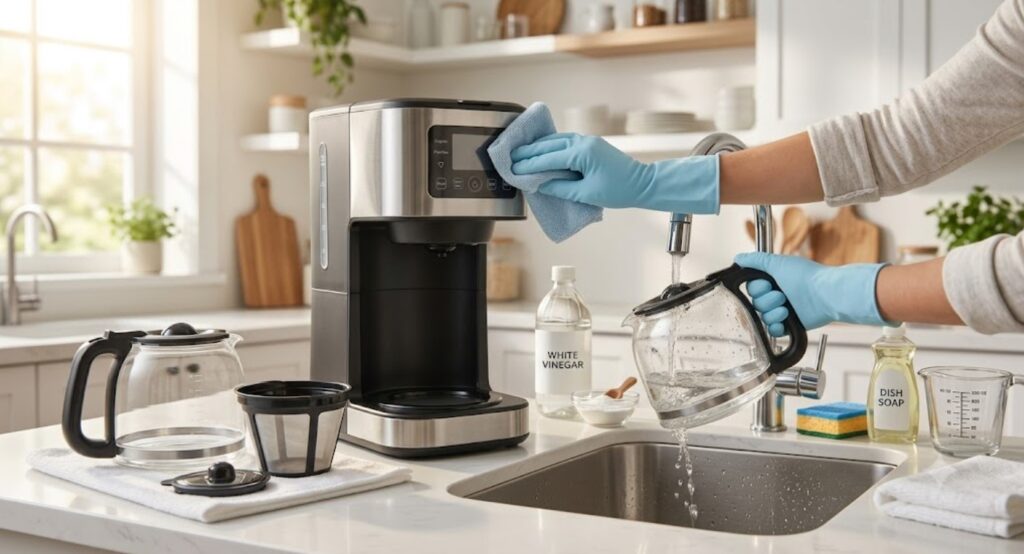
Monthly Descaling
Minerals from water can build up inside the machine over time.
To descale:
- Fill the reservoir with equal parts white vinegar and water.
- Run a complete brewing cycle.
- Discard the solution.
- Run two or three cycles with clean water to rinse the machine.
Replace Filters
If your coffee maker uses water filters or reusable mesh filters, replace or clean them according to the manufacturer’s instructions.

Safety Tips
Follow these simple safety practices to use your coffee maker safely.
- Keep the appliance away from water when plugged in.
- Never touch hot surfaces during brewing.
- Place the coffee maker on a stable, flat surface.
- Unplug the machine before cleaning.
- Keep the power cord away from children.
- Use only clean drinking water.
- Do not overfill the water reservoir.
- Follow the manufacturer’s instructions.

Frequently Asked Questions (FAQs)
What is a coffee maker?
A coffee maker is a kitchen appliance that automatically brews coffee by heating water and passing it through ground coffee beans.
How does a coffee maker work?
It heats water to the ideal brewing temperature, then flows the hot water through coffee grounds, producing fresh brewed coffee.
Which type of coffee maker is best?
It depends on your needs. Drip coffee makers are ideal for families, single-serve machines are great for convenience, and espresso machines are best for specialty coffee lovers.
How often should I clean my coffee maker?
Clean removable parts after each use and descale the machine approximately once a month, depending on your water quality and usage.
Is a coffee maker worth buying?
Yes. A coffee maker saves time, provides consistent coffee quality, and can reduce the cost of buying coffee from cafés.
Conclusion
A coffee maker is one of the most useful kitchen appliances for anyone who enjoys fresh, flavorful coffee at home or in the office. From simple drip coffee makers to advanced espresso machines, there is a model to suit every lifestyle and budget.
By understanding what a coffee maker is, how it works, the different types available and the features that matter most, you can confidently choose a machine that fits your daily routine. Regular cleaning and proper maintenance will also help your coffee maker perform efficiently for years while ensuring every cup tastes its best.
Whether you’re a beginner looking for your first coffee maker or an experienced coffee enthusiast ready to upgrade, investing in the right machine can make your coffee experience more enjoyable, convenient and cost-effective.
Also Read:
The U.S. Food & Drug Administration (FDA) also recommends safe food handling and proper cleaning of kitchen equipment.