

Introduction
Doing dishes is one of the most common household chores but it can also be one of the most time-consuming. Fortunately, modern kitchen technology has made this task much easier with the invention of the dishwasher. Instead of spending valuable time washing dishes by hand, a dishwasher can clean and sanitize plates, glasses, cutlery, pots and other kitchen utensils with the push of a button.
But what is a dishwasher and how does it work? Whether you’re furnishing a new home, upgrading your kitchen or simply curious about this popular appliance, understanding its features and benefits can help you decide if it’s the right investment for your household.
Modern dishwashers are designed to save time, reduce water consumption and provide a more hygienic cleaning process than traditional hand washing. They are available in different sizes and styles, from compact countertop models for small apartments to large built-in units for busy families.
In this comprehensive guide, you’ll learn what a dishwasher is, how it works, the different types available, their advantages and disadvantages, essential features to look for, maintenance tips, safety advice and practical buying recommendations. By the end of this article, you’ll have all the information you need to choose the best dishwasher for your kitchen.

What Is a Dishwasher?
A dishwasher is an electrical kitchen appliance designed to automatically wash, rinse and dry dishes, glasses, cutlery, cookware and other kitchen utensils. Instead of scrubbing dishes by hand, the machine uses hot water, detergent and powerful spray arms to remove food residue, grease, and bacteria efficiently.
Dishwashers are available in a wide range of sizes and designs to suit different households. Compact countertop models are ideal for apartments and small kitchens, while larger built-in dishwashers are perfect for families who wash many dishes each day. Many advanced models also include features such as energy-saving modes, quick wash cycles, smart controls, adjustable racks and child safety locks.
Today, dishwashers are commonly used in homes, restaurants, hotels, offices and commercial kitchens because they provide a faster, more hygienic, and more convenient way to keep dishes clean.

Why Are Dishwashers So Popular?
Dishwashers have become one of the most valuable kitchen appliances because they save time, improve hygiene and make daily cleaning much easier.
Some of the main reasons for their popularity include:
- Washes dishes automatically with minimal effort.
- Saves time compared to washing dishes by hand.
- Uses water efficiently in many modern models.
- Cleans dishes with hot water for better hygiene.
- Reduces physical effort after cooking or entertaining guests.
- Offers multiple wash programs for different cleaning needs.
- Fits different lifestyles with compact and full-size models.
For busy families, professionals, and anyone who wants a cleaner, more convenient kitchen, a dishwasher is more than just a luxury—it’s a practical appliance that helps simplify everyday life.
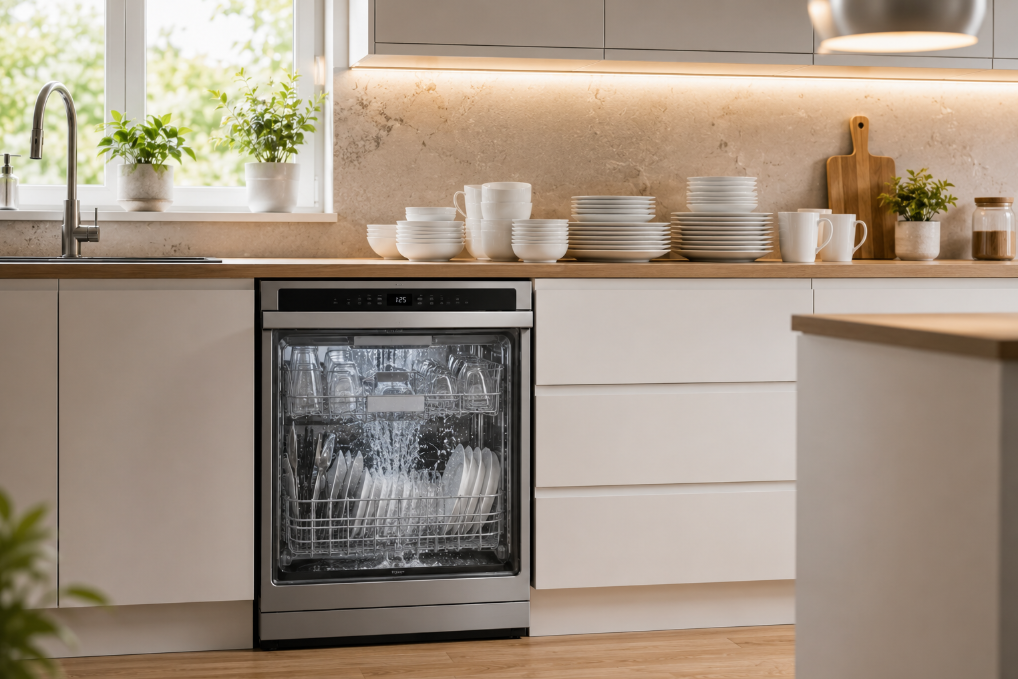
How Does a Dishwasher Work?
A dishwasher may seem like a complex appliance, but its cleaning process is surprisingly simple and highly efficient. Instead of manually scrubbing dishes, the machine uses hot water, detergent and powerful spray arms to remove food particles, grease and stains automatically.
Here’s how a typical dishwasher works step by step:
1. Loading the Dishes
Before starting the wash cycle, dishes are placed inside the dishwasher racks. Plates, bowls, glasses, cups and cutlery should be arranged properly so that water can reach every surface.
Proper loading also prevents dishes from blocking the spray arms, ensuring better cleaning performance.
2. Adding Detergent
Dishwasher detergent is placed inside the detergent dispenser. During the wash cycle, the dispenser opens automatically, releasing the detergent at the right time.
Special dishwasher detergents are formulated to remove grease, dried food and stains without damaging dishes.
3. Filling with Water
Once the cycle begins, the dishwasher draws water from your home’s water supply. The amount of water depends on the selected wash program and the appliance’s efficiency.
Modern dishwashers are designed to use much less water than washing dishes by hand.
4. Heating the Water
An internal heating element raises the water temperature, typically between 50°C and 70°C (122°F–158°F), depending on the selected cycle.
The hot water helps dissolve detergent, remove grease and sanitize dishes more effectively.
5. Washing the Dishes
Rotating spray arms located beneath and sometimes above the racks spray high-pressure hot water mixed with detergent onto the dishes.
These powerful jets reach every corner of the dishwasher, loosening food particles and removing stubborn stains.
6. Rinsing
After the wash cycle, dirty water is drained away, and clean water is sprayed over the dishes to remove detergent residue and any remaining food particles.
Many dishwashers also add a rinse aid during this stage to reduce water spots and improve drying performance.
7. Drying
Finally, the dishwasher dries the dishes using heated air, condensation drying or fan-assisted drying, depending on the model.
When the cycle finishes, your dishes are clean, dry and ready to use.

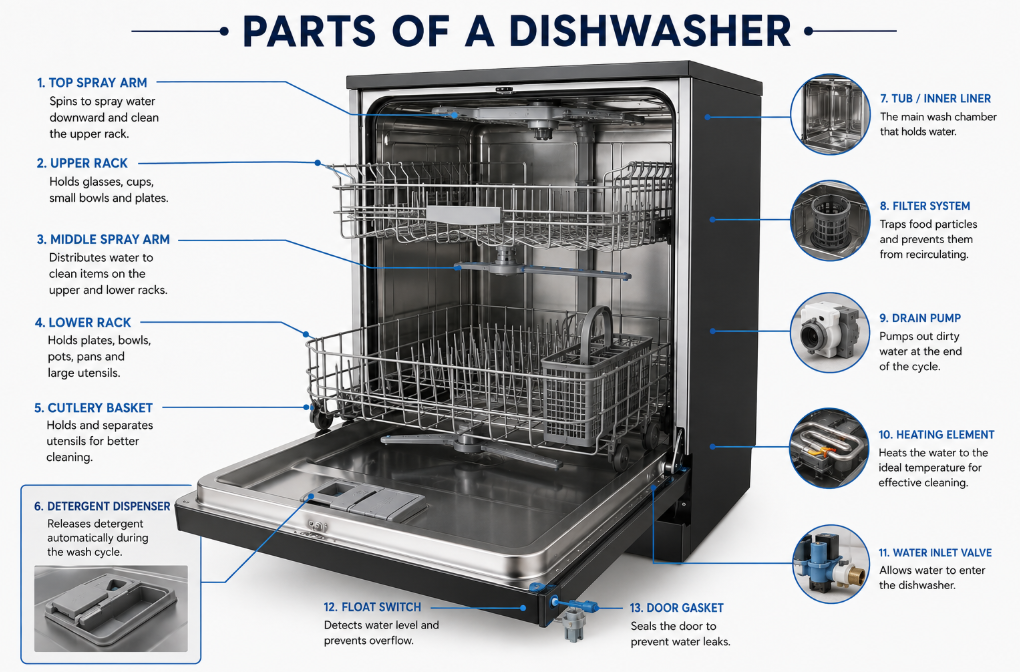
Main Parts of a Dishwasher
Understanding the main components of a dishwasher can help you use and maintain it properly.
Dishwasher Door
The insulated door seals the appliance during operation and helps keep hot water and steam inside.
Dish Racks
Dishwashers usually have upper and lower racks designed to hold different types of kitchenware.
- Upper rack: Cups, glasses, bowls
- Lower rack: Plates, pots, pans
Many modern models feature adjustable racks for added flexibility.
Spray Arms
Spray arms rotate during the wash cycle, spraying hot water evenly over the dishes.
Most dishwashers have two or three spray arms for complete cleaning coverage.
Filter
The filter traps food particles to prevent them from clogging the drain pump.
Cleaning the filter regularly helps maintain washing performance.
Heating Element
The heating element heats the water during washing and also assists in drying the dishes after rinsing.
Detergent Dispenser
This compartment stores dishwasher detergent and automatically releases it during the wash cycle.
Control Panel
Modern dishwashers feature digital or touch controls that allow users to select different wash programs such as:
- Eco Wash
- Quick Wash
- Heavy Duty
- Auto Wash
- Delicate Cycle
Drain Pump
After washing and rinsing, the drain pump removes dirty water from the dishwasher before the next stage begins.
Types of Dishwashers
Dishwashers are available in several styles to suit different kitchen sizes, budgets, and household needs.
1. Built-in Dishwasher
A built-in dishwasher is permanently installed beneath the kitchen countertop and connected directly to the home’s plumbing.
This is the most popular type for modern homes.
Best For
- Families
- Permanent kitchens
- Frequent dishwashing
Advantages
- Large capacity
- Quiet operation
- Seamless appearance
- Wide range of features

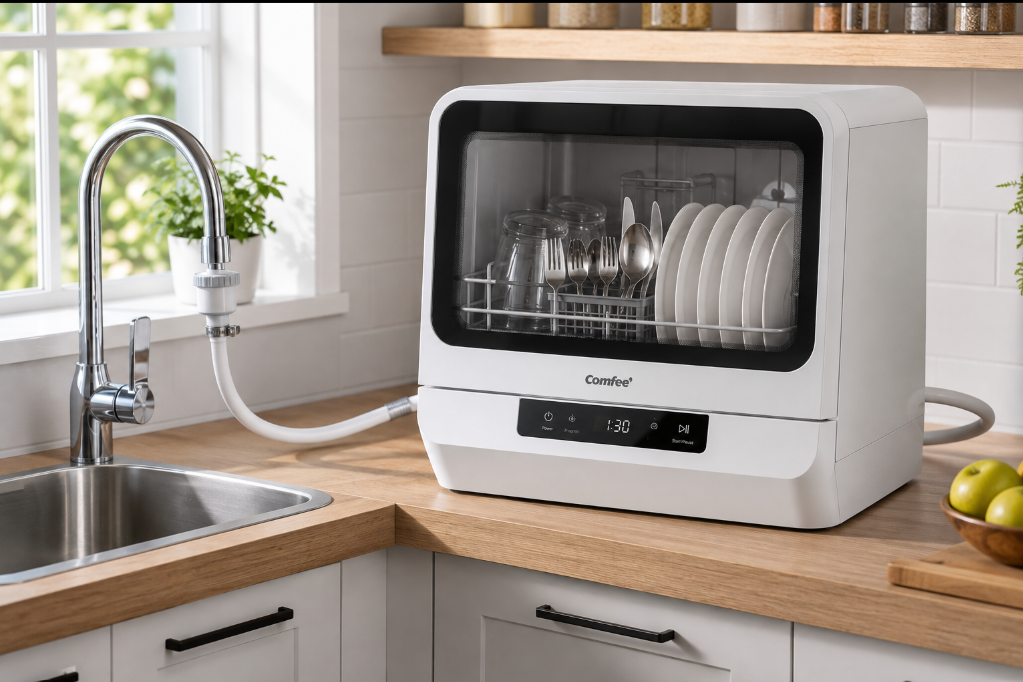
2. Portable Dishwasher
Portable dishwashers are freestanding units that can be moved when needed. They connect to a kitchen faucet during use, making them a practical choice for homes without built-in dishwasher space.
Best For
- Renters
- Small kitchens
- Temporary installations
Advantages
- Easy to move
- No permanent installation
- Good capacity
- Ideal for apartments
.
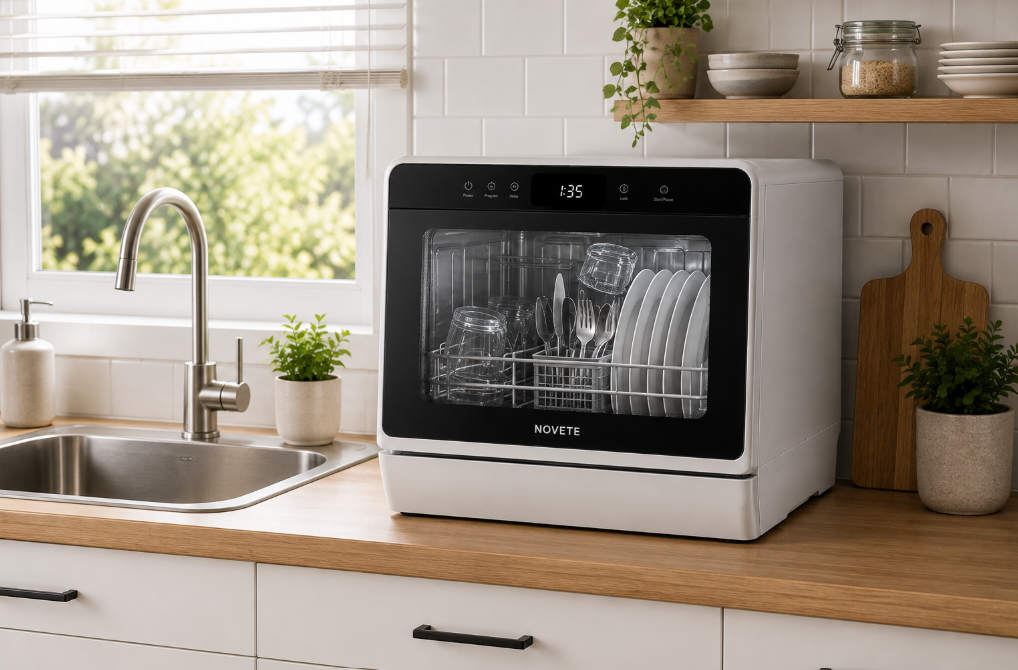
3. Countertop Dishwasher
A countertop dishwasher is a compact model designed to sit on a kitchen counter. It is perfect for individuals, couples or anyone with limited kitchen space.
Best For
- Students
- Small apartments
- Singles or couples
Advantages
- Compact size
- Water-efficient
- Easy installation
- Affordable
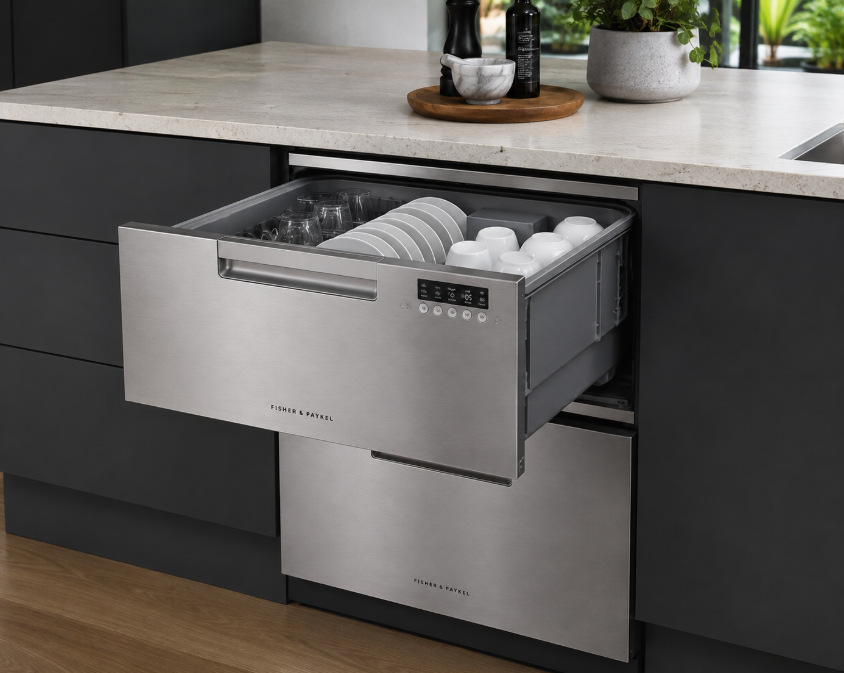
4. Drawer Dishwasher
A drawer dishwasher is designed with one or two pull-out drawers instead of a traditional front-opening door. Each drawer operates independently, allowing you to wash smaller loads without using the entire machine.
This type of dishwasher is ideal for households that don’t always have a full load of dishes but still want the convenience of automatic cleaning.
Best For
- Small families
- Couples
- Modern kitchens
- Energy-conscious users
Advantages
- Wash one drawer while using the other
- Saves water and electricity for small loads
- Modern and stylish appearance
- Easy loading and unloading
5. Integrated Dishwasher
An integrated dishwasher is designed to blend seamlessly with your kitchen cabinets. The front panel matches your cabinetry, making the appliance almost invisible.
Many luxury kitchens use integrated dishwashers to create a clean and uniform appearance.
Best For
- Luxury kitchens
- Modern home designs
- Homeowners who prefer a hidden appliance
Advantages
- Elegant appearance
- Blends perfectly with kitchen cabinets
- Quiet operation
- Premium features

Common Uses of a Dishwasher
Although the name suggests it is only for washing dishes, a dishwasher can safely clean many kitchen items when used according to the manufacturer’s recommendations.
Some of the most common uses include:
Washing Plates and Bowls
Dinner plates, salad plates, soup bowls, and serving dishes can all be cleaned efficiently in a dishwasher.
Cleaning Glasses and Cups
Drinking glasses, mugs, coffee cups, and tea cups are easily washed while reducing the risk of scratches caused by hand washing.
Washing Cutlery
Forks, knives, spoons, and serving utensils can be placed in the cutlery basket or tray for thorough cleaning.
Cleaning Pots and Pans
Many stainless steel pots and pans are dishwasher-safe. However, always check the manufacturer’s instructions before placing cookware inside.
Washing Food Storage Containers
Many BPA-free plastic food containers labeled “dishwasher-safe” can be cleaned on the top rack.
Cleaning Baby Bottles and Accessories
Some baby bottles, bottle parts and feeding accessories can be sanitized safely in a dishwasher using the appropriate cycle.

Advantages of Using a Dishwasher
A dishwasher offers much more than convenience. It improves hygiene, saves time, and helps make daily kitchen cleanup much easier.
1. Saves Time
Instead of standing at the sink washing dishes, simply load the dishwasher, start the cycle and let it do the work while you focus on other tasks.
2. Better Hygiene
Dishwashers use high-temperature water that helps remove grease, food residue, and many germs more effectively than washing with lukewarm water by hand.
3. Water Efficient
Many modern dishwashers use less water than hand washing a full sink of dishes, making them an environmentally friendly option.
4. Energy Efficient
Energy-efficient models are designed to reduce electricity and water consumption while still providing excellent cleaning performance.
5. Protects Your Hands
Frequent hand washing with hot water and detergent can dry or irritate the skin. A dishwasher reduces direct contact with cleaning chemicals.
6. Consistent Cleaning Results
The combination of hot water, detergent and powerful spray arms provides reliable cleaning every time.
7. Ideal for Large Families
Preparing meals for a large family often results in many dirty dishes. A dishwasher handles large loads efficiently, saving both time and effort.

Disadvantages of a Dishwasher
Although dishwashers offer many benefits, there are a few factors to consider before purchasing one.
Initial Purchase Cost
Quality dishwashers can represent a significant investment, especially premium models with advanced features.
Installation Requirements
Built-in dishwashers require plumbing and electrical connections, which may involve professional installation.
Not Everything Is Dishwasher-Safe
Certain items should not be placed in a dishwasher, including:
- Cast iron cookware
- Wooden cutting boards
- Some non-stick pans
- Fine crystal
- Delicate hand-painted dishes
Always check the manufacturer’s care instructions.
Requires Regular Maintenance
Filters, spray arms, and seals should be cleaned regularly to maintain performance and prevent unpleasant odors.
Takes Kitchen Space
Built-in dishwashers require dedicated cabinet space, which may not be available in very small kitchens.

How to Choose the Best Dishwasher
Choosing the right dishwasher depends on your household size, kitchen space, budget, and daily cleaning needs. Modern dishwashers come with a wide range of features, so understanding what matters most can help you make a smart purchase.
1. Choose the Right Size
Dishwashers are available in different sizes.
- Countertop Dishwashers – Ideal for singles, couples, and small apartments.
- Portable Dishwashers – Great for renters or kitchens without permanent installation.
- Built-in Dishwashers – Best for families and modern homes.
- Drawer Dishwashers – Perfect for smaller loads and flexible washing.
2. Consider Capacity
Dishwasher capacity is usually measured in place settings.
- 6–8 place settings: Small households
- 10–12 place settings: Medium families
- 13–16 place settings: Large families
Choose a capacity that matches your daily dishwashing needs.
3. Look for Energy Efficiency
An energy-efficient dishwasher uses less electricity and water, helping reduce utility bills while protecting the environment.
Look for models with recognized energy-efficiency certifications available in your region.
4. Check Available Wash Programs
Different cleaning tasks require different wash cycles. Useful programs include:
- Eco Wash
- Quick Wash
- Heavy Wash
- Intensive Wash
- Glass Care
- Auto Wash
- Sanitize Cycle
Having multiple options allows you to clean everything from delicate glassware to heavily soiled cookware.
5. Noise Level
If your kitchen is open to the living or dining area, choose a quieter dishwasher.
Many modern models operate at 40–50 decibels, making them barely noticeable during operation.
6. Adjustable Racks
Adjustable racks make it easier to wash:
- Large pots
- Tall glasses
- Baking trays
- Mixing bowls
Flexible interiors improve loading convenience.
7. Drying Performance
Some dishwashers include:
- Heated drying
- Condensation drying
- Fan-assisted drying
Efficient drying reduces water spots and leaves dishes ready to use immediately.
8. Set Your Budget
Dishwashers range from affordable basic models to premium smart appliances. Compare features carefully and choose one that offers the best value for your budget.

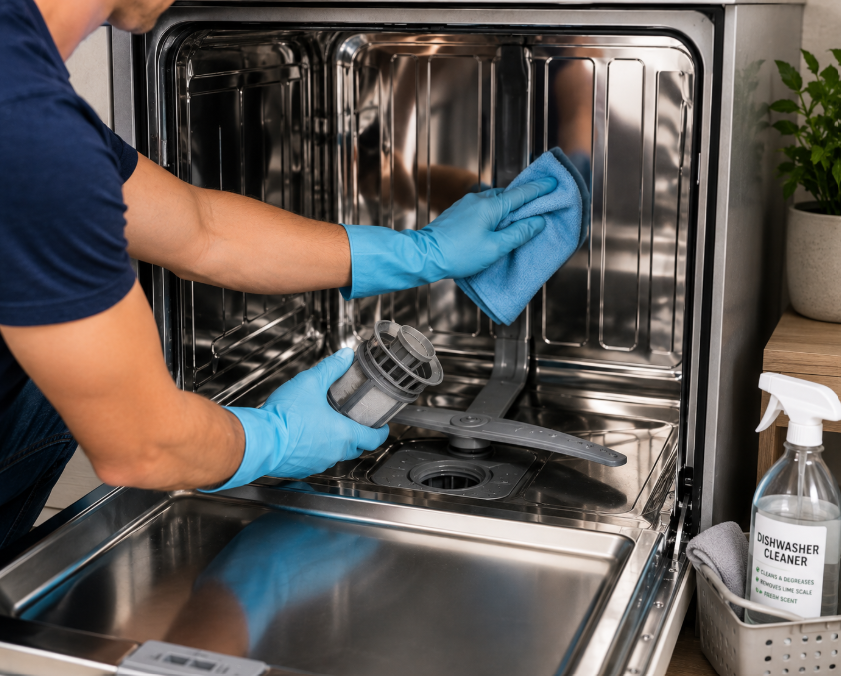
Cleaning and Maintenance Tips
Regular maintenance keeps your dishwasher running efficiently and extends its lifespan.
Clean the Filter Weekly
Food particles can accumulate in the filter over time.
- Remove the filter.
- Rinse it under warm water.
- Use a soft brush if necessary.
- Reinstall it properly.
Clean the Spray Arms
Small food particles or minerals may block the spray arm holes.
Remove the spray arms occasionally and rinse them thoroughly to maintain strong water flow.
Wipe the Door Seal
The rubber gasket around the door should be cleaned regularly with a damp cloth to prevent mold and unpleasant odors.
Run a Cleaning Cycle
Once a month, run an empty dishwasher using a dishwasher cleaner or a cleaner recommended by the manufacturer to remove grease, mineral deposits and odors.
Keep the Exterior Clean
Wipe stainless steel surfaces with a microfiber cloth and a suitable stainless steel cleaner to maintain their appearance.
Safety Tips
Following a few simple safety practices will help keep your dishwasher operating safely and efficiently.
- Read the user manual before first use.
- Load dishes properly to avoid blocking the spray arms.
- Use only dishwasher-specific detergent.
- Keep detergents away from children and pets.
- Be careful when opening the door immediately after a cycle, as hot steam can escape.
- Do not overload the dishwasher.
- Unplug the appliance before performing maintenance if required.
- Inspect the water hose periodically for leaks or damage.

Frequently Asked Questions (FAQs)
What is a dishwasher?
A dishwasher is an electrical kitchen appliance that automatically washes, rinses, and dries dishes, glasses, cutlery and many other kitchen utensils using hot water and detergent.
Is a dishwasher worth buying?
Yes. A dishwasher saves time, reduces manual effort, improves hygiene and can be more water-efficient than washing dishes by hand.
Does a dishwasher save water?
Many modern dishwashers use less water than hand washing a full load of dishes, especially when operated with full loads and eco cycles.
Can I wash pots and pans in a dishwasher?
Many stainless steel pots and pans are dishwasher-safe, but items made from cast iron, wood or certain non-stick coatings should usually be washed by hand. Always follow the manufacturer’s recommendations.
How often should I clean my dishwasher?
Clean the filter weekly, wipe the door seal regularly and run a cleaning cycle about once a month to keep the appliance performing at its best.
How long does a dishwasher cycle take?
Depending on the selected program, a wash cycle usually lasts between 30 minutes and 3 hours.
Conclusion
A dishwasher is one of the most practical kitchen appliances for modern homes. It simplifies one of the most time-consuming household chores by automatically washing, rinsing and drying your dishes with minimal effort.
Now that you understand what a dishwasher is, how it works, the different types available, their benefits, limitations and the key features to consider, you’re in a better position to choose a model that suits your home and lifestyle.
Whether you need a compact countertop unit for a small apartment or a large built-in dishwasher for a busy family kitchen, investing in the right dishwasher can save you time, improve kitchen hygiene and make everyday cleanup much easier.
Also Read:
The U.S. Food & Drug Administration (FDA) also recommends safe food handling and proper cleaning of kitchen equipment.