

Introduction
Microwave ovens have become one of the most essential kitchen appliances in modern homes. Whether you need to reheat leftovers, prepare frozen meals or cook vegetables in just a few minutes, a microwave oven makes cooking faster, easier and more convenient.
In this complete beginner’s guide, you’ll learn everything you need to know about microwave ovens, including how they work, their advantages and disadvantages, different types, safety tips, maintenance and how to choose the best model for your kitchen.

What Is a Microwave Oven?
A microwave oven is an electric kitchen appliance that cooks, reheats and defrosts food using microwave radiation. Unlike traditional ovens that transfer heat from the outside inward, microwave ovens generate electromagnetic waves that cause water molecules inside food to vibrate rapidly. These vibrations create heat, warming the food evenly and much faster than conventional cooking methods.
Modern microwave ovens also include advanced features such as automatic cooking programs, inverter technology, grilling functions, convection baking, child safety locks and sensor cooking. These features allow users to prepare a wider variety of meals with greater convenience and precision.
How Does a Microwave Oven Work?
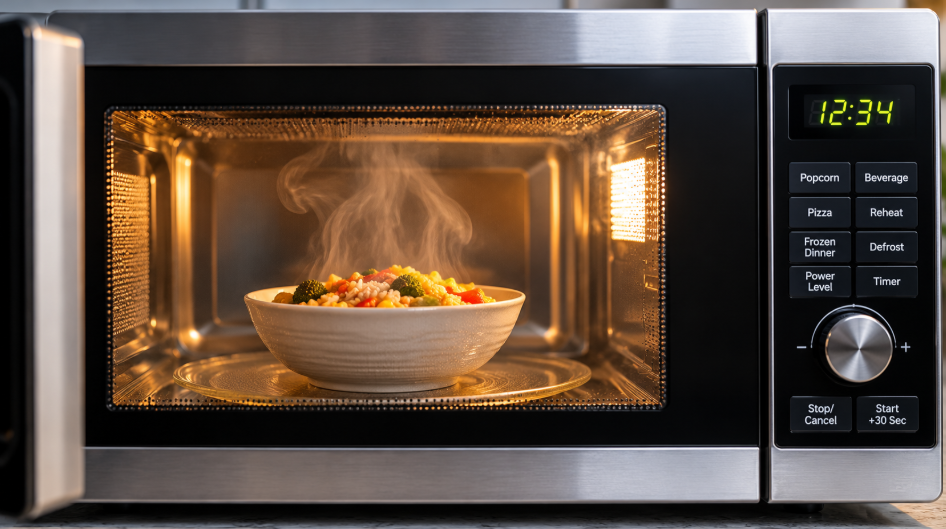
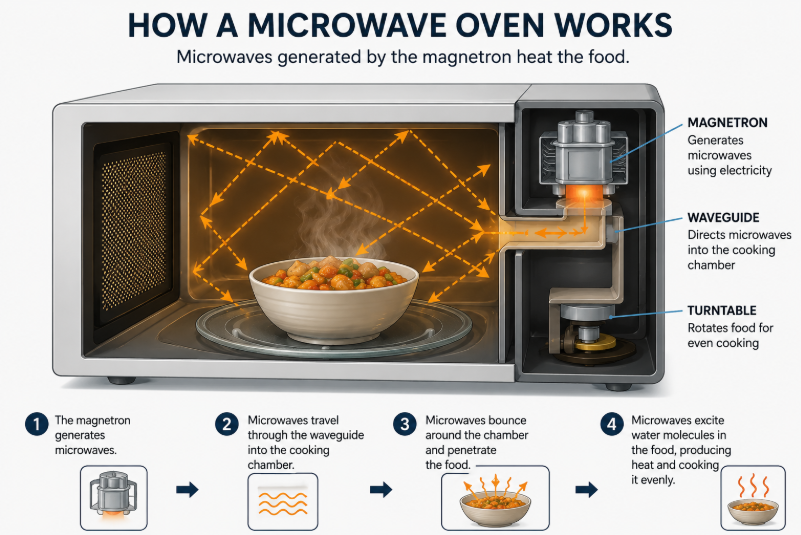
A microwave oven works by producing microwave radiation, a safe form of non-ionizing electromagnetic energy. Inside the oven is a component called a magnetron, which generates these microwaves.
When you start the microwave, the magnetron sends microwave energy into the cooking chamber. These waves bounce around inside the metal walls and are absorbed by food, especially by water, fat and sugar molecules. As these molecules vibrate rapidly, they create heat, which cooks or reheats the food.
Main Components of a Microwave Oven
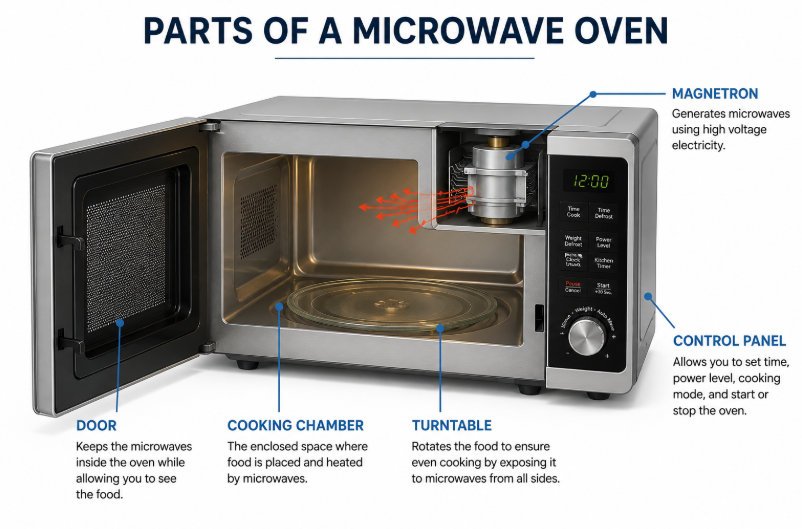
Although microwave ovens come in different designs, they all contain several essential components that work together to heat food efficiently.
1. Magnetron
The magnetron is the heart of the microwave oven. It generates microwave energy that heats the food.
2. Cooking Chamber
This is the metal interior where food is placed. The metal walls reflect microwaves, helping distribute the energy throughout the chamber.
3. Turntable
Most microwave ovens include a rotating glass turntable. It slowly rotates the food during cooking to improve heating uniformity.
4. Control Panel
The control panel allows users to set cooking time, power level, cooking modes and automatic programs.
5. Door and Safety Lock
Microwave ovens are equipped with safety interlock switches that immediately stop microwave production when the door is opened, preventing microwave exposure.
Types of Microwave Ovens
Microwave ovens are available in several types, each designed for different cooking needs and kitchen layouts.
1. Countertop Microwave
Countertop microwaves are the most common and affordable type. They simply sit on the kitchen counter and are easy to install without any modifications.
Best for: Most households and beginners.

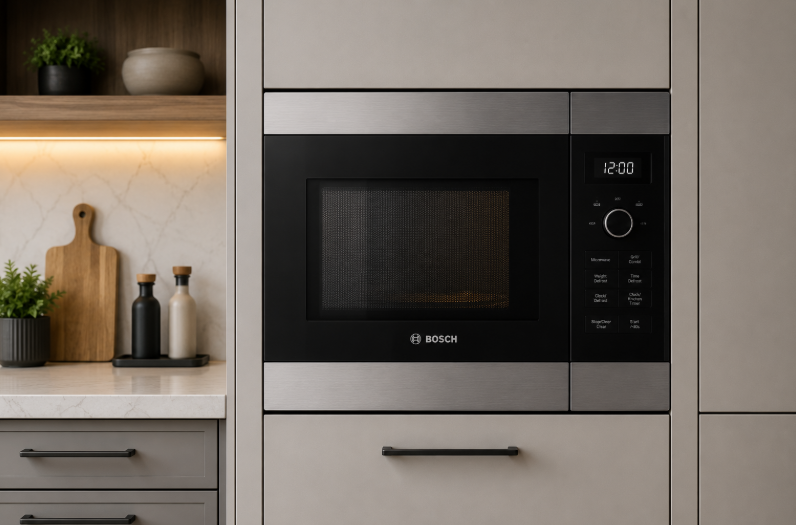
2. Built-In Microwave
Built-in microwave ovens are installed directly into kitchen cabinets, creating a clean and modern appearance. They save counter space but usually require professional installation.
Best for: Modern kitchens with custom cabinetry.
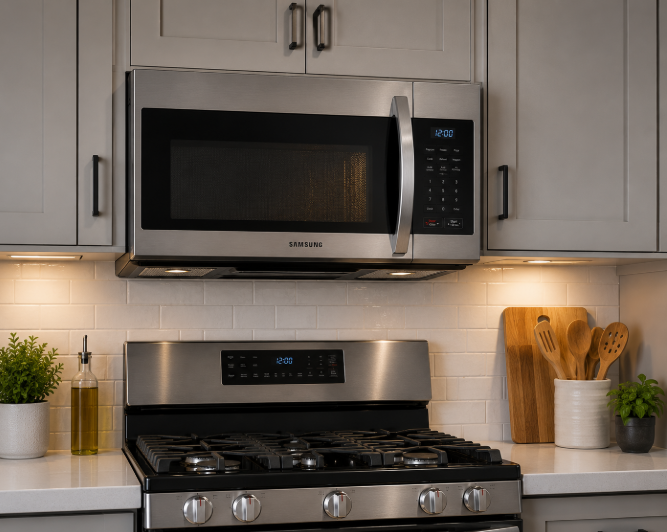
3. Over-the-Range Microwave
These microwave ovens are installed above the cooking range. Besides heating food, they often include an exhaust fan and lighting for the stovetop.
Best for: Small kitchens where space is limited.
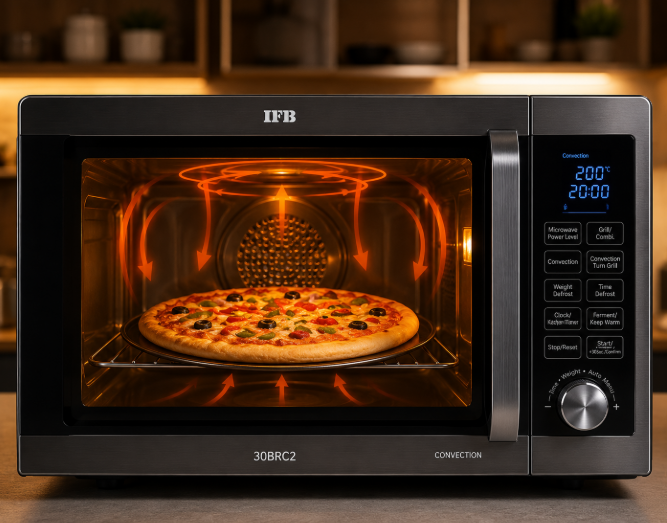
4. Convection Microwave
Convection microwave ovens combine standard microwave heating with convection cooking. This allows them to bake, roast, grill and brown food in addition to regular microwave functions.
Although they cost more than standard models, they offer much greater versatility.
Best for: Families who want both microwave and oven functions in one appliance.
Advantages of a Microwave Oven
Microwave ovens have become a must-have appliance in modern kitchens because they make cooking faster, easier and more convenient. Here are some of the biggest advantages of using a microwave oven.
1. Saves Time
One of the biggest benefits of a microwave oven is its speed. It can reheat leftovers, cook frozen meals and prepare snacks in just a few minutes, making it perfect for busy individuals and families.
2. Energy Efficient
Microwave ovens generally consume less energy than conventional ovens because they cook food much faster. This can help reduce electricity usage, especially when preparing small meals.
3. Easy to Use
Modern microwave ovens come with simple controls, digital displays, preset cooking programs, and automatic timers. Even beginners can learn to operate them with ease.
4. Preserves Food Moisture
Because microwave cooking is fast, many foods retain their natural moisture better than with longer cooking methods. Vegetables, for example, often stay tender and flavorful when cooked properly.
5. Multiple Cooking Functions
Many modern microwave ovens offer additional functions such as:
- Grilling
- Baking
- Roasting
- Defrosting
- Auto cooking programs
- Sensor cooking
This makes them much more versatile than older microwave models.

Disadvantages of a Microwave Oven
Although microwave ovens are very useful, they also have some limitations that buyers should consider.
1. Uneven Heating
Sometimes food heats unevenly, especially thick meals or large portions. Stirring food during cooking usually helps solve this problem.
2. Cannot Produce Crispy Texture
Standard microwave ovens cannot brown or crisp food the way conventional ovens or air fryers can.
Foods like pizza crusts, fried chicken and baked cookies usually taste better when cooked in a traditional oven or an air fryer.
3. Metal Cannot Be Used
Metal utensils, aluminum foil, and certain containers should never be placed inside a microwave oven because they can create sparks and damage the appliance.
Always use microwave-safe containers made of glass, ceramic, or microwave-safe plastic.
4. Limited Cooking Capacity
Most household microwave ovens have limited interior space, making it difficult to cook large dishes or meals for many people at once.
5. Not Suitable for Every Recipe
Although microwave ovens are excellent for reheating and quick cooking, they are not ideal for every type of meal. Traditional baking and roasting still require conventional or convection ovens for the best results.
Common Uses of a Microwave Oven
Microwave ovens are used every day for many different kitchen tasks.
Some of the most common uses include:
- Reheating leftovers
- Cooking frozen meals
- Defrosting frozen meat
- Making popcorn
- Heating milk or beverages
- Steaming vegetables
- Melting butter or chocolate
- Preparing instant noodles or oatmeal
Because of their versatility, microwave ovens are one of the most frequently used appliances in modern kitchens.

Safety Tips for Using a Microwave Oven
Using a microwave oven safely helps prevent accidents and extends the appliance’s lifespan.
Follow these important safety tips:
- Always use microwave-safe containers.
- Never place metal utensils or aluminum foil inside the microwave.
- Do not operate the microwave when it is empty.
- Stir food halfway through cooking to ensure even heating.
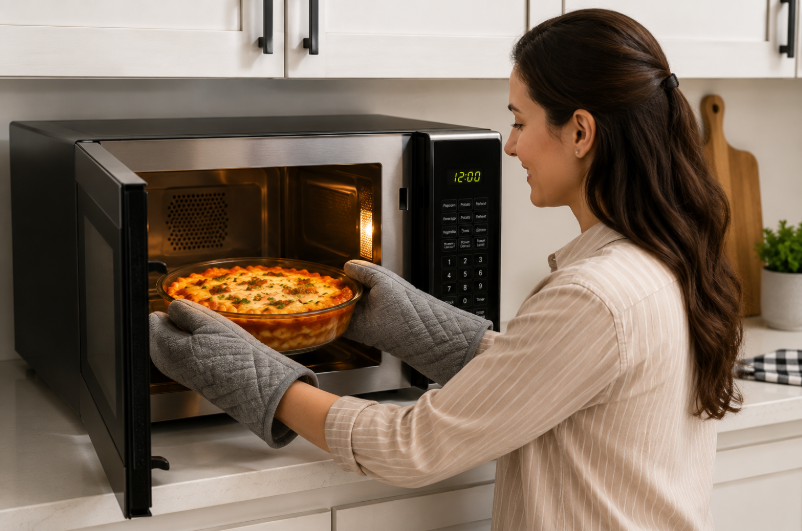
- Be careful when removing hot containers, as steam can cause burns.
- Clean food spills regularly to prevent unpleasant odors and maintain performance.
- Keep the appliance out of reach of small children unless they are supervised.
How to Choose the Best Microwave Oven
Choosing the right microwave oven depends on your cooking habits, kitchen space and budget. Here are the most important factors to consider before making a purchase.
1. Capacity
Microwave oven capacity is measured in liters (L) or cubic feet.
- 20–25 L: Ideal for individuals or couples.
- 25–30 L: Suitable for small families.
- 30 L or more: Best for large families or frequent cooking.
2. Power
Microwave power is measured in watts (W).
- 700–900 W: Basic reheating and simple cooking.
- 900–1200 W: Faster and more efficient cooking.
- 1200 W+: Suitable for larger meals and advanced cooking.
Higher wattage usually means faster cooking.
3. Type of Microwave
Choose the type that best fits your kitchen:
- Countertop
- Built-in
- Over-the-range
- Convection
Each has its own advantages depending on available space and cooking needs.
4. Cooking Features
Useful features include:
- Auto cooking menus
- Defrost function
- Child safety lock
- Sensor cooking
- Grill mode
- Convection mode
- Inverter technology
These features can make cooking easier and more versatile.
5. Budget
Microwave ovens are available at different price points.
Basic models are affordable and suitable for everyday reheating, while premium models include advanced cooking technologies and larger capacities.
Choose a model that meets your needs without paying for features you may never use.
Cleaning and Maintenance
Proper maintenance helps your microwave oven last longer and perform efficiently.
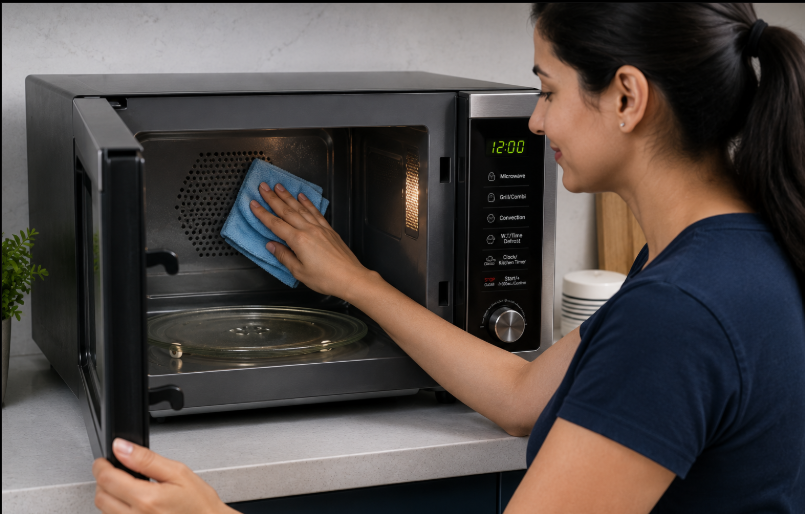
Clean Regularly
Wipe the interior after each use using a soft cloth and mild detergent to prevent food buildup.
Remove Food Odors
Heat a bowl of water with lemon slices for a few minutes. The steam loosens stains and helps eliminate odors.
Keep the Turntable Clean
Wash the glass turntable regularly using warm, soapy water.
Inspect the Door Seal
Check that the door closes properly and the seal is clean and undamaged.
Avoid Harsh Chemicals
Do not use abrasive cleaners or metal scrubbers, as they can damage the interior.
Frequently Asked Questions (FAQs)
Can a microwave oven cook food completely?
Yes. Most microwave ovens can fully cook many foods such as vegetables, rice, potatoes, pasta, soups and frozen meals. Convection microwave ovens can also bake and roast.
Is microwave cooking safe?
Yes. Microwave ovens are considered safe when used according to the manufacturer’s instructions. They use non-ionizing radiation, which does not make food radioactive.
Can metal be used in a microwave?
No. Metal utensils, aluminum foil, and stainless steel containers should generally not be used unless the manufacturer specifically states otherwise.
What foods should not be microwaved?
Avoid heating eggs in their shells, sealed containers, and foods wrapped in aluminum foil. These can burst or create sparks.
How long does a microwave oven last?
With proper care and maintenance, most microwave ovens last 7–10 years, depending on usage and build quality.

Conclusion
A microwave oven is one of the most practical and time-saving appliances for modern kitchens. Whether you need to reheat leftovers, prepare quick meals or defrost frozen food, it offers convenience, speed and ease of use.
By understanding how microwave ovens work, their different types, key features and proper maintenance, you can confidently choose a model that suits your cooking needs and budget.
If you’re planning to buy your first microwave oven, take time to compare different models, consider the features you need most and always follow safe cooking practices. A well-chosen microwave oven can make everyday meal preparation faster, easier and more enjoyable.

Also Read:
The U.S. Food & Drug Administration (FDA) also recommends safe food handling and proper cleaning of kitchen equipment.
For Addittion food safety guidance visit: Food Safety Gov