

Introduction
Cooking rice on a stovetop often requires constant attention to prevent it from burning, boiling over or becoming undercooked. A rice cooker solves these problems by automatically controlling the cooking temperature and time, allowing you to prepare perfectly cooked rice with minimal effort. Whether you’re making white rice, brown rice, jasmine rice or basmati rice, a rice cooker delivers consistent results every time.
Modern rice cookers are much more than simple rice-making appliances. Many models can steam vegetables, prepare soups, cook oatmeal, make porridge and even bake certain dishes, making them a versatile addition to any kitchen. Their ease of use and automatic Keep Warm function make them especially popular with busy families, students and anyone who wants convenient meal preparation.
In this guide, you’ll learn what a rice cooker is, how it works, the different types available, their advantages and disadvantages, maintenance tips and how to choose the best rice cooker for your kitchen.
What Is a Rice Cooker?
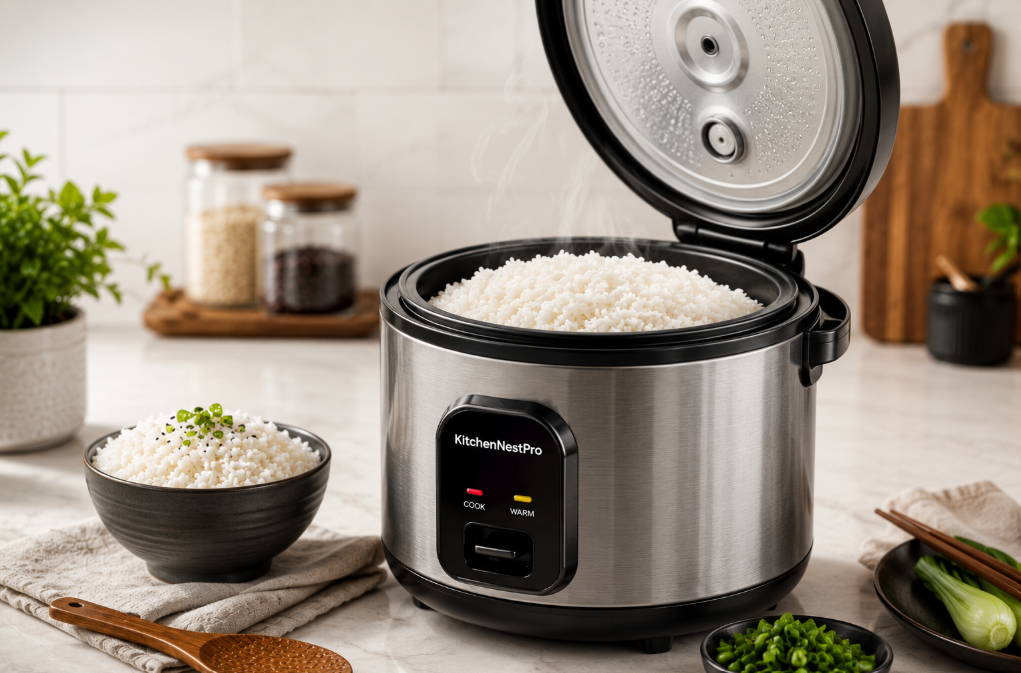
A rice cooker is an electric kitchen appliance specifically designed to cook rice automatically. It uses a built-in heating element and temperature sensor to cook rice evenly and then switches to a Keep Warm mode once the rice is ready.
Unlike traditional stovetop cooking, a rice cooker eliminates the need to monitor the cooking process. Simply add the correct amount of rice and water, press the cooking button and let the appliance do the rest.
Rice cookers are available in different sizes and technologies, ranging from basic one-touch models to advanced smart cookers with multiple cooking programs. Some models can prepare several types of rice and other dishes with a single appliance.
Today, rice cookers are commonly used in:
- Homes
- Apartments
- Student dormitories
- Restaurants
- Hotels
- Catering businesses
Because they are easy to use and provide consistent results, rice cookers have become one of the most popular small kitchen appliances worldwide.
How Does a Rice Cooker Work?
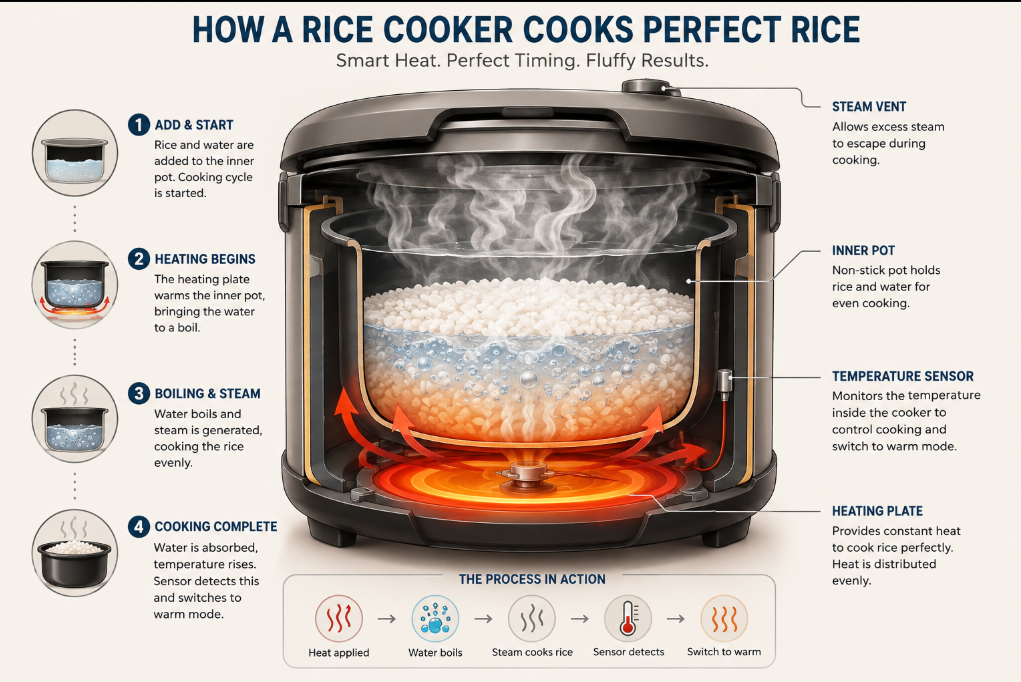
A rice cooker may seem simple, but it uses an intelligent heating system to cook rice efficiently and automatically.
The cooking process starts when you place washed rice and the recommended amount of water into the inner cooking pot. Once you press the Cook button, the heating plate underneath the pot begins transferring heat evenly.
As the water heats up, it gradually reaches the boiling point. The rice absorbs the water while becoming soft and fluffy. During this stage, the cooker maintains the correct cooking temperature automatically.
When nearly all the water has been absorbed or evaporated, the temperature inside the pot begins to rise above the boiling point. The rice cooker’s temperature sensor detects this change and automatically switches from Cook mode to Keep Warm mode.
This feature keeps the rice warm for hours without continuing to cook it, helping maintain its texture and flavor until you’re ready to serve.
This automatic process prevents common problems such as:
- Overcooked rice
- Burnt rice
- Undercooked rice
- Constant monitoring during cooking
As a result, rice cookers are convenient even for people with little cooking experience.
Main Parts of a Rice Cooker
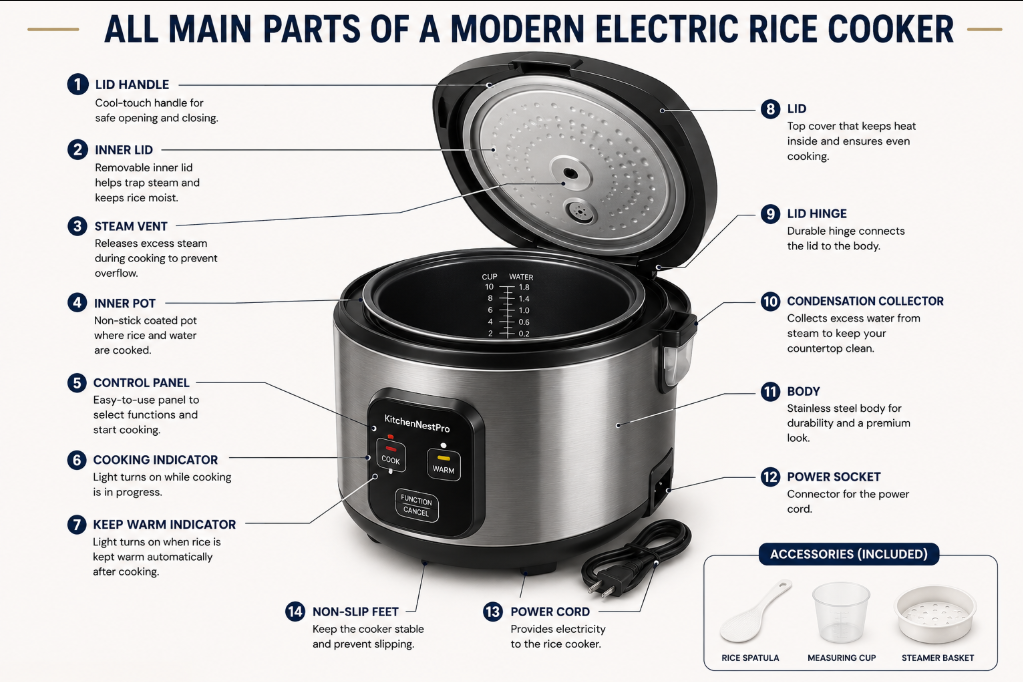
Understanding the main components of a rice cooker helps you use and maintain it properly.
1. Inner Cooking Pot
The inner pot holds the rice and water during cooking. Most modern rice cookers include a removable non-stick pot that is easy to clean.
2. Heating Plate
Located at the bottom of the appliance, the heating plate generates heat and transfers it directly to the cooking pot.
3. Temperature Sensor
The built-in temperature sensor monitors the cooking process and automatically changes from Cook mode to Keep Warm when the rice is finished.
4. Lid
The lid traps steam inside the cooker, helping the rice cook evenly while retaining moisture.
5. Steam Vent
The steam vent safely releases excess steam during cooking to prevent excessive pressure buildup.
6. Control Panel
Modern rice cookers include simple buttons or digital touch controls for selecting cooking programs and timers.
7. Keep Warm Function
One of the most useful features, the Keep Warm mode maintains the ideal serving temperature without drying out the rice.
8. Measuring Cup and Rice Paddle
Most rice cookers include a measuring cup for accurate rice portions and a rice paddle for serving without damaging the non-stick coating.
Types of Rice Cookers
Rice cookers come in several designs, each offering different features and cooking technologies. Choosing the right type depends on your cooking habits, budget and the variety of meals you prepare.
1. Basic Rice Cooker
A basic rice cooker is the most common and affordable type. It usually features a one-touch operation with Cook and Keep Warm functions.
Simply add rice and water, press the button and the cooker automatically switches to Keep Warm once the rice is ready.
Best For
- Beginners
- Students
- Small families
- Daily rice cooking
Advantages
- Affordable price
- Easy to operate
- Reliable performance
- Low maintenance

2. Micom (Microcomputer) Rice Cooker
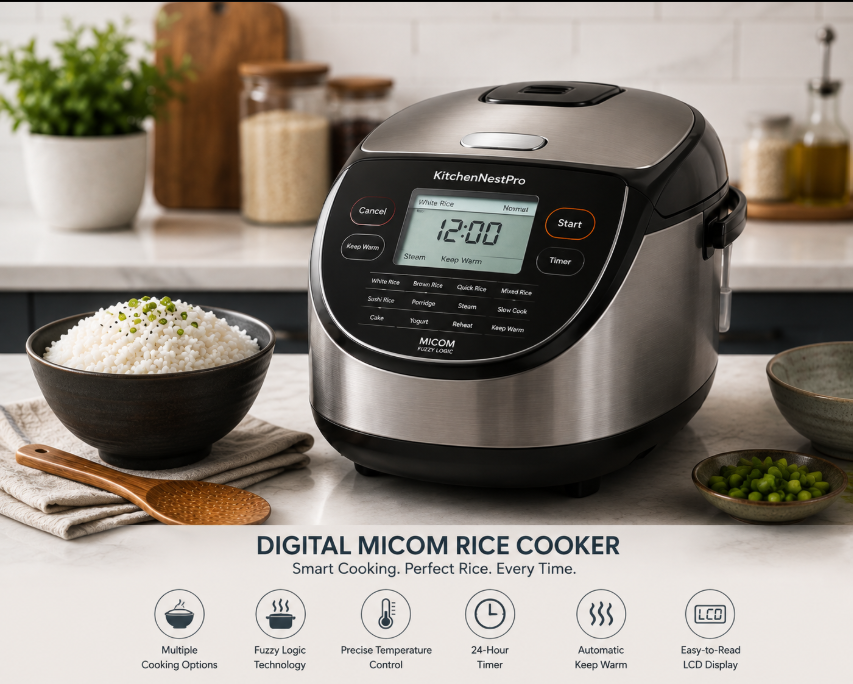
A Micom rice cooker uses a built-in microcomputer to automatically adjust cooking temperature and time based on the type of rice being prepared.
These cookers usually include multiple cooking programs for:
- White rice
- Brown rice
- Jasmine rice
- Sushi rice
- Porridge
- Steam cooking
Advantages
- More precise cooking
- Better texture
- Multiple cooking modes
- Easy digital controls
Best For
- Families
- Frequent home cooks
- People who prepare different rice varieties
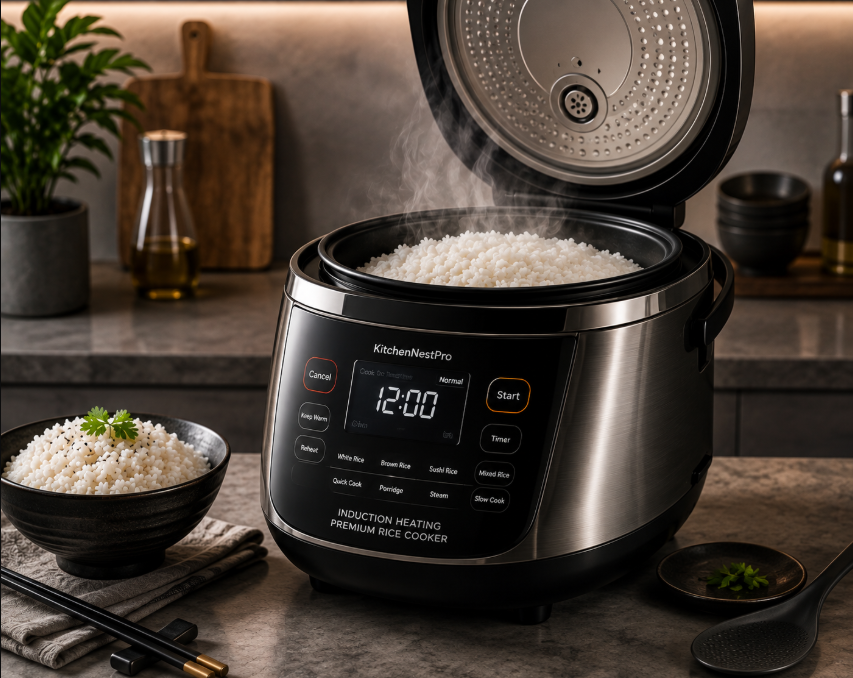
3. Induction Heating (IH) Rice Cooker
An Induction Heating (IH) rice cooker uses electromagnetic induction instead of a traditional heating plate. This technology heats the entire inner cooking pot evenly, resulting in better heat distribution and improved rice texture.
IH rice cookers are often considered premium appliances because they produce consistently fluffy, evenly cooked rice.
Advantages
- Even heating
- Superior rice quality
- Precise temperature control
- Energy efficient
Best For
- Rice enthusiasts
- Large families
- Premium home kitchens
4. Pressure Rice Cooker
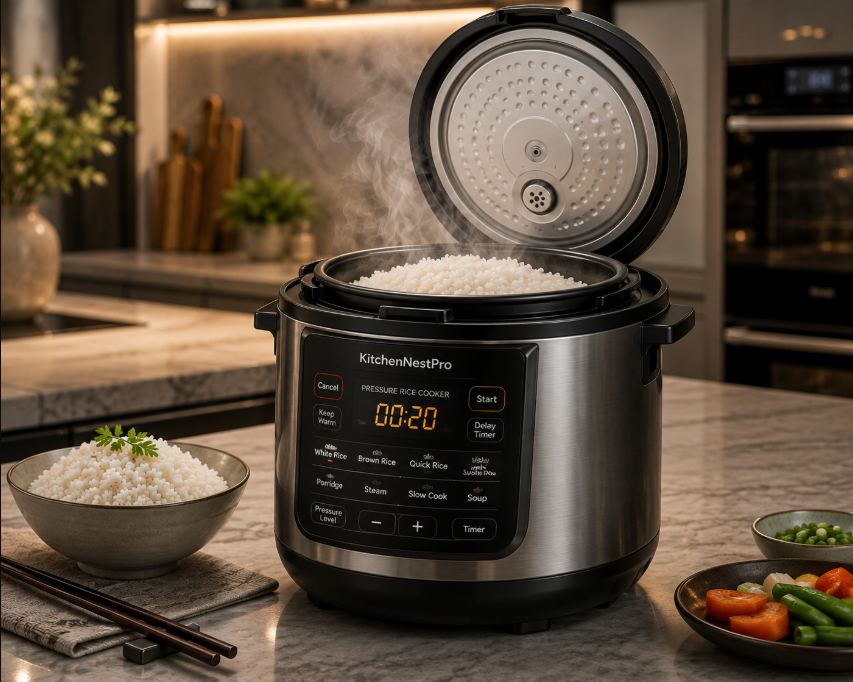
A pressure rice cooker combines pressure cooking with automatic temperature control to cook rice faster while preserving moisture and flavor.
Pressure cooking allows the rice to absorb water more effectively, producing soft, fluffy grains with excellent texture.
Many premium models can also prepare soups, stews, beans, and slow-cooked meals.
Advantages
- Faster cooking
- Better texture
- Locks in flavor
- Multi-purpose appliance
Best For
- Busy households
- Advanced home cooks
- Families preparing multiple dishes
5. Commercial Rice Cooker
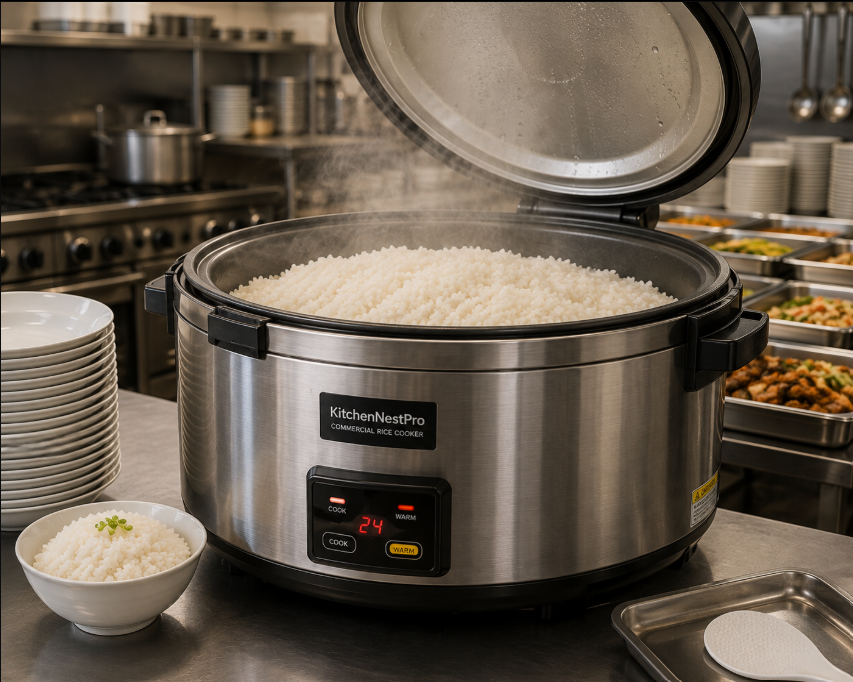
A commercial rice cooker is designed for restaurants, hotels, catering services and large kitchens where significant quantities of rice are prepared daily.
These models feature large capacities, durable construction and powerful heating systems for continuous use.
Advantages
- Large capacity
- Durable construction
- Fast cooking
- Suitable for heavy daily use
Best For
- Restaurants
- Hotels
- Catering businesses
- Cafeterias
Common Uses of a Rice Cooker
Although its primary purpose is cooking rice, a modern rice cooker can prepare many different meals.
Cooking White Rice
The most common use is preparing perfectly fluffy white rice with minimal effort.
Cooking Brown Rice
Many modern rice cookers include a dedicated brown rice program that automatically adjusts cooking time.
Cooking Basmati and Jasmine Rice
Rice cookers produce evenly cooked aromatic rice varieties while maintaining their texture and fragrance.
Steaming Vegetables
Many models include a steaming basket, allowing vegetables like broccoli, carrots, beans and corn to cook while the rice is prepared below.
Making Oatmeal and Porridge
Rice cookers can prepare warm breakfasts such as oatmeal and rice porridge without constant stirring.
Cooking Quinoa
Quinoa cooks evenly in a rice cooker using a process similar to rice preparation.
Preparing Soup
Some advanced rice cookers can gently simmer soups and broths using specialized cooking programs.
Cooking Small One-Pot Meals
Certain models can prepare simple meals by combining rice with vegetables, chicken or seasonings, making meal preparation more convenient.

Advantages of Using a Rice Cooker
A rice cooker offers several benefits that make it one of the most practical kitchen appliances for everyday cooking.
Perfectly Cooked Rice
Automatic temperature control ensures consistently fluffy and evenly cooked rice every time.
Saves Time
Once cooking begins, you don’t need to monitor the pot, allowing you to focus on preparing other dishes.
Easy to Use
Most rice cookers require only measuring the rice and water before pressing a single button.
Automatic Keep Warm Function
The appliance automatically keeps the rice warm without overcooking it, making it ready to serve whenever needed.
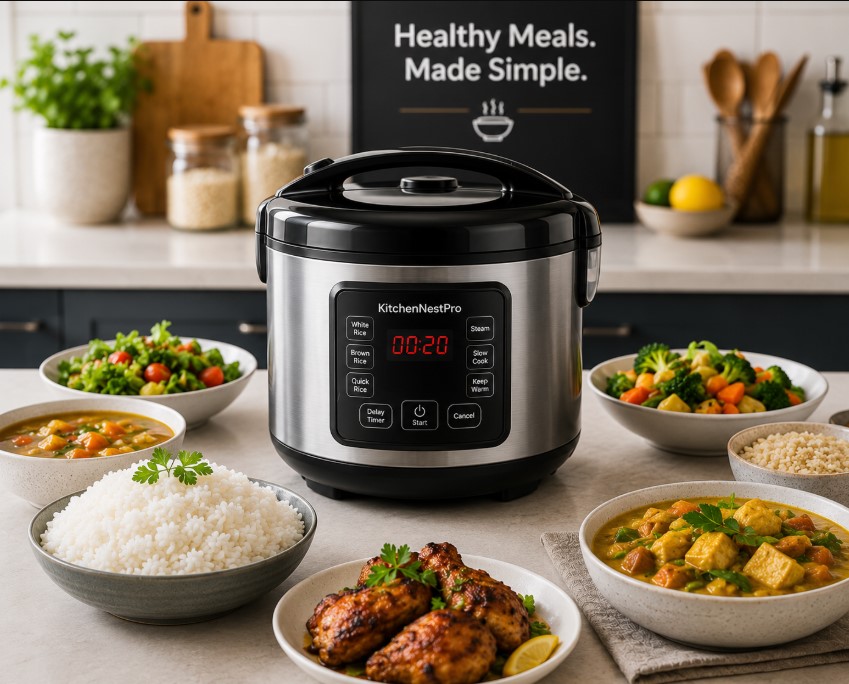
Multi-Purpose Cooking
Modern rice cookers can prepare more than just rice, increasing their value in the kitchen.
Disadvantages of a Rice Cooker
Although rice cookers are highly convenient, they also have a few limitations that buyers should consider before purchasing one.
1. Takes Up Counter Space
Even compact rice cookers require dedicated storage or countertop space. This can be a concern for people with small kitchens or limited cabinet storage.
2. Premium Models Can Be Expensive
Basic rice cookers are affordable, but advanced models with induction heating, pressure cooking and smart features often come at a much higher price.
3. Limited Cooking Capacity
Every rice cooker has a maximum capacity. Overfilling the pot may result in uneven cooking, water spilling over or reduced performance.
4. Requires Electricity
Unlike cooking rice on a gas stove, an electric rice cooker needs a power source, making it unsuitable during power outages.
5. Longer Cooking Time for Some Recipes
Although rice cookers are convenient, certain dishes such as brown rice or porridge may take longer to cook compared to pressure cooking methods.

How to Choose the Best Rice Cooker
Selecting the right rice cooker depends on your household size, cooking habits and budget. Here are the most important features to consider before buying.
1. Capacity
Choose a rice cooker based on the number of people you cook for.
- 1–3 Cups: Ideal for singles or couples.
- 4–6 Cups: Suitable for small families.
- 8–10 Cups: Best for large families.
- 10+ Cups: Recommended for restaurants and commercial kitchens.
Buying the right capacity helps reduce food waste and improves cooking efficiency.
2. Cooking Technology
Different rice cookers use different cooking methods.
- Basic Rice Cooker: Affordable and easy to use.
- Micom Rice Cooker: Smart temperature control for better results.
- Induction Heating (IH): Even heating and superior rice quality.
- Pressure Rice Cooker: Faster cooking with excellent texture.
Choose the technology that best fits your cooking needs and budget.
3. Keep Warm Function
A good rice cooker should automatically switch to Keep Warm mode after cooking. This feature keeps rice fresh and ready to serve without drying it out.
4. Timer and Preset Programs
Many modern rice cookers include programmable timers and preset cooking modes for:
- White rice
- Brown rice
- Sushi rice
- Porridge
- Steam cooking
- Slow cooking
These programs make meal preparation easier and more convenient.
5. Non-Stick Inner Pot
A removable non-stick cooking pot is easier to clean and prevents rice from sticking to the surface.
Look for durable, scratch-resistant coatings for longer-lasting performance.
6. Ease of Cleaning
Choose a model with:
- Removable inner pot
- Detachable lid (if available)
- Dishwasher-safe accessories
Easy cleaning helps maintain hygiene and extends the appliance’s lifespan.
7. Build Quality
A high-quality rice cooker should have:
- Durable exterior
- Strong handles
- Secure lid
- Reliable heating system
- Stable base
A well-built appliance provides better performance and lasts longer.
8. Budget and Warranty
Compare features within your budget and select a model that includes a manufacturer’s warranty and dependable customer support.

Cleaning and Maintenance Tips
Regular cleaning helps your rice cooker perform efficiently and keeps your food safe.
Clean the Inner Pot After Every Use
Wash the removable cooking pot with warm water, mild dish soap and a soft sponge. Avoid abrasive scrubbers that may damage the non-stick coating.
Wipe the Heating Plate
Food particles or water droplets on the heating plate can affect cooking performance. Always wipe it gently with a soft, dry cloth after the appliance has cooled.
Clean the Lid
Steam and starch can build up on the inside of the lid. Clean it after every use to prevent unpleasant odors and maintain hygiene.
Empty the Condensation Collector
Some rice cookers include a small condensation container that collects excess moisture. Empty and wash it regularly.
Dry All Parts Before Reassembly
Allow every component to dry completely before putting the rice cooker back together to help prevent mold and unpleasant smells.
Store Properly
Store the appliance in a clean, dry place with the lid slightly open if it will not be used for an extended period. This helps prevent moisture buildup inside the cooker.

Safety Tips for Using a Rice Cooker
Using a rice cooker correctly not only improves cooking results but also extends the appliance’s lifespan and helps prevent accidents. Follow these simple safety tips whenever you use your rice cooker.
1. Read the User Manual
Before using your rice cooker for the first time, read the manufacturer’s instructions carefully. Different models may have unique features and operating methods.
2. Place It on a Flat Surface
Always place the rice cooker on a stable, heat-resistant and level countertop. This helps prevent tipping or accidental spills during cooking.
3. Never Immerse the Main Unit in Water
Only the removable inner pot and accessories should be washed with water. Never place the electrical base in water, as it can damage the appliance and create an electrical hazard.
4. Avoid Overfilling
Do not exceed the maximum fill line inside the cooking pot. Overfilling can cause boiling water or foam to overflow during cooking.
5. Be Careful with Hot Steam
Steam escaping from the steam vent can be extremely hot. Always open the lid carefully and keep your hands and face away from the steam.
6. Unplug After Use
After cooking is complete, unplug the rice cooker if you do not plan to use the Keep Warm function for an extended period.
7. Keep Away from Children
Place the rice cooker where children cannot accidentally touch the hot surface or pull the power cord.
8. Use Original Accessories
Always use the measuring cup, rice paddle and accessories provided by the manufacturer to avoid damaging the non-stick coating.

Frequently Asked Questions (FAQs)
What is a rice cooker?
A rice cooker is an electric kitchen appliance that automatically cooks rice by controlling temperature and cooking time. Most models also include a Keep Warm function to maintain serving temperature.
How does a rice cooker work?
A rice cooker heats water and rice until the water is absorbed or evaporates. A built-in temperature sensor detects when cooking is complete and automatically switches to Keep Warm mode.
Can I cook brown rice in a rice cooker?
Yes. Most modern rice cookers include a dedicated Brown Rice setting or can cook brown rice by using the correct water ratio and cooking time.
Can a rice cooker steam vegetables?
Yes. Many rice cookers include a steaming basket that allows you to steam vegetables, fish and other foods while cooking rice.
Can I cook foods other than rice?
Yes. Depending on the model, many rice cookers can prepare oatmeal, quinoa, soup, porridge and simple one-pot meals.
Is a rice cooker worth buying?
Yes. A rice cooker saves time, cooks rice consistently, reduces the risk of burning and can prepare multiple dishes, making it a valuable kitchen appliance for many households.
How long does a rice cooker last?
With proper cleaning and maintenance, a quality rice cooker can last 8–10 years or even longer, depending on the brand, build quality and frequency of use.
Conclusion
A rice cooker is one of the most convenient and reliable kitchen appliances for preparing perfectly cooked rice with minimal effort. Its automatic cooking process, Keep Warm function and user-friendly design make it an excellent choice for beginners, busy families and experienced home cooks alike.
Modern rice cookers offer much more than simply cooking rice. From steaming vegetables and preparing oatmeal to making soups and one-pot meals, they provide versatility that saves both time and effort in the kitchen.
Now that you understand what a rice cooker is, how it works, the different types available, their advantages, limitations and the key features to consider, you can confidently choose the right model for your cooking needs and budget.
Whether you’re preparing a simple family dinner or cooking large batches for gatherings, a quality rice cooker can make meal preparation easier, faster and more consistent.
Also Read:
The U.S. Food & Drug Administration (FDA) also recommends safe food handling and proper cleaning of kitchen equipment.