

Introduction
Finding a reliable blender does not always mean spending hundreds of dollars. For smoothies, protein shakes, sauces, dips, frozen drinks, and everyday food preparation, there are several affordable models that can deliver useful performance without taking over your kitchen budget. The challenge is knowing which features actually matter when comparing motors, pitcher sizes, controls, blades, cleaning and overall convenience.
In this guide, we compare 7 of the best blenders under $100 and explain what each one does best. We also look at the differences between personal and full-size blenders, how much motor power you really need, which features are worth paying for and the common mistakes to avoid when buying a budget blender.
What Should You Look for in a Blender Under $100?
Before choosing a blender, it helps to understand that the most expensive-looking feature is not necessarily the most useful one. A blender with a very high advertised wattage may not automatically produce better results than a model with a lower rating. Pitcher design, blade arrangement, speed control, ingredient volume and how the motor handles the workload all affect everyday performance.
Your first decision should be what you actually plan to blend. Someone making one smoothie every morning has very different requirements from a family preparing large batches of smoothies, sauces or frozen drinks. A compact personal blender can save counter space and make cleanup easier, while a full-size model is generally more practical for several servings.
Motor Power
Motor power is one of the first specifications shoppers notice. Models in the under-$100 range can vary considerably, but wattage should be treated as one part of the buying decision rather than the only measure of performance.
For basic smoothies and shakes, a modest personal blender can be perfectly adequate. For frozen fruit, ice, fibrous vegetables or larger quantities, a stronger motor and a well-designed blending jar can be more useful.
Capacity
Think about how many servings you normally make.
A personal blender with a cup is convenient for one person and often takes up little space. A full-size pitcher is better if you regularly prepare drinks for a family or want to make a larger quantity in one batch.
Controls
Simple controls can actually be an advantage on a budget blender. A few useful speed settings and a pulse function may be more practical than a large collection of programs you rarely use.
Pulse control is particularly useful when you want more control over texture, such as when making salsa, chunky dips or foods that should not be completely smooth.
Cleaning
A blender that is powerful but annoying to clean can quickly become an appliance you stop using. Look for removable or dishwasher-safe components where appropriate, but always follow the manufacturer’s cleaning instructions for the specific model.
7 Best Blenders Under $100
The following models represent different types of budget-friendly blenders rather than seven identical machines. Prices can change with sales and retailers, so consider the under-$100 category as a typical buying target rather than a permanent price guarantee.
1. Ninja Professional Plus Blender with Auto-iQ — Best Overall
The Ninja Professional Plus Blender with Auto-iQ is a strong choice for shoppers who want a full-size blender with more capability than a basic personal model.
Its appeal comes from the combination of a large pitcher, powerful blending system, and automatic programs. This makes it suitable for households that prepare smoothies or blended recipes for more than one person.
Why We Like It
The larger capacity is useful when you do not want to blend several small batches. Instead of preparing one smoothie at a time, you can make enough for multiple servings.
The Auto-iQ-style approach is also useful for people who prefer pressing a program rather than constantly adjusting the speed manually. A pulse function gives additional control when you want to process ingredients without turning everything into a completely smooth mixture.
It is particularly attractive for smoothies and frozen drinks, although users should still follow the manufacturer’s recommendations regarding ingredients and maximum fill levels.
Potential Drawbacks
A full-size blender takes more counter and storage space than a personal blender. The larger pitcher can also require more cleaning after use.
If you live alone and usually make one smoothie at a time, a smaller personal blender may be more convenient.
Best For
Best overall choice for families and users who want a full-size blender.
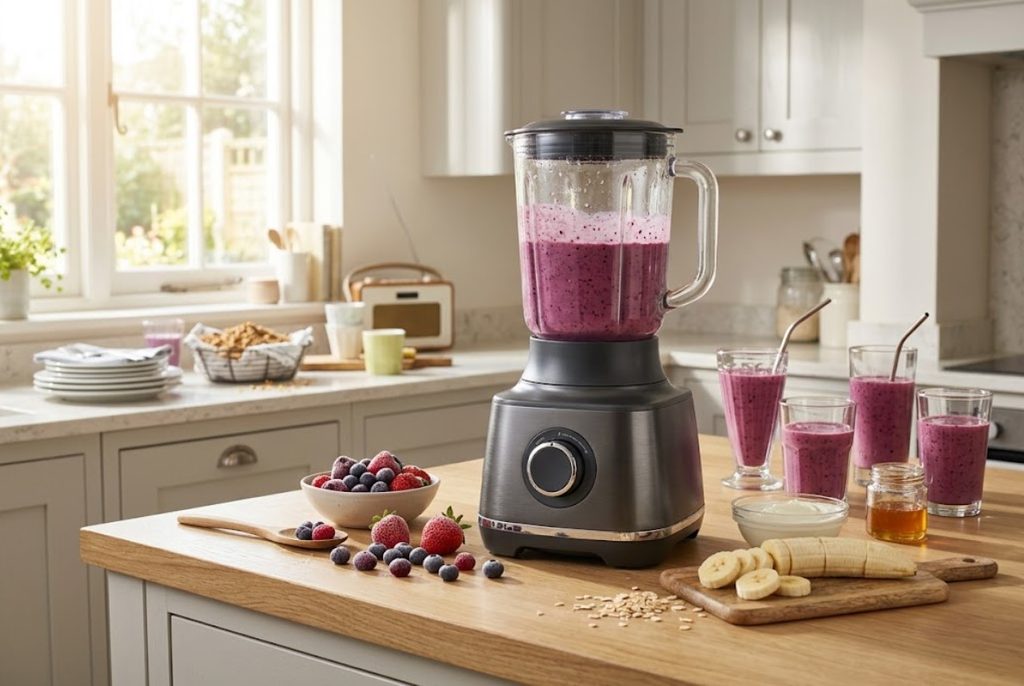
2. Oster Pro 1200 Blender — Best Value Full-Size Blender
The Oster Pro 1200 is worth considering if you want a full-size blender with strong everyday versatility without moving into premium pricing.
The model is known for combining a powerful motor with a larger jar and multiple blending controls. Its full-size format makes it more suitable for households that regularly prepare several servings.
Why We Like It
The main advantage is versatility. A full-size blender can handle more than smoothies. Depending on the recipe and manufacturer’s instructions, you can use a blender like this for sauces, dips, frozen drinks and other blended preparations.
The model’s larger capacity is also helpful when preparing food for more than one person.
For shoppers comparing budget blenders, the Oster Pro 1200 can make sense when you want something closer to a traditional countertop blender rather than a small single-serving machine.
Potential Drawbacks
A full-size blender is naturally less compact than a personal blender. The jar can also be heavier and require more storage space.
If your main goal is making one protein shake every morning, its larger footprint may not be worthwhile.
Best For
Best value for users who want a full-size blender for everyday kitchen tasks.

3. Hamilton Beach Power Elite Blender — Best Budget Full-Size Option
The Hamilton Beach Power Elite is an appealing choice for shoppers who want a straightforward full-size blender without spending heavily on premium features.
Hamilton Beach has long positioned this type of blender toward everyday household use, making it suitable for smoothies, shakes and other common blending jobs.
Why We Like It
Its biggest attraction is simplicity. You do not necessarily need a complicated control panel to make a good smoothie.
A conventional full-size jar also gives you more flexibility than a personal cup when preparing multiple servings. That can make it useful for families, couples or anyone who prefers making a larger batch.
For people buying their first countertop blender, a straightforward model can also be less intimidating.
Potential Drawbacks
Budget models may not offer the same refinement, noise control, materials or advanced automation found in significantly more expensive blenders.
You should also avoid assuming that a budget blender is designed for every possible task. Very hard ingredients and prolonged heavy-duty blending can place additional demands on a motor.
Best For
Best for budget-conscious shoppers who want a traditional countertop blender.

4. BLACK+DECKER PowerCrush Blender — Best for Simple Everyday Blending
The BLACK+DECKER PowerCrush line is another option for shoppers who want an affordable full-size blender for routine kitchen tasks.
It is especially appealing to users who value straightforward controls and want a blender for smoothies, shakes and basic food preparation rather than an appliance packed with premium features.
Why We Like It
For everyday use, simplicity can be a real advantage. A blender that is easy to understand is more likely to become part of your normal kitchen routine.
It can also be a sensible option when you want a full-size machine but have a relatively modest budget.
Potential Drawbacks
As with many affordable countertop blenders, it is important to keep expectations realistic. A budget blender may not provide the same results as a premium high-powered machine when processing very difficult ingredients.
For large amounts of dense frozen ingredients, you should pay attention to the manufacturer’s recommended operating instructions.
Best For
Best for simple smoothies, shakes and everyday blending on a budget.

5. nutribullet 600W Personal Blender — Best Personal Blender
If you usually make one serving at a time, the original nutribullet 600W Personal Blender is one of the most recognizable options in the personal-blender category.
The current official nutribullet listing describes it as a compact 600-watt personal blender and includes a 24-ounce tall cup and an 18-ounce short cup in the listed package. The company also says its cups are top-rack dishwasher safe, while the motor base should not be placed in the dishwasher.
Why We Like It
The biggest benefit is convenience. Instead of transferring a smoothie from a large pitcher into a glass, you can blend directly in the personal cup and use it for serving.
That makes the design particularly attractive to people who prepare quick breakfasts, protein shakes or single portions.
The compact footprint is another major advantage for smaller kitchens, dorm rooms, apartments and workspaces.
Potential Drawbacks
The smaller format is not ideal when you need several servings. You also need to respect the cup’s capacity and the manufacturer’s instructions rather than trying to overload it with ingredients.
It is a personal blender first, so shoppers looking for large-batch preparation should choose a full-size model instead.
Best For
Best personal blender for smoothies and single servings.
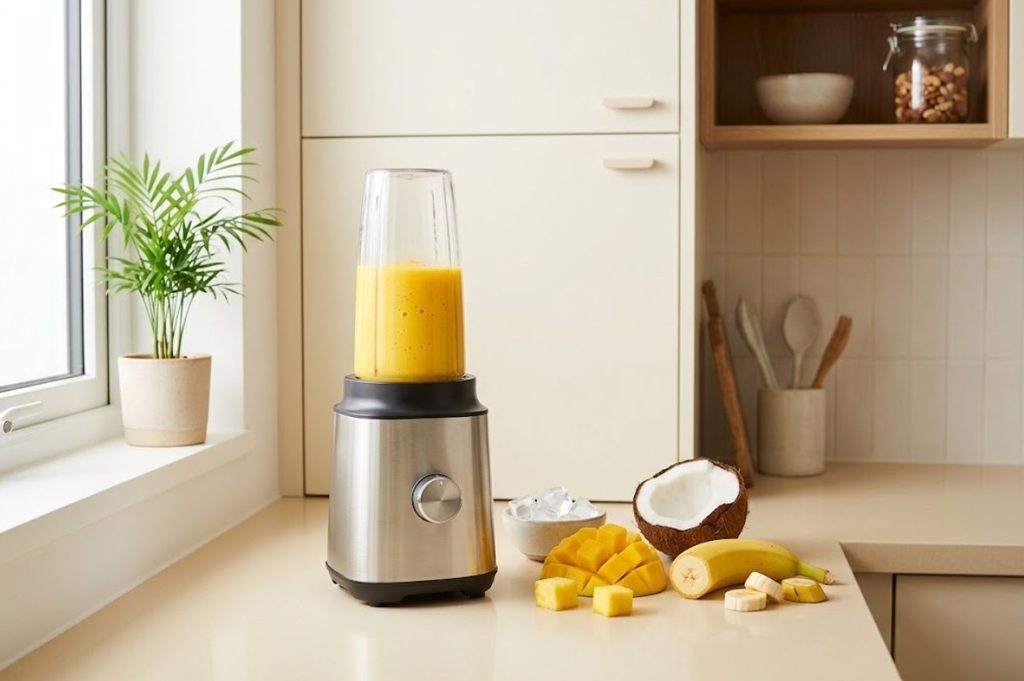
6. Ninja Fit Personal Blender — Best Compact Choice
The Ninja Fit Personal Blender is another compact option for people who prioritize convenience and limited counter space.
Rather than competing directly with large countertop blenders, this type of personal blender is designed around individual portions.
Why We Like It
Its compact size makes it appealing for small kitchens. You can prepare a smoothie or shake without dedicating a large area of your countertop to a full-size pitcher.
Personal blenders can also reduce cleanup because the blending vessel doubles as the drinking container in many setups.
This makes them especially useful for busy mornings when speed and convenience matter more than making a large batch.
Potential Drawbacks
The obvious limitation is capacity. If you need to prepare drinks for several people at once, repeatedly blending small portions can become inconvenient.
It is also not the type of appliance you should automatically choose for large batches, heavy food preparation or recipes that require a substantial pitcher.
Best For
Best compact blender for small kitchens and individual smoothies.

7. nutribullet Blender — Best Full-Size nutribullet Option Under $100
If you like the simplicity associated with personal nutribullet models but want a full-size countertop blender, the current nutribullet Blender is an interesting option.
The company’s current listing describes this model as having a 1200-watt motor, three precision speeds and pulse function, with the ability to blend hot and cold ingredients. The official site currently lists it below $100, although prices and promotions can change.
Why We Like It
The main advantage is the combination of full-size capacity and relatively straightforward controls.
It can make more sense for a household that wants a larger blender but does not need an elaborate selection of automatic programs.
The ability to work with both hot and cold ingredients also gives it more flexibility than a personal smoothie-only setup, although users should always follow the manufacturer’s instructions for hot ingredients.
Potential Drawbacks
The full-size format requires more storage space than a personal blender. It may also be more appliance than a single person needs for occasional smoothies.
And although a 1200-watt rating looks impressive, wattage alone does not guarantee that every recipe will produce identical results. Jar shape, blades, ingredient quantity and blending technique all matter.
Best For
Best full-size nutribullet option for everyday household blending.
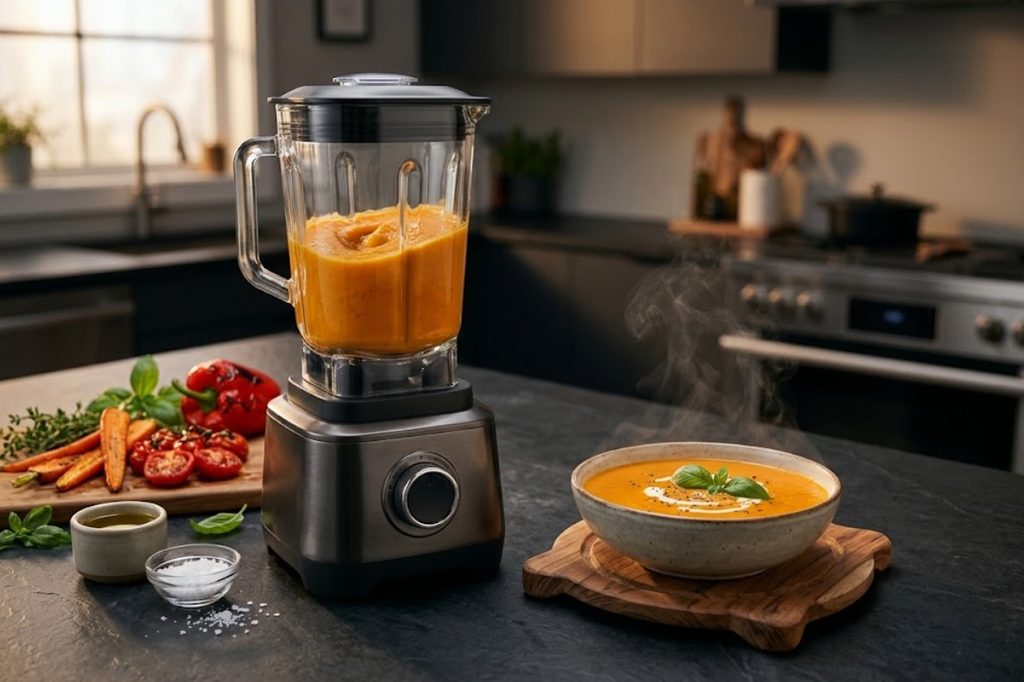
Personal Blender vs. Full-Size Blender: Which Should You Choose?
The simplest way to decide is to think about serving size and routine.
A personal blender is usually the better choice when you:
- Make one smoothie at a time
- Have limited counter space
- Want quick cleanup
- Prefer drinking directly from the blending cup
- Mostly prepare shakes and smoothies
A full-size blender is more suitable when you:
- Make multiple servings
- Have a family
- Prepare sauces and dips
- Want a larger pitcher
- Need greater flexibility for food preparation
Neither design is automatically better. The right choice depends on your kitchen and your normal recipes.
If you are new to this appliance and want a basic explanation of how it works before comparing models, our pillar article “What Is a Blender” is a useful place to start.
How Much Blender Power Do You Really Need?
Wattage is useful, but it should not be treated as a universal performance score.
For simple smoothies made with soft fruits and liquids, a personal blender with a moderate motor can work well. The official nutribullet 600W model, for example, is marketed for everyday smoothies and similar preparations.
If you frequently use frozen fruit, ice, fibrous vegetables or thick mixtures, you may benefit from a more powerful full-size blender. However, ingredients should still be added according to the manufacturer’s recommended process.
The important lesson is this: choose power according to your recipes rather than buying the largest wattage number you can find.
Glass vs. Plastic Blender Jars
The jar material can affect the everyday experience.
Plastic
Plastic jars are usually lighter and easier to handle. They can be a practical choice for families and people who frequently move the blender around.
However, some plastics can eventually show scratches or absorb odors depending on the material and how the blender is used.
Glass
Glass jars can feel substantial and are less likely to retain certain odors. However, they are heavier and can be more difficult to handle.
For most shoppers under $100, the more important question is whether the jar is appropriately sized, easy to clean and compatible with the type of food you regularly prepare.
Important Features Worth Paying For
You do not need every feature advertised on a blender box.
Pulse Function
A pulse button is genuinely useful. It gives you short bursts of power and can help when preparing salsa, chunky dips or recipes where you want more control over texture.
Multiple Speeds
Multiple speeds are helpful when you make different types of recipes. Low speeds can be useful for controlled processing, while higher speeds are generally useful for smoothies and finer blends.
Dishwasher-Safe Parts
Dishwasher-safe cups, lids or jars can make an appliance much easier to live with. Always check exactly which components are dishwasher safe because the motor base should never be treated like removable dishwasher-safe parts.
Good Container Design
The shape of the jar matters because ingredients need to circulate through the blades. A poorly matched container can make even a powerful motor work harder than necessary.
Common Mistakes When Buying a Blender Under $100
Choosing Only by Wattage
A large wattage number can look impressive, but it does not tell the entire story. Blade design, jar shape, controls and intended use also matter.
Buying a Personal Blender for a Family
If you regularly make four smoothies, a small personal cup may quickly become frustrating. Consider a full-size pitcher instead.
Ignoring Cleaning
If you hate taking an appliance apart, you may stop using it. Look carefully at how the blade assembly, cup, lid and jar are cleaned.
Overfilling the Blender
More ingredients do not necessarily mean better blending. Overloading can interfere with ingredient circulation and place unnecessary stress on the motor.
Expecting a Budget Blender to Do Everything
A blender under $100 can be extremely useful, but it should not automatically be treated like a premium commercial machine. Choose one according to the jobs you actually need it to perform.
Forgetting Counter Space
Measure your available space before buying. A full-size blender that fits badly under your cabinets can become surprisingly inconvenient.
How to Keep Your Budget Blender Working Well
Good maintenance can make everyday blending easier.
First, clean the blender soon after use rather than allowing food to dry around the blades and jar. Follow the manufacturer’s cleaning instructions for removable components.
Second, avoid running the motor unnecessarily. Prepare ingredients into manageable pieces and add enough liquid when the recipe calls for it.
Third, pay attention to unusual smells, noises or changes in performance. If a blender begins behaving differently, stop using it and check the manufacturer’s troubleshooting guidance.
Finally, do not put the motor base in water or in a dishwasher. Clean it according to the manufacturer’s instructions.
Which Blender Is Best for You?
The best option depends heavily on how you blend.
| Blender | Best For | Type | Main Advantage |
| Ninja Professional Plus | Overall use | Full-size | Large-batch versatility |
| Oster Pro 1200 | Value | Full-size | Strong everyday performance |
| Hamilton Beach Power Elite | Budget buyers | Full-size | Simple everyday blending |
| BLACK+DECKER PowerCrush | Basic use | Full-size | Straightforward operation |
| nutribullet 600W | Single servings | Personal | Compact convenience |
| Ninja Fit | Small kitchens | Personal | Space-saving design |
| nutribullet Blender | Full-size nutribullet | Full-size | 1200W and simple controls |
Remember that product availability and pricing can change, especially during sales. Before purchasing, check the current product specifications, included accessories, warranty information and retailer price.
Frequently Asked Questions
Is a blender under $100 worth buying?
Yes. A blender under $100 can be a good choice for smoothies, shakes, sauces, dips and everyday food preparation. The key is choosing a model that matches your intended use rather than expecting every budget blender to perform every task.
Is 600 watts enough for a blender?
For many everyday personal blending jobs, 600 watts can be sufficient. The nutribullet 600W, for example, is designed around personal smoothies and similar preparations. However, users who regularly process large quantities or tougher ingredients may prefer a more powerful full-size blender.
Should I buy a personal or full-size blender?
Choose a personal blender if you mostly make one serving at a time and want convenience. Choose a full-size blender if you need multiple servings or greater flexibility for family meals and larger recipes.
Can a cheap blender crush ice?
Some budget blenders can process ice when used correctly, but performance varies. Always follow the manufacturer’s instructions regarding ice and frozen ingredients rather than assuming that every blender can handle large amounts of ice.
How long should a budget blender last?
There is no single lifespan that applies to every model. Usage frequency, recipe difficulty, cleaning, maintenance and build quality all affect durability. Following the manufacturer’s instructions can help reduce unnecessary wear.
What is the most important feature in a blender?
For most buyers, the most important feature is matching the blender to the intended workload. A compact personal blender may be ideal for smoothies, while a full-size model is better for families and larger batches.
Final Verdict
The best blender under $100 is not necessarily the one with the biggest motor or the longest feature list. For a full-size household blender, the Ninja Professional Plus is a strong overall choice, while the Oster Pro 1200 and Hamilton Beach Power Elite are attractive alternatives for shoppers focused on value. For individual smoothies and limited counter space, the nutribullet 600W and Ninja Fit make more sense because of their compact personal-blender designs.
Before buying, decide how many people you normally serve, what ingredients you blend most often, how much counter space you have, and how much cleaning you are willing to do. Once those factors are clear, choosing a blender under $100 becomes much easier—and you can spend your money on the features you will actually use rather than paying for specifications that look impressive on a box.