

Introduction
A good smoothie blender can make breakfast faster, meal preparation easier, and frozen ingredients much less frustrating to process. However, choosing the right model can be confusing because blenders differ in motor power, jar design, blade systems, capacity, controls and intended use. A blender that works beautifully for soft fruit may not be the best choice for frozen berries, ice, leafy greens or thick protein shakes.
In this guide, we compare 7 of the best blenders for smoothies and look at what makes each one useful for a particular type of smoothie drinker. We also explain how much power you really need, whether a personal or full-size blender is better, how to blend frozen fruit and greens and which mistakes can make smoothies less smooth.
What Makes a Blender Good for Smoothies?
Before choosing a blender, it is important to understand what actually affects smoothie quality. A good smoothie is not simply the result of having the highest wattage printed on the box.
Several factors work together, including motor strength, blade design, container shape, ingredient quantity, liquid ratio and blending speed.
For example, frozen berries require more work than fresh bananas, while leafy greens can be difficult to break down if the blender does not create enough circulation inside the container.
Motor Power
Motor power is one of the first specifications shoppers notice. More power can be useful when working with frozen ingredients, ice, fibrous vegetables and thick mixtures, but wattage should not be the only factor you consider.
A well-designed blender with an appropriately shaped container can circulate ingredients effectively, helping the blades process food more consistently.
Blade Design
Smoothies benefit from blades that can create enough movement inside the container to bring ingredients toward the cutting area.
This becomes particularly important when using frozen fruit or thick mixtures. If ingredients remain stuck around the sides, you may need to stop the blender and manually redistribute them.
Container Shape
The shape of the blending container affects how ingredients move.
A narrow personal cup may work particularly well for one serving because ingredients remain close to the blades. A larger pitcher can be more useful for family-sized smoothies but may require a greater quantity of ingredients and liquid to achieve efficient circulation.
Capacity
Your normal serving size should determine the blender type you choose.
A personal blender can be excellent for one smoothie. A full-size blender is more practical when you regularly prepare drinks for several people.
7 Best Blenders for Smoothies
The following seven choices are aimed at different smoothie needs rather than being seven identical recommendations. Some are better suited to individual drinks, while others make more sense for families or tougher ingredients.
Prices and availability can change, so always check the current specifications and price before purchasing.
1. Ninja Professional Plus Blender with Auto-iQ — Best Overall
The Ninja Professional Plus Blender with Auto-iQ is a strong overall option for smoothie lovers who want a full-size countertop blender.
Its combination of a large container, powerful blending system, and automatic programs makes it particularly useful for households that prepare smoothies for multiple people.
Why We Like It
The larger container allows you to prepare several servings in one batch rather than making individual smoothies repeatedly.
This can be especially convenient for families who prepare breakfast drinks together. You can add fruit, vegetables, yogurt, liquid and frozen ingredients and process a larger quantity at once.
The Auto-iQ-style programs are also useful for people who do not want to constantly adjust blending speed manually. A programmed cycle can make routine smoothie preparation more convenient.
The blender’s larger format also makes it more versatile than a small personal machine.
Best Smoothie Uses
It is particularly suitable for:
- Frozen fruit smoothies
- Berry smoothies
- Family-size breakfast smoothies
- Protein smoothies
- Smoothies containing leafy greens
- Thick fruit-and-yogurt mixtures
Potential Drawbacks
The larger pitcher takes more storage space than a personal blender.
It can also be more cleaning than a small blending cup, particularly if you only make one smoothie per day.
Best For
Best overall smoothie blender for households and multiple servings.

2. Vitamix Explorian E310 — Best for Serious Smoothie Enthusiasts
The Vitamix Explorian E310 is a more performance-focused blender and is worth considering for smoothie enthusiasts who want a machine capable of handling demanding ingredients.
It is generally positioned at a higher price than many budget models, so it may not always fit a strict under-$100 budget. However, it represents the type of higher-performance blender shoppers may consider when smoothie quality is a major priority.
Why We Like It
The appeal of a blender like the Explorian E310 is its ability to handle more demanding ingredients and thick mixtures.
For smoothie lovers who regularly use frozen fruit, leafy greens, seeds, nuts, or dense ingredients, stronger blending performance can be valuable.
The manual speed controls also give you greater control over texture. You can start slowly and increase the speed rather than immediately running everything at maximum power.
Best Smoothie Uses
Consider it for:
- Very thick smoothies
- Frozen fruit
- Green smoothies
- Seed-containing smoothies
- High-fiber ingredients
- Large smoothies
Potential Drawbacks
The main drawback is price. It may not be appropriate for someone looking specifically for an affordable smoothie blender.
Its size and performance are also more than some casual smoothie drinkers need.
Best For
Best for serious smoothie enthusiasts who prioritize blending performance.
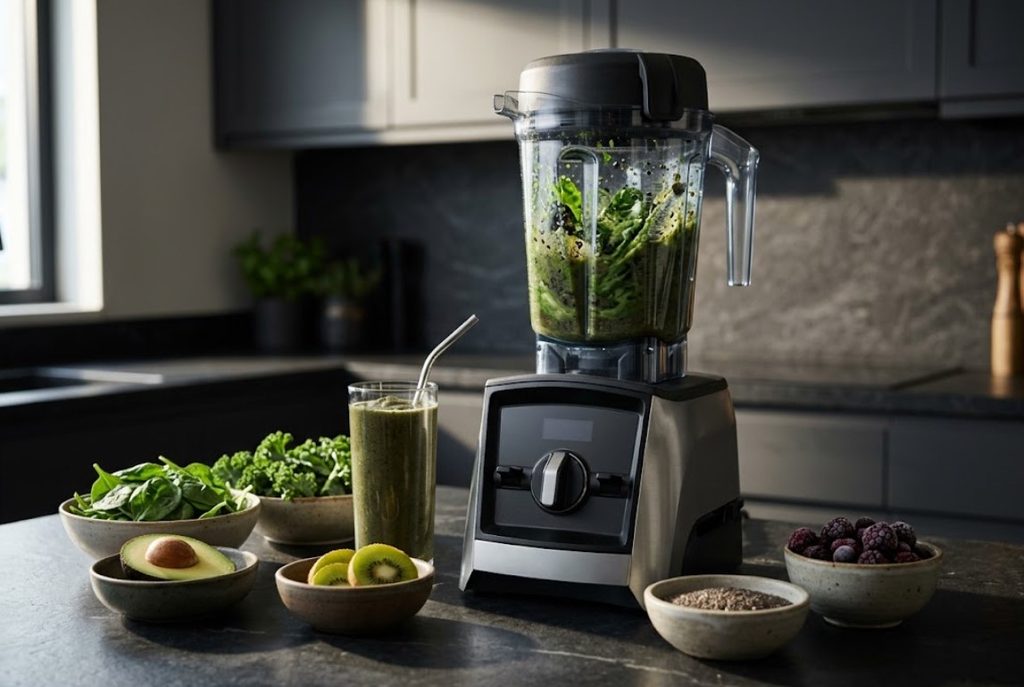
3. NutriBullet 600W Personal Blender — Best for One Smoothie
The NutriBullet 600W Personal Blender is designed around convenience and single-serving preparation.
Its compact format makes it especially appealing to people who prepare one smoothie at a time and want to minimize cleanup.
The official NutriBullet product information describes the 600W model as a personal blender and lists blending cups designed for individual use.
Why We Like It
The biggest advantage is simplicity.
You can prepare a smoothie directly in the personal cup, which can reduce the number of dishes involved in the process.
Its compact footprint is also useful in apartments, dorm rooms, offices and kitchens where counter space is limited.
For someone whose daily smoothie consists of fruit, yogurt, milk and protein powder, a personal blender can be more practical than a large countertop machine.
Best Smoothie Uses
It works particularly well for:
- Single-serving fruit smoothies
- Protein shakes
- Breakfast smoothies
- Soft fruit
- Yogurt-based drinks
- Quick post-workout drinks
Potential Drawbacks
The main limitation is capacity.
If you need four smoothies every morning, preparing several personal servings can take longer than using a full-size pitcher.
Personal blenders may also be less suitable for very large quantities or certain demanding ingredients.
Best For
Best personal blender for quick single-serving smoothies.

4. Ninja Fit Personal Blender — Best for Small Kitchens
The Ninja Fit Personal Blender is another compact option for people who prioritize portability and limited counter space.
Instead of trying to compete with large countertop blenders, its main advantage is convenience for individual servings.
Why We Like It
A personal blender can be an excellent choice for students, apartment residents, travelers, and people who do not want a large appliance permanently occupying their countertop.
The compact format also makes it easier to store after use.
For someone who makes one smoothie before leaving for work or school, the convenience of a small blender can be more important than having a large pitcher.
Best Smoothie Uses
It is suitable for:
- Fruit smoothies
- Protein shakes
- Single servings
- Quick breakfast drinks
- Soft and frozen fruit combinations
Potential Drawbacks
It is not designed around large-batch smoothie preparation.
If you regularly make drinks for an entire family, a full-size blender will probably be more convenient.
Best For
Best compact smoothie blender for small kitchens.
5. Ninja Foodi Power Nutri Duo — Best for Thick Smoothie Bowls
If you enjoy smoothie bowls rather than only traditional drinkable smoothies, the Ninja Foodi Power Nutri Duo is an interesting type of appliance to consider.
Its design is aimed at thick mixtures, which can be more difficult for conventional blenders because there is less liquid available to help ingredients circulate.
Why We Like It
Traditional smoothies contain enough liquid to move ingredients around the blades.
Smoothie bowls are different. They are usually much thicker and require a blender designed to handle dense ingredients.
This makes a system designed around thick mixtures particularly interesting for people who enjoy frozen fruit bowls, thick desserts or spoonable smoothie recipes.
Best Smoothie Uses
It is especially suitable for:
- Smoothie bowls
- Thick frozen fruit blends
- Frozen desserts
- Thick protein mixtures
- Spoonable breakfast bowls
Potential Drawbacks
If you only make thin, drinkable smoothies, you may not need this type of specialized design.
It can also be less useful for someone who wants a single appliance primarily for large family batches.
Best For
Best for thick smoothie bowls and spoonable frozen blends.

6. Oster Pro 1200 Blender — Best Value for Smoothies
The Oster Pro 1200 is a practical option for shoppers who want a full-size blender for regular smoothie preparation without immediately moving into premium pricing.
Its larger format makes it more suitable for households that prepare multiple servings.
Why We Like It
A full-size blender provides more flexibility when making smoothies for several people.
You can prepare a larger batch rather than repeating the same process with a personal cup.
It can also be useful when smoothies are only one of several things you prepare. The same countertop blender can potentially be used for sauces, dips and other blended foods according to the manufacturer’s instructions.
Best Smoothie Uses
It is suitable for:
- Family smoothies
- Fruit smoothies
- Vegetable smoothies
- Protein smoothies
- Larger batches
Potential Drawbacks
It occupies more space than a personal blender.
If you live alone and make only one small smoothie, a compact blender may be more convenient.
Best For
Best value full-size blender for everyday smoothie preparation.
7. BlendJet 2 — Best Portable Smoothie Blender
The BlendJet 2 takes a very different approach from traditional countertop blenders.
Instead of being designed primarily for permanent kitchen-counter use, a portable blender is aimed at people who want to prepare drinks away from a conventional kitchen.
Why We Like It
Portability is its biggest advantage.
A compact rechargeable blender can be convenient for people who travel frequently, spend time at work or want a smoothie without using a large countertop appliance.
It is particularly attractive for simple single-serving recipes.
Best Smoothie Uses
It can be useful for:
- Protein shakes
- Fruit smoothies
- Travel smoothies
- Office drinks
- Quick single servings
Potential Drawbacks
Portable blenders generally have less capacity and different performance expectations than full-size countertop machines.
They should not automatically be treated as replacements for powerful kitchen blenders.
Best For
Best portable option for smoothies away from the kitchen.

How to Choose the Best Blender for Smoothies
With seven different types of smoothie blenders available, the best choice depends on how you actually prepare your drinks.
If you make one smoothie every morning, a personal blender may be more convenient than a large countertop model.
If you prepare smoothies for a family, a full-size blender is likely to save time.
If you enjoy very thick smoothie bowls, a model designed for dense mixtures may be more useful.
And if you regularly use frozen fruit, leafy greens, ice, seeds, or other demanding ingredients, paying attention to motor performance and container design becomes more important.
If you are completely new to the appliance, our guide “What Is a Blender” explains the basic purpose and operation of a blender before you start comparing individual models.
How Much Power Do You Need for Smoothies?
There is no single wattage number that automatically guarantees a perfect smoothie.
A moderate-powered personal blender can be perfectly adequate for soft fruit, yogurt, milk, protein powder and similar ingredients.
More demanding recipes can benefit from greater motor capability. Frozen fruit, ice, fibrous greens and thick mixtures require more work than soft bananas or strawberries.
However, power should always be considered together with the blade design and container.
A powerful motor cannot compensate completely for poor ingredient circulation.
This is one reason it is useful to compare the entire appliance rather than selecting the model with the largest number printed on the package.
How to Make a Smoother Smoothie
Even a good blender can produce poor results if the ingredients are added incorrectly.
Start With Liquid
Adding liquid first can help create movement around the blades.
Milk, water, juice, coconut water or another suitable liquid can help ingredients circulate.
Add Soft Ingredients
Next, add softer fruits such as bananas, berries or mango.
These ingredients generally break down more easily and can help create a smoother mixture.
Add Greens
Leafy greens can be added after the liquid and softer ingredients.
Breaking large leaves into smaller pieces can also make blending easier.
Add Frozen Ingredients Last
Frozen fruit and ice can be harder for a blender to process.
Adding them after softer ingredients can help create better circulation and reduce the chance of ingredients becoming trapped around the blades.
Avoid Overfilling
Do not fill the container beyond its recommended capacity.
Overfilling can prevent proper circulation and may place unnecessary strain on the motor.
Best Ingredients for Smoothies
A smoothie does not need dozens of ingredients.
A simple combination can often produce an excellent result.
Fruits
Popular choices include:
- Banana
- Strawberry
- Blueberry
- Mango
- Pineapple
- Peach
- Kiwi
Vegetables and Greens
For green smoothies, consider:
- Spinach
- Kale
- Cucumber
- Celery
- Avocado
Protein
Depending on your dietary preferences, smoothies can include:
- Yogurt
- Milk
- Protein powder
- Nut butter
- Seeds
Liquid
Common choices include:
- Water
- Milk
- Coconut water
- Soy milk
- Almond milk
- Oat milk
The right ratio is more important than simply adding as many ingredients as possible.
Personal Blender vs Full-Size Blender for Smoothies
The choice between a personal and full-size blender largely depends on serving size.
Personal Blender
Choose a personal blender when:
- You usually make one serving
- You have limited counter space
- You want quick cleanup
- You like portable cups
- You mainly prepare smoothies or shakes
Full-Size Blender
Choose a full-size blender when:
- You prepare multiple servings
- You have a family
- You want larger batches
- You make different blended foods
- You regularly use demanding ingredients
For a more detailed look at affordable full-size options, our article “Best Blenders Under $100: 7 Affordable Picks for Smoothies, Food Prep & More” provides another useful comparison.
Common Smoothie-Blender Mistakes to Avoid
Choosing Only by Wattage
A high wattage number may attract attention, but it does not tell you everything about the blender.
Container design, blades, speed controls and intended use matter too.
Using Too Little Liquid
A thick smoothie with too little liquid may become difficult to circulate.
If your recipe allows it, adding an appropriate amount of liquid can improve blending.
Adding Ice Without Considering the Blender
Not every blender is designed for large amounts of ice.
Always check the manufacturer’s instructions before using ice or other particularly hard ingredients.
Overfilling the Container
Overfilling can reduce ingredient movement and produce inconsistent results.
Leave enough room for ingredients to circulate.
Expecting Every Blender to Make Smoothie Bowls
Smoothie bowls are significantly thicker than drinkable smoothies.
If you regularly make them, look for a blender designed for thick mixtures rather than assuming any countertop blender will perform equally well.
Ignoring Cleanup
A blender that is difficult to clean may discourage regular use.
Look for removable, easy-to-clean components and always follow the manufacturer’s instructions.
How to Clean Your Smoothie Blender
Cleaning immediately after making a smoothie is usually easier than allowing fruit, yogurt or protein powder to dry around the container.
Start by disconnecting the appliance from power.
Remove the appropriate detachable components and clean them according to the manufacturer’s instructions.
Some cups, lids and jars may be dishwasher safe, while the motor base should never be submerged in water.
Pay particular attention to the area around the blade assembly because smoothie residue can collect there.
If you regularly use ingredients such as nut butter or protein powder, cleaning immediately after use becomes even more important.
Which Blender Is Best for Your Smoothie?
The Ninja Professional Plus is a strong overall choice for households that want a full-size blender capable of preparing multiple smoothies.
For serious smoothie enthusiasts who prioritize performance, the Vitamix Explorian E310 is a more advanced option, although it usually sits outside a strict budget category.
For individual smoothies, the NutriBullet 600W and Ninja Fit offer the convenience of personal blending.
For thick smoothie bowls, the Ninja Foodi Power Nutri Duo is particularly interesting, while the Oster Pro 1200 offers a practical full-size option for everyday family smoothie preparation. Finally, the BlendJet 2 is the most portable concept for people who want a smoothie away from the kitchen.
Smoothie Blender Comparison
| Blender | Best For | Type | Main Advantage |
| Ninja Professional Plus | Overall | Full-size | Large-batch smoothies |
| Vitamix Explorian E310 | Serious users | Full-size | Strong performance |
| NutriBullet 600W | One serving | Personal | Compact convenience |
| Ninja Fit | Small kitchens | Personal | Space-saving |
| Ninja Foodi Power Nutri Duo | Smoothie bowls | Personal/specialized | Thick mixtures |
| Oster Pro 1200 | Value | Full-size | Everyday versatility |
| BlendJet 2 | Portability | Portable | Travel convenience |
Before purchasing, check the manufacturer’s current specifications, included accessories, warranty and operating instructions because products and packages can change over time.
Frequently Asked Questions
What is the best blender for smoothies?
There is no single best blender for everyone. A full-size model such as the Ninja Professional Plus is suitable for families, while a personal model such as the NutriBullet 600W may be better for someone making one smoothie at a time.
Is a personal blender good for smoothies?
Yes. Personal blenders are particularly convenient for single-serving smoothies, protein shakes and quick breakfast drinks.
What blender power is best for frozen fruit?
Frozen fruit generally requires more blending capability than soft fresh fruit. A stronger full-size blender can be useful, but motor power should be considered together with blade design, container shape and the manufacturer’s instructions.
Can I make green smoothies in a personal blender?
Yes. Personal blenders can work well for green smoothies when ingredients are prepared appropriately and sufficient liquid is used. Very fibrous or large quantities of greens may be easier to process in a larger, more powerful blender.
Is a full-size blender better than a personal blender?
Not necessarily. A full-size blender is better for multiple servings and larger batches, while a personal blender is often more convenient for one person.
What is the best blender for smoothie bowls?
A blender specifically designed for thick mixtures can be more appropriate for smoothie bowls because these recipes contain less liquid and are much thicker than normal smoothies.
Can every blender crush ice?
No. Ice-processing capability varies by model. Always check the manufacturer’s instructions before using large quantities of ice.
Final Verdict
The best blender for smoothies depends on the type of smoothie you make, how many people you serve, and how often you use frozen or difficult ingredients. For families and larger batches, the Ninja Professional Plus is a strong overall choice. For individual smoothies, compact options such as the NutriBullet 600W and Ninja Fit provide excellent convenience, while people who enjoy thick smoothie bowls may prefer a specialized option such as the Ninja Foodi Power Nutri Duo.
Before buying, focus on your actual routine rather than simply choosing the blender with the biggest motor. Consider serving size, ingredient type, container design, cleaning requirements and available counter space. A blender that matches your everyday smoothie habits will usually be more useful than an expensive model with features you rarely need.
Official manufacturer resources can also help confirm whether a particular model is designed for frozen ingredients, ice, hot liquids or other specialized smoothie preparations