
Introduction
Choosing a blender can seem simple until you start comparing motor power, jar sizes, blade designs, speed settings, cleaning features, noise levels and prices. With so many models available, the most expensive blender is not necessarily the best choice for every kitchen. The right blender depends on what you plan to make, how often you will use it, how much food you usually prepare and how much you are willing to spend.
If you are wondering how to choose a blender, this guide will help you focus on the features that actually matter instead of buying a blender simply because it has a higher wattage or more buttons. We will look at nine important things to consider before buying, so you can choose a blender that fits your recipes, kitchen space, cleaning routine and budget.
1. Decide What You Will Use the Blender For
The first thing to consider when learning how to choose a blender is what you actually want to prepare. A blender designed mainly for smoothies does not necessarily need the same features as one used for soups, sauces, nut butters, frozen desserts or larger family meals.
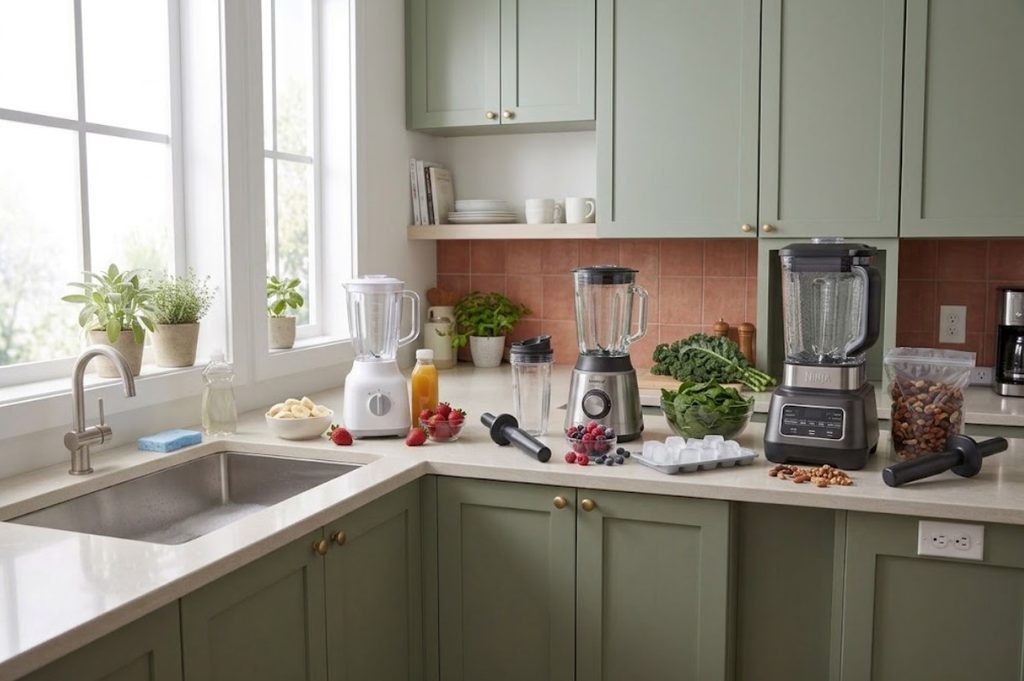
If smoothies are your main reason for buying a blender, look for a model capable of handling frozen fruit, leafy greens, ice and liquids without leaving large chunks behind. A personal blender can be convenient if you usually make one serving at a time, while a countertop blender may be better for families.
For soups and sauces, container capacity and speed control can become more important. If you regularly prepare thick mixtures, you should also pay attention to motor strength and blade design.
For occasional light blending, there is little reason to spend heavily on a high-performance model. On the other hand, frequent users may benefit from a stronger motor, durable jar, better controls, and a sturdier construction.
If you are completely new to blenders, What Is a Blender? Types, Uses, Benefits & Complete Buying Guide (2026) can help you understand the basic types and their common uses before making your decision.
2. Consider the Blender Type
Blenders come in several designs and choosing the correct type can make a bigger difference than simply choosing a powerful motor.
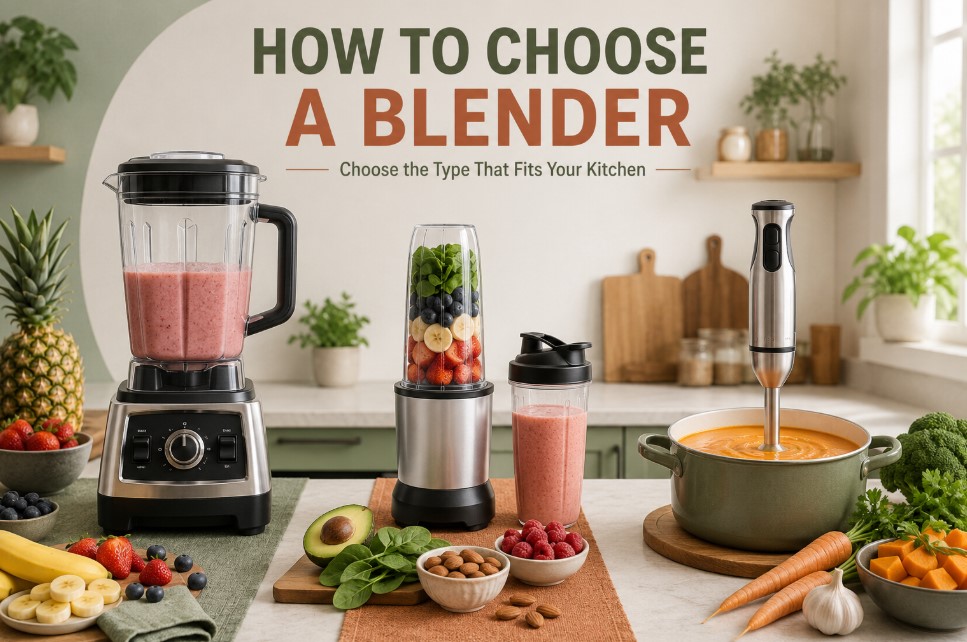
Countertop blenders
Countertop blenders are the traditional choice. They usually have a larger container and are suitable for smoothies, sauces, soups, shakes and family-size recipes. They are a good option if you expect to use your blender frequently.
Personal blenders
Personal blenders are smaller and designed mainly for individual portions. Many come with containers that can double as drinking cups, making them convenient for quick morning smoothies.
Immersion blenders
Immersion blenders are handheld appliances that can be placed directly into a pot, bowl, or container. They are particularly useful for soups, sauces and smaller quantities.
If you are deciding between an immersion and countertop model, Immersion Blender vs. Regular Blender: 7 Key Differences You Should Know provides a useful comparison of how the two designs differ.
The best type therefore depends on your kitchen routine. Don’t buy a large countertop blender if you mainly make one small smoothie and don’t choose a tiny personal blender if you regularly prepare food for several people.
3. Look at Motor Power
Motor power is another important consideration, but it should not be the only specification you use when choosing a blender.
A stronger motor can be helpful when blending demanding ingredients such as frozen fruit, ice, fibrous vegetables or thick mixtures. However, wattage alone does not tell you exactly how well a blender will perform. Blade design, container shape, motor efficiency and the overall construction also influence blending results.
For light tasks such as soft fruits, sauces, and simple shakes, an extremely powerful motor may not be necessary. If you regularly blend frozen ingredients or thick mixtures, however, investing in a stronger machine can make the process easier.
Think about your normal recipes rather than choosing the biggest number on the specification sheet.

4. Check the Jar Capacity and Material
The blender jar determines how much you can prepare at one time and how comfortable the appliance will be for your kitchen.
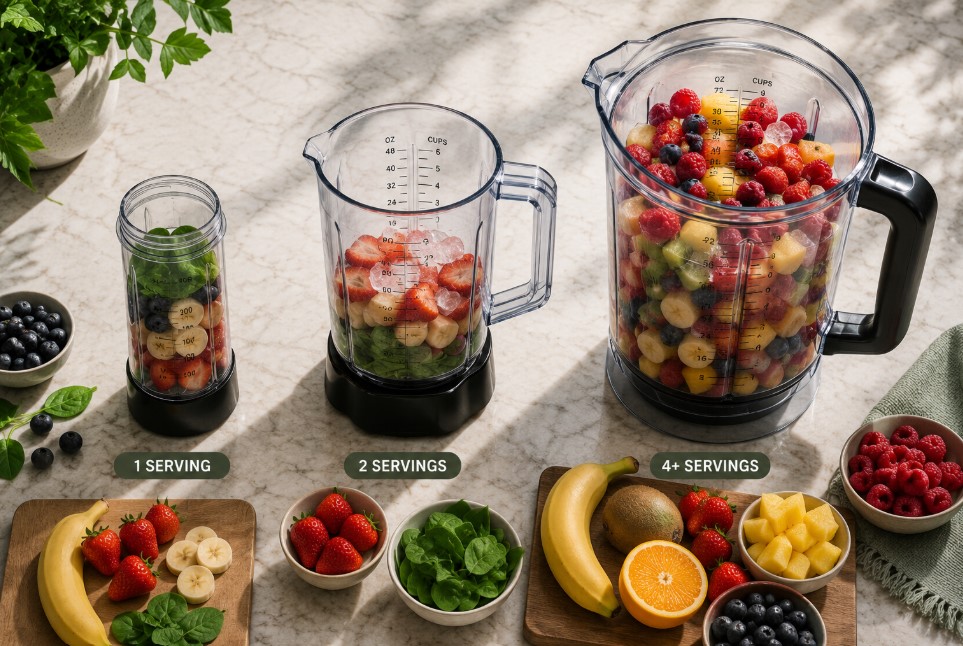
If you usually make individual smoothies, a small container may be enough. Families may prefer a larger pitcher that can prepare several servings in one batch. Remember that a larger jar also requires more storage space.
The material matters as well. Many blender containers are made from plastic, glass, or similar durable materials. Plastic containers can be lightweight and convenient, while glass can feel substantial and resist absorbing certain odors. The best choice depends on how you use and clean your blender.
Also examine the shape of the jar. A container should allow ingredients to circulate toward the blades instead of becoming trapped around the sides.
If you want to understand the practical benefits and uses of different blender designs before comparing jar capacity, What Is a Blender? Types, Uses, Benefits & Complete Buying Guide (2026) is a useful starting point.
5. Examine the Blade Design
The blades are one of the most important working parts of a blender because they are responsible for breaking ingredients down into smaller pieces.
When comparing models, don’t simply count the number of blades. Pay attention to their shape, arrangement, construction and how they interact with the bottom of the container.
A good blade system should work with the container design to create circulation. This helps ingredients move through the blades instead of staying on the surface.
Different recipes can also place different demands on the blade system. Soft fruits are relatively easy to process, while ice, frozen fruit, nuts and fibrous vegetables can be more challenging.
Safety should also be considered. Blender blades are extremely sharp, so you should never reach into the jar while the appliance is connected to power.

6. Look at Speed Settings and Controls
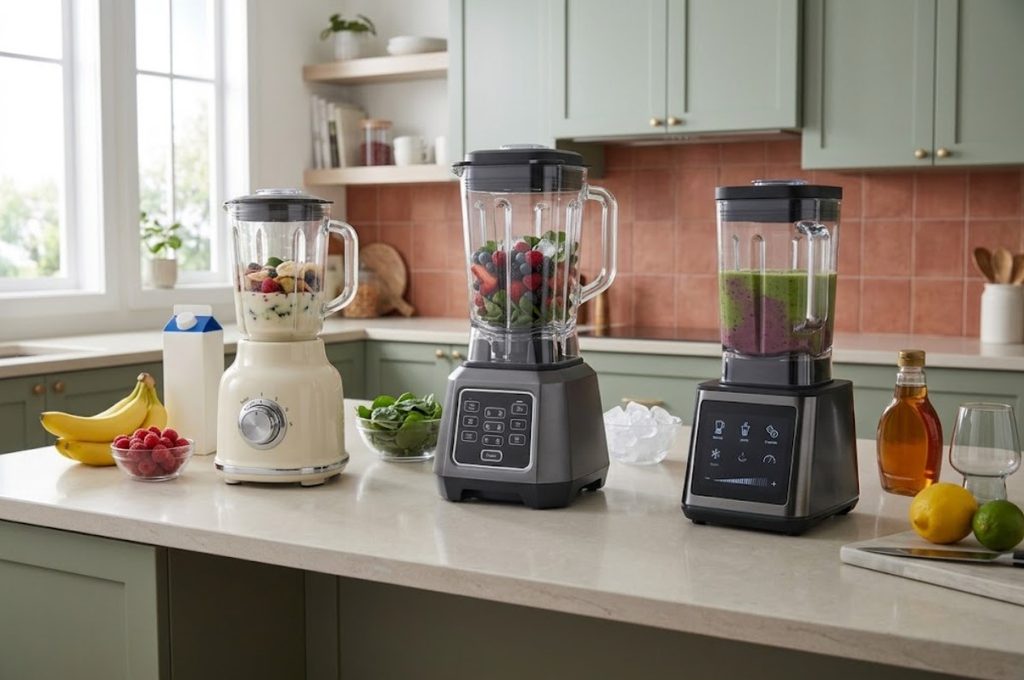
A blender with multiple speed settings can give you greater control over different recipes, but more buttons do not automatically mean better performance.
Simple controls may be perfectly suitable if you mainly make smoothies or shakes. More advanced users may appreciate variable speed control because it allows them to gradually increase blending intensity.
Some blenders also include preset programs. These can be convenient because they automatically control blending speed and duration for particular tasks.
Before buying, consider whether you actually need these features. A complicated control panel can add cost without providing much benefit if you only use one or two settings.
A straightforward control system can sometimes be more convenient than a large collection of buttons that you rarely use.
7. Think About Cleaning and Maintenance
Cleaning is one of the easiest features to overlook when buying a blender, but it can determine how often you actually use the appliance.
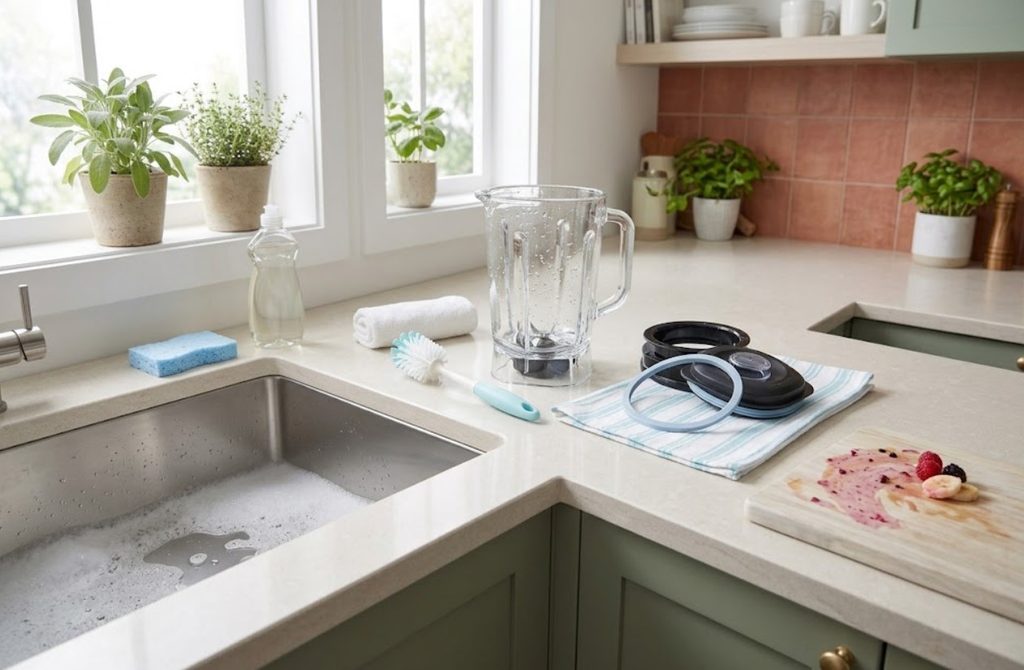
A blender with a complicated jar, difficult-to-reach areas, or many small removable pieces can take more time to clean. Look for a design that allows you to rinse and wash the components without unnecessary effort.
Pay particular attention to the lid, gasket, underside of the jar and areas around the blade assembly. Food and smoothie residue can collect in these locations.
You should also check the manufacturer’s cleaning instructions before purchasing because different blender components may have different care requirements. For general cleaning habits, How to Clean a Blender Properly: 7 Easy Steps for a Fresh, Odor-Free Blender explains practical ways to keep a blender fresh and clean.
8. Consider Noise, Size and Kitchen Space
A blender may perform well but still be inconvenient if it is too large or too noisy for your kitchen.
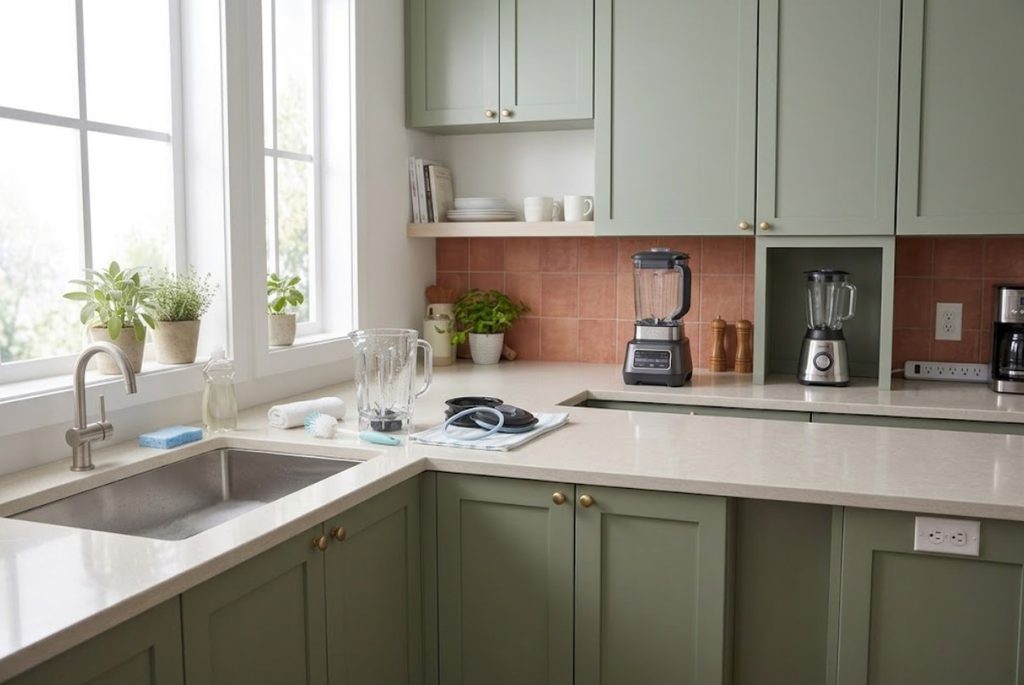
Before buying, consider where you will keep it. Measure the available counter and cabinet space if necessary. Remember that a tall blender may not fit comfortably beneath low kitchen cabinets.
Noise can also matter, particularly if you live in a small home or usually prepare smoothies early in the morning. Powerful motors can produce significant sound, so look for information about noise levels and user experiences when available.
Weight is another practical consideration. A heavy blender may feel stable during operation, but it can become inconvenient if you regularly move it between storage and the countertop.
This is why choosing a blender should involve more than looking at technical specifications. It needs to fit your actual kitchen routine.
9. Compare the Price With the Features You Actually Need
Finally, set a realistic budget and compare what each blender provides for the price.
A more expensive blender may offer stronger performance, more durable components, advanced controls or longer-term convenience. But expensive does not automatically mean suitable for you.
If you only need a blender for occasional smoothies, a reasonably priced model may be sufficient. If you use a blender every day for frozen fruit, sauces, soups, food preparation, or larger batches, spending more on useful performance and durability may make sense.
The key is to compare features with your actual needs rather than comparing price tags alone.
For example, if two blenders both handle your recipes effectively, but one costs considerably more because of features you will never use, the cheaper option may offer better value.
If your budget is around $100, Best Blenders Under $100: 7 Affordable Picks for Smoothies, Food Prep & More can also help you explore more budget-conscious options.
What Blender Features Matter Most?
After considering all nine factors, it helps to prioritize them according to your own needs.
| Feature | Why It Matters | Most Important For |
| Blender type | Determines how and where you can use it | Everyone |
| Motor power | Helps with demanding ingredients | Frozen foods, ice, thick mixtures |
| Jar capacity | Determines batch size | Families and meal prep |
| Jar material | Affects weight, durability, and maintenance | Frequent users |
| Blade design | Influences blending performance | Smoothies and tough ingredients |
| Speed controls | Provides control over different recipes | Frequent or advanced users |
| Cleaning | Makes regular use easier | Everyone |
| Size and noise | Determines everyday convenience | Small kitchens |
| Price | Keeps your purchase within budget | Everyone |
A Simple Way to Choose the Right Blender
If you are still unsure, start with your most common use.
For daily smoothies:
Choose a blender with suitable motor power, a good blade system and a container size that matches your serving size.
For a family:
Prioritize a larger jar, reliable performance, easy cleaning and durable construction.
For soups and sauces:
Consider an immersion blender if you want to blend directly in pots and containers.
For occasional use:
A simple and affordable blender may be all you need.
For demanding recipes:
Look more closely at motor performance, blade design, jar construction and durability.
And if you are comparing a blender with another food-preparation appliance, Blender vs Food Processor: 7 Key Differences and Which One Should You Buy? can help you decide which appliance is better suited to different kitchen tasks.
Common Mistakes to Avoid When Choosing a Blender
One common mistake is buying a blender based only on motor wattage. A powerful motor is useful, but the entire blending system matters.
Another mistake is buying a container that is either too small for your family or unnecessarily large for your everyday needs.
You should also avoid paying for features you will never use. Preset programs, touch controls and extra accessories can be convenient, but they are not essential for everyone.
Ignoring cleaning is another mistake. A blender that is difficult to clean may eventually spend more time sitting in a cabinet than on your countertop.
Finally, don’t forget about your kitchen space. A blender that technically fits on your counter but makes storage difficult may become frustrating over time.
What Should You Look for in a Blender?
Before purchasing, use this quick checklist:
- Choose the blender type that matches your recipes.
- Consider how frequently you will use it.
- Select appropriate motor power for your ingredients.
- Choose a jar capacity that fits your typical batch size.
- Examine the blade design and construction.
- Decide how much speed control you really need.
- Check how easy the blender is to clean.
- Consider its size, weight and noise.
- Compare price with the features you will actually use.
- Check the manufacturer’s specifications and care instructions before making your final purchase.
For exact specifications, safety information, and care instructions, it is always worth checking the manufacturer’s official product documentation before purchasing a particular blender.
Frequently Asked Questions
What is the most important thing to consider when choosing a blender?
Your intended use is one of the most important factors. Decide whether you mainly need the blender for smoothies, soups, sauces, frozen ingredients, personal drinks or larger family recipes. Then choose motor power, jar size and other features around those needs.
Is a higher-watt blender always better?
No. Higher wattage can be useful for demanding ingredients, but wattage alone does not determine overall blending performance. Blade design, container shape, motor efficiency and construction also matter.
How much should I spend on a blender?
There is no single correct price. Occasional users can often choose an affordable model, while frequent users may benefit from investing in better performance and durability. Your budget should reflect how often and how heavily you plan to use the blender.
Is a personal blender better than a countertop blender?
Neither is universally better. A personal blender is convenient for individual smoothies and smaller portions, while a countertop blender generally provides greater capacity and versatility.
Is an immersion blender worth buying?
An immersion blender can be very useful if you frequently make soups, sauces or smaller batches and want to blend directly inside a pot or container. It can also be easier to store than a full-size countertop blender.
How important is easy cleaning?
Very important. If a blender is difficult to clean, you may be less likely to use it regularly. Look for a design with accessible components and straightforward cleaning instructions.
Final Verdict
Learning how to choose a blender does not have to mean comparing every specification on the market. Start with what you actually make, then consider the blender type, motor power, jar capacity, blade design, controls, cleaning requirements, size, noise and price. The best blender is not necessarily the most powerful or expensive model—it is the one that performs your everyday tasks well and fits comfortably into your kitchen routine.
Before making your final purchase, compare several models using these nine factors and prioritize the features that genuinely matter to you. Whether you need a simple blender for occasional smoothies or a powerful machine for frequent food preparation, choosing based on your real needs will help you get better value from your purchase.