
Introduction
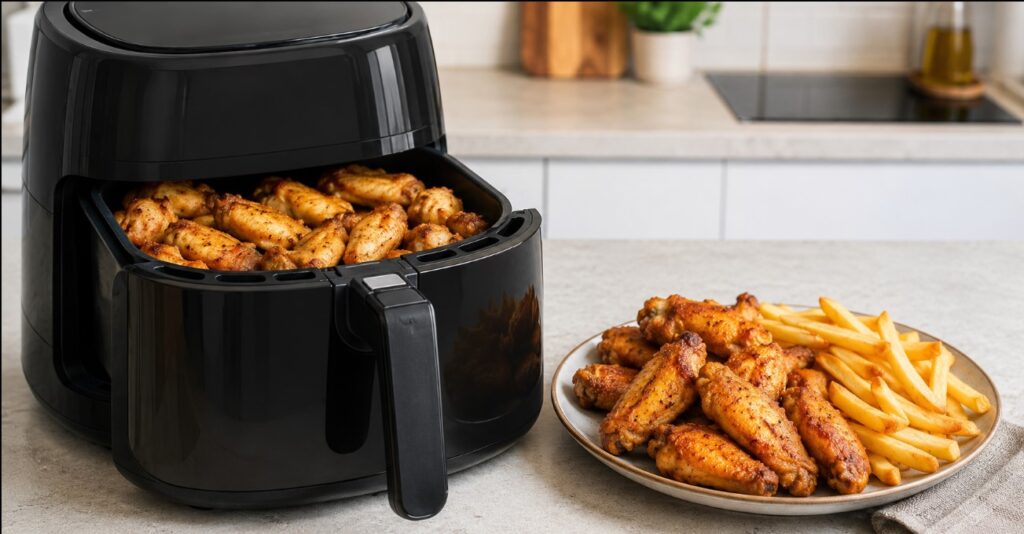
Air fryers can make cooking faster and more convenient, but getting consistently crispy and evenly cooked food isn’t always as simple as pressing a button. Beginners often run into problems such as soggy fries, burnt edges, undercooked centers, uneven browning or food that turns out much drier than expected. In many cases, the problem isn’t the air fryer itself—it comes down to how the food is prepared and cooked.
The good news is that most air fryer mistakes are easy to fix. From overcrowding the basket and using the wrong temperature to skipping necessary shaking or treating every oven recipe exactly the same, a few small changes can make a noticeable difference. In this guide, we’ll look at 10 common mistakes and, more importantly, explain what you can do instead.
Quick List: 10 Common Air Fryer Mistakes
Before going into each mistake in detail, here’s a quick overview of the problems we’ll cover:
- Overcrowding the air-fryer basket
- Using too much oil
- Assuming every food needs zero oil
- Not shaking or flipping food when appropriate
- Using the wrong temperature
- Using the wrong cooking time
- Opening the basket too frequently
- Using unsuitable foods or containers
- Not cleaning the air fryer properly
- Treating every oven recipe exactly the same
Some of these mistakes may seem minor, but they can have a significant effect on the final result. The key is understanding why they cause problems rather than simply memorizing a list of rules.
1. Overcrowding the Air Fryer Basket
One of the most common air fryer mistakes is putting too much food into the basket at once.
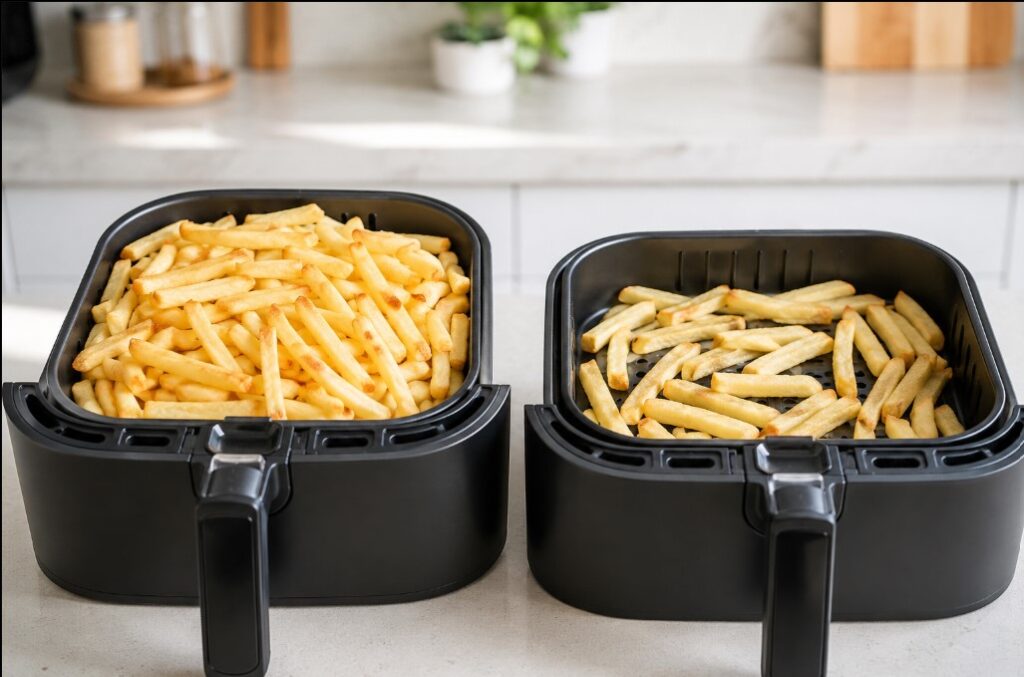
It can be tempting to fill the basket because you want to finish cooking quickly. However, air fryers depend on hot air circulating around the food. When pieces are packed tightly together, that airflow becomes restricted.
The result can be disappointing. Instead of getting evenly browned and crispy food, you may end up with food that is softer in some areas, pale in others and unevenly cooked.
What should you do instead?
Try arranging food in a relatively loose, even layer whenever the recipe allows. You don’t necessarily need a large gap between every individual piece, but avoid creating a thick pile that blocks the airflow.
For foods such as fries, potato wedges, chicken wings, and frozen snacks, cooking in batches can produce better results than trying to cook everything at once.
This is particularly important when cooking frozen foods. The amount of food in the basket can affect how quickly moisture escapes and how well the surface browns.
A simple rule
If you have to pile food several layers deep just to fit everything in, consider cooking it in batches.
It may take a little longer, but the improved texture can be worth it.
2. Using Too Much Oil
Air fryers are often promoted as a way to cook with less oil, but that doesn’t mean adding a large amount of oil will make food better.
Too much oil can make food greasy and can also create unnecessary smoke or residue, depending on the food and appliance.
For many foods, especially frozen products that already contain some oil, you may not need to add much at all.
Fresh foods can be different. A light coating of oil can help some ingredients brown and crisp more evenly.
What should you do instead?
Rather than pouring oil directly into the basket, consider lightly coating the food before cooking when the recipe calls for it.
An oil sprayer can help distribute a thin coating more evenly, although you should make sure the sprayer is compatible with the oil and intended use.
For homemade fries, for example, a small amount of oil can help the exterior develop better color and texture. You don’t need to soak the potatoes.
Remember
More oil doesn’t automatically mean crispier food.
Air circulation, moisture, temperature, food preparation and cooking time all contribute to the final texture.
3. Assuming Every Food Needs Zero Oil
This mistake is almost the opposite of the previous one.
Because air fryers are associated with low-oil cooking, some beginners assume that adding oil is always unnecessary. But certain foods can benefit from a small amount.
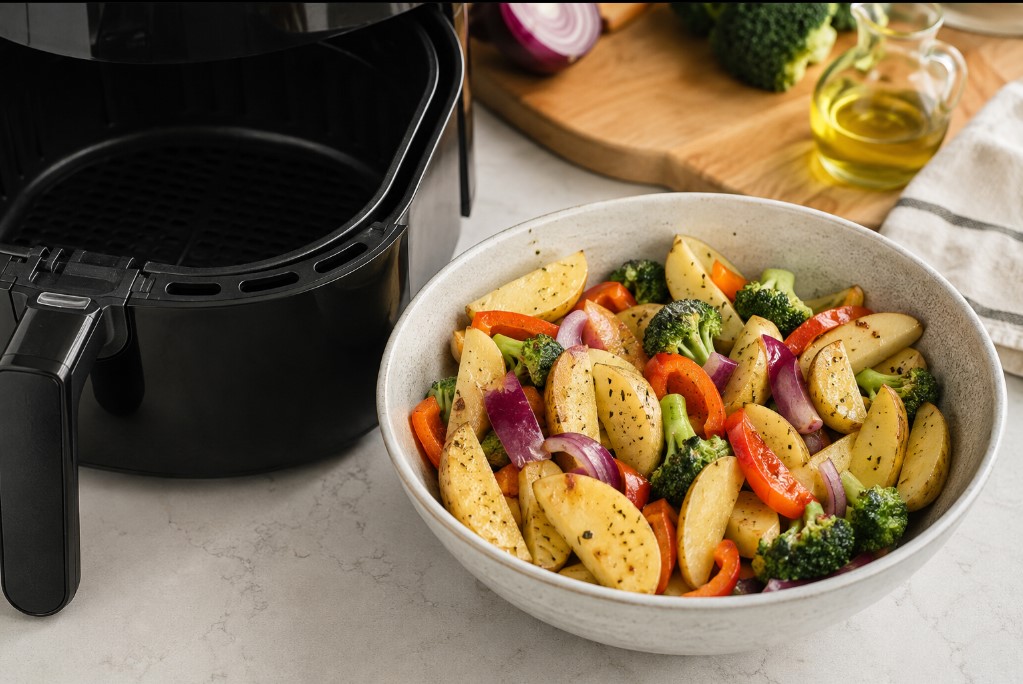
Fresh vegetables, homemade potato wedges and some lean ingredients may brown more attractively with a light coating of oil.
At the same time, foods that already contain significant fat—or commercially prepared frozen foods designed for oven or fryer cooking—may need little or no additional oil.
The better approach
Instead of following a strict “always use oil” or “never use oil” rule, consider the food you’re preparing.
Ask:
- Does the food naturally contain fat?
- Is it fresh or frozen?
- Does the recipe recommend oil?
- Am I trying to improve browning?
- Does the food look excessively dry without a light coating?
This flexible approach is more useful than treating every air-fryer recipe exactly the same way.
4. Not Shaking or Flipping Food When Appropriate
Many air-fryer foods benefit from being shaken or turned during cooking.
This doesn’t mean you need to constantly open the basket. Instead, some foods simply benefit from being moved once during cooking so different surfaces have a better opportunity to brown.
French fries, potato wedges, nuggets and similar small pieces are good examples.
If you leave them completely untouched, pieces touching each other may brown differently from pieces exposed to the circulating air.
But don’t shake everything
This is an important exception.
Delicate foods such as certain fish fillets or fragile items may break apart if you aggressively shake the basket.
For these foods, gently turning them with suitable utensils—or following the recipe’s instructions—may be more appropriate.
The takeaway
Move food when movement improves even cooking, but don’t treat shaking as a universal rule.
Your recipe and the type of food should determine whether you need to shake, flip, rotate or simply leave the food alone.
5. Using the Wrong Temperature
Choosing the highest available temperature may seem like a shortcut to faster cooking, but it can easily produce disappointing results.
Food can brown or burn on the outside before the inside has finished cooking.
This is especially important for thicker foods. A high temperature may quickly color the exterior while the center still needs more time.
On the other hand, a temperature that’s too low can leave some foods pale and less crispy.
What should you do?
Use the recipe’s recommended temperature as a starting point, then adjust according to your particular air fryer.
Air fryers differ in size, heating performance, fan strength and basket design. Two models set to the same temperature may not produce exactly the same result.
For foods where safe internal cooking is important, don’t rely solely on surface appearance. A food thermometer can help you check whether the center has reached a safe temperature.
For specific starting temperatures and cooking times, you can also refer to our Air Fryer Cooking Times & Temperature Chart.
Don’t chase the highest temperature
Higher temperature isn’t automatically better.
The goal is to cook the food properly while developing the texture and browning you want.
6. Using the Wrong Cooking Time
Another common mistake is assuming that the cooking time printed in a recipe will work perfectly for every air fryer.
Cooking time can change depending on:
- Food thickness
- Amount of food
- Starting temperature
- Frozen or fresh ingredients
- Basket size
- Air-fryer model
- How closely food pieces are arranged
For example, two batches of chicken may have different cooking times if one batch contains smaller pieces than the other.
Similarly, a small quantity of fries may cook differently from a heavily loaded basket.
Start with the recipe—but pay attention
A recipe’s cooking time should be treated as a starting point, not an absolute guarantee.
Check food at an appropriate point during cooking and adjust as necessary.
For meat and poultry, use a food thermometer when appropriate rather than relying only on color.
This is one reason keeping notes about successful cooking settings can be useful. Once you find a temperature and time that works well with your particular air fryer, you can use that experience the next time you prepare the same food.
7. Opening the Basket Too Frequently
Air fryers make it easy to check food during cooking, and occasionally opening the basket is perfectly reasonable.
The problem comes when you keep opening it every few moments.
Each time the basket is opened, some hot air escapes. Depending on the appliance, the temperature then needs time to recover.
Constant checking can therefore interfere with cooking and make it harder to judge how long the food actually needs.
A better approach
Try to check food at sensible intervals rather than repeatedly.
If a recipe says to shake the basket halfway through cooking, use that opportunity to inspect the food as well.
You can also use the transparent window on models that have one, although visibility alone shouldn’t replace checking doneness when food safety matters.
Think of it this way:
Check with a purpose—not simply because you’re curious.
8. Using Unsuitable Foods or Containers
Not every food or container is automatically suitable for an air fryer.
Because air fryers circulate hot air at relatively high temperatures, you should always consider whether a particular container or ingredient is appropriate for your appliance.
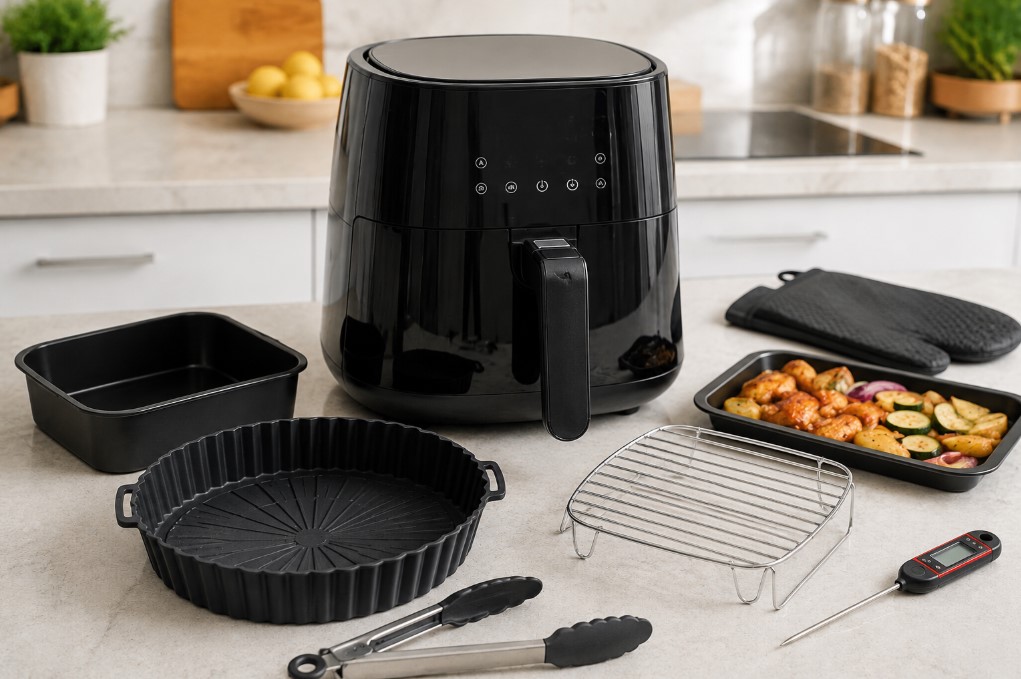
For cookware, use containers that are specifically suitable for the temperatures involved and that fit safely inside the basket or cooking chamber.
You should also follow the manufacturer’s instructions for materials, accessories and cookware.
Some foods can also be problematic. Very wet batters may not behave like traditional deep-frying batter, while very lightweight ingredients can potentially move around because of the strong airflow.
Foods that release a large amount of grease can also require extra attention and cleaning.
Before using a container, ask:
- Is it heat-safe?
- Does it fit without touching the heating element?
- Does it allow adequate airflow?
- Does the appliance manufacturer permit its use?
- Could the food spill, drip or move around?
When in doubt, check the manual for your specific air-fryer model.
9. Not Cleaning the Air Fryer Properly
Cleaning isn’t just about keeping your air fryer looking nice. Regular cleaning helps prevent accumulated grease, unpleasant smells and baked-on food residue.
After cooking, allow the appliance and removable parts to cool according to the manufacturer’s instructions. Then clean the basket and tray appropriately.
Pay particular attention to grease and food particles that may remain after cooking fatty foods.
The heating area can also collect residue over time, so inspect it according to the manufacturer’s cleaning instructions. Never immerse the electrical appliance itself in water.
How often should you clean it?
For many foods, the basket and cooking tray should be cleaned after each use. Deeper cleaning can be performed as needed depending on how frequently you use the appliance and what you cook.
If you regularly cook greasy foods, cleaning may need to be more frequent.
A clean air fryer is a better air fryer
Don’t wait until accumulated grease becomes difficult to remove. Regular basic cleaning is usually much easier than dealing with heavy buildup later.
10. Treating Every Oven Recipe Exactly the Same
This is one of the most important mistakes for beginners who already know how to cook with an oven.
An air fryer can be used for many foods that are normally prepared in an oven, but you shouldn’t assume that the same temperature and cooking time will always produce the same result.
Air fryers generally have a smaller cooking chamber and strong air circulation. These differences can affect how quickly food browns and cooks.
For example, an oven recipe might give you a temperature and cooking time designed for a large conventional oven. Putting the same food into a compact air fryer may require adjustments.
What should you do?
Use the original recipe as a reference, but monitor the food and adjust as necessary.
You may need to:
- Reduce the cooking temperature
- Reduce the cooking time
- Check food earlier
- Cook smaller batches
- Turn or shake food when appropriate
This doesn’t mean there is one universal conversion formula that works for every recipe. The best adjustment depends on the food and your particular appliance.
If you want to understand the broader differences between the two appliances, see our guide Air Fryer vs. Oven: Which Is Better for Cooking?
How to Get Better Air-Fryer Results Every Time
Avoiding mistakes is only half the story. Developing a simple cooking routine can make air frying much easier.
Before Cooking
Prepare the food evenly.
Try to cut ingredients into reasonably similar sizes so they cook at a similar rate.
Check your recipe.
Know the recommended temperature and approximate cooking time before you start.
Don’t automatically add oil.
Decide whether the particular food actually benefits from it.
Preheat when appropriate.
Some recipes and appliances benefit from preheating, while others don’t require it. Follow the recipe or manufacturer’s guidance.
During Cooking
Give food enough space.
Good airflow is essential for many air-fryer foods.
Shake or turn when appropriate.
Move foods that benefit from more even exposure to hot air.
Don’t constantly open the basket.
Check food when necessary, but avoid repeatedly interrupting cooking.
Monitor thick foods carefully.
Surface browning doesn’t necessarily mean the center is cooked.
After Cooking
Check doneness.
For foods where internal temperature matters, use an appropriate food thermometer.
Clean the basket and tray.
Removing grease and food residue soon after cooking is generally easier.
Remember what worked.
If you discover the perfect setting for your favorite food, make a note of it. Your own experience with your particular air fryer can become one of your most useful cooking references.
Air Fryer Troubleshooting: Common Problems and Quick Fixes
| Problem | Possible Cause | What to Try |
| Food isn’t crispy | Basket is overcrowded | Cook a smaller batch |
| Food is too dry | Excessive time or temperature | Reduce cooking time or temperature |
| Uneven browning | Food isn’t being exposed evenly | Shake or turn when appropriate |
| Food is greasy | Too much added oil | Use a lighter coating |
| Food is undercooked | Pieces are too thick or crowded | Allow more time and check doneness |
| Food burns outside | Temperature is too high | Reduce temperature and monitor earlier |
| Frozen food cooks unevenly | Basket overloaded | Arrange in a more even layer |
| Strong greasy smell | Residue or grease buildup | Clean the appliance thoroughly |
This table can be useful as a quick reference because you don’t always need to reread an entire article when something goes wrong. If your fries aren’t crispy, for example, the first things to check are basket space, moisture, oil, temperature and cooking time.
Frequently Asked Questions
Why is my air-fryer food not crispy?
Overcrowding is one of the most common reasons. Excess moisture, too much food in the basket, insufficient cooking time, or unsuitable temperatures can also affect crispiness. Try cooking a smaller batch and making sure the food has enough exposure to circulating air.
Why does my air fryer cook unevenly?
Uneven cooking can happen when food pieces are different sizes or are packed too closely together. Shaking or turning appropriate foods during cooking can help distribute the food more evenly.
Can you put too much food in an air fryer?
Yes. Filling the basket excessively can restrict airflow and lead to uneven cooking and poor browning. When you need to prepare a large quantity, cooking in batches may produce better results.
Do you need oil in an air fryer?
Not always. Some foods already contain enough fat, while others can benefit from a small amount of oil for browning and texture. The right amount depends on the food and recipe.
Should you flip food in an air fryer?
Some foods benefit from shaking or flipping, particularly foods that need even browning on multiple surfaces. However, delicate foods may be better left alone or turned carefully.
Why does my food burn in the air fryer?
The temperature may be too high, the cooking time may be too long, or the food may be positioned too close to a strong heat source. Try lowering the temperature and checking the food earlier.
Can I use oven recipes in an air fryer?
Yes, many oven recipes can be adapted for an air fryer, but the temperature, cooking time, quantity or arrangement may need adjustment. Don’t assume the oven settings will transfer perfectly to every air fryer.
How often should I clean my air fryer?
The removable basket and tray should generally be cleaned after use, while deeper cleaning depends on how frequently you use the appliance and what you cook. Always follow the manufacturer’s cleaning instructions.
Conclusion
Most air fryer mistakes are surprisingly simple to correct. Give food enough room for air to circulate, use oil thoughtfully, choose sensible temperatures and cooking times, move food when appropriate and avoid constantly opening the basket. These small habits can make your results much more consistent.
Most importantly, learn how your own air fryer behaves. Cooking times and results can vary between models, so use recipes as starting points and pay attention to the food you’re actually cooking. With a little practice, you’ll know when to adjust the temperature, when to cook in batches, and when to leave the basket alone—and that’s when air frying becomes much easier and more predictable.
Also Read:
The U.S. Food & Drug Administration (FDA) also recommends safe food handling and proper cleaning of kitchen equipment.