

Introduction
Knowing the right cooking temperature and cooking time is one of the biggest challenges when you first start using an air fryer. Unlike a conventional oven, an air fryer cooks food in a smaller space with rapidly circulating hot air, so food can cook quickly and develop a crisp exterior. However, the exact cooking time can vary depending on the food, its size, quantity, starting temperature and the air fryer model you use.
This air fryer cooking times and temperature chart provides a practical starting point for common foods, including chicken, frozen foods, vegetables, fish, seafood, meat, potatoes and reheated leftovers. Use the times as guidelines rather than absolute rules, and check your food as it approaches the recommended cooking time. For foods such as poultry and meat, use an instant-read thermometer when appropriate to confirm that they have reached a safe internal temperature.
How Air Fryer Cooking Times Work
Air fryers cook food by circulating hot air around the cooking chamber. The moving air transfers heat to the surface of the food, helping create browning and crispness while the food cooks.
Because the cooking chamber is relatively small and the hot air circulates directly around the food, many foods can cook faster than they would in a conventional oven. However, this doesn’t mean that every food should simply be cooked at the highest possible temperature.
The ideal combination of temperature and cooking time depends on what you’re preparing. A thin piece of food may cook quickly at a moderate temperature, while a thicker piece may need more time for heat to reach the center without excessively browning the outside.
Several factors can change the cooking time:
- Food thickness: Thick pieces generally need more time than thin pieces.
- Food quantity: A crowded basket can slow cooking and reduce crispness.
- Starting temperature: Frozen food generally takes longer than refrigerated or room-temperature food.
- Air fryer model: Different models can have different heating and airflow characteristics.
- Food moisture: Foods with more moisture may need additional cooking time to become crisp.
- Cut size: Smaller pieces generally cook faster than larger pieces.
For these reasons, the times in this guide should be treated as starting points. Begin checking food slightly before the suggested finishing time, especially when you’re using a new air fryer.
Air Fryer Cooking Times and Temperature Chart
The following chart gives approximate starting points for some of the foods people commonly prepare in an air fryer.
| Food | Temperature | Approx. Cooking Time | Helpful Tip |
| Chicken wings | 380°F / 193°C | 20–25 min | Shake or turn halfway |
| Chicken breast | 375°F / 190°C | 15–22 min | Check internal temperature |
| Chicken thighs | 380°F / 193°C | 20–25 min | Turn halfway |
| Chicken tenders | 375°F / 190°C | 10–15 min | Avoid overcrowding |
| Chicken drumsticks | 380°F / 193°C | 20–25 min | Turn during cooking |
| Frozen French fries | 400°F / 204°C | 15–20 min | Shake several times |
| Fresh potato wedges | 400°F / 204°C | 18–25 min | Use a light oil coating |
| Onion rings | 375°F / 190°C | 8–12 min | Check frequently |
| Mozzarella sticks | 375°F / 190°C | 6–8 min | Avoid overcooking |
| Chicken nuggets | 400°F / 204°C | 8–12 min | Shake halfway |
| Salmon fillet | 380°F / 193°C | 8–12 min | Cooking time varies by thickness |
| Fish fillet | 375°F / 190°C | 10–15 min | Check the thickest section |
| Shrimp | 400°F / 204°C | 6–10 min | Avoid overcooking |
| Steak | 400°F / 204°C | 8–14 min | Time depends on thickness and doneness |
| Sausages | 375°F / 190°C | 10–15 min | Turn halfway |
| Bacon | 350°F / 177°C | 7–10 min | Check toward the end |
| Broccoli | 375°F / 190°C | 8–12 min | Toss with a little oil |
| Cauliflower | 375°F / 190°C | 10–15 min | Cut into similar pieces |
| Zucchini | 375°F / 190°C | 8–12 min | Avoid overcrowding |
| Brussels sprouts | 375°F / 190°C | 12–18 min | Shake halfway |
| Sweet potato cubes | 380°F / 193°C | 15–20 min | Cut evenly |
| Reheated pizza | 350°F / 177°C | 3–5 min | Check frequently |
| Reheated fries | 350°F / 177°C | 3–6 min | Shake halfway |
| Reheated chicken | 350°F / 177°C | 5–8 min | Avoid drying it out |
Important: Cooking times are approximate. Food thickness, quantity, appliance design, and starting temperature can all affect the result. For meat and poultry, verify doneness using an appropriate food thermometer rather than relying only on appearance or time.

Chicken Cooking Times in an Air Fryer
Chicken is one of the most popular foods to prepare in an air fryer, but different cuts require different cooking times.
Chicken Wings
Chicken wings generally work well at around 380°F (193°C) for approximately 20–25 minutes, depending on their size and your desired level of crispness.
Turn or shake the wings during cooking so that hot air can reach different surfaces. If you’re cooking a large batch, avoid packing the basket too tightly. For extra crispness, make sure excess moisture has been removed from the chicken before seasoning.
Chicken Breast
Boneless chicken breast can cook relatively quickly, but it is important not to rely only on a fixed time because breast thickness varies significantly.
A starting point is around 375°F (190°C) for 15–22 minutes. Thicker pieces may require additional time. Because chicken breast can become dry when overcooked, checking the internal temperature is especially useful.
Chicken Thighs
Chicken thighs are generally more forgiving because they contain more fat and connective tissue than lean breast meat.
A useful starting point is approximately 380°F (193°C) for 20–25 minutes, turning halfway through cooking.
Chicken Tenders
Chicken tenders are smaller and usually require less time. Try approximately 375°F (190°C) for 10–15 minutes.
Breaded tenders may brown quickly, so begin checking them before the full estimated cooking time has passed.
Chicken Drumsticks
Drumsticks can be cooked at around 380°F (193°C) for approximately 20–25 minutes, depending on their size.
Always verify that poultry has reached a safe internal temperature before serving.

Air Fryer Cooking Times for Frozen Foods
One of the biggest advantages of an air fryer is its ability to cook many frozen foods quickly without deep frying.
Frozen French fries are often cooked at around 400°F (204°C) for 15–20 minutes. Shake the basket several times to encourage even browning.
Frozen chicken nuggets may take around 8–12 minutes at 400°F (204°C). Onion rings and mozzarella sticks generally require less time, so keep a close eye on them toward the end.
Frozen foods don’t always need to be thawed before air frying. In many cases, they can go directly from the freezer into the air fryer, although you should follow the package instructions and adjust them based on your particular appliance.
Avoid filling the basket so much that the frozen food forms a thick layer. Better airflow usually means more even browning.

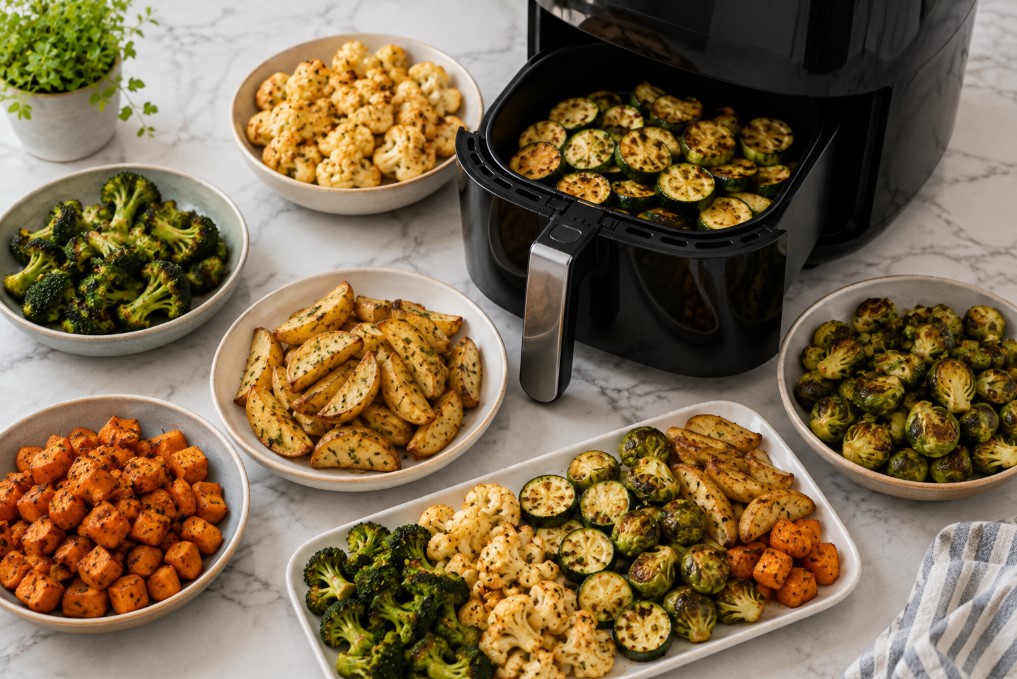
Air Fryer Cooking Times for Vegetables
Air frying is a convenient way to roast vegetables while developing browned edges and a slightly crisp exterior.
Broccoli
Broccoli florets can start at approximately 375°F (190°C) for 8–12 minutes.
Tossing the florets with a small amount of oil can help with browning.
Cauliflower
Cauliflower generally takes around 10–15 minutes at 375°F (190°C).
Try to cut the florets into similar sizes so they cook more evenly.
Zucchini
Zucchini can cook relatively quickly, often taking around 8–12 minutes at 375°F (190°C).
Because zucchini contains a lot of moisture, overcrowding can make it softer rather than nicely browned.
Brussels Sprouts
Brussels sprouts can take approximately 12–18 minutes at 375°F (190°C).
Shake or turn them during cooking to expose different surfaces to the hot air.
Potatoes and Sweet Potatoes
Potatoes generally benefit from higher temperatures and sufficient airflow. Potato wedges can start around 400°F (204°C) for 18–25 minutes.
Sweet potato cubes may take approximately 15–20 minutes at 380°F (193°C).
Cutting potatoes into similar-sized pieces is one of the easiest ways to improve consistency.
Air Fryer Cooking Times for Meat, Fish and Seafood
Air fryers can also prepare many types of meat, fish, and seafood. However, thickness and desired doneness can make cooking times vary considerably.
Steak
Steak can be cooked at a relatively high temperature, such as 400°F (204°C). Depending on thickness and desired doneness, cooking may take approximately 8–14 minutes.
A thermometer is useful when you want a specific level of doneness rather than relying on time alone.
Sausages
Sausages can start at approximately 375°F (190°C) for 10–15 minutes. Turn them halfway through cooking so they brown more evenly.
Salmon
Salmon fillets can often be cooked at around 380°F (193°C) for 8–12 minutes, depending on thickness.
Because thinner fillets cook faster than thick ones, check them early.
Fish Fillets
Many fish fillets can be cooked at around 375°F (190°C) for 10–15 minutes.
The exact time depends heavily on the thickness of the fish and whether it is fresh, chilled, or frozen.
Shrimp
Shrimp cook quickly and can become rubbery when overcooked. A useful starting point is 400°F (204°C) for approximately 6–10 minutes.
Arrange shrimp in as close to a single layer as possible for more even cooking.

Reheating Food in an Air Fryer
An air fryer isn’t only useful for cooking raw food. It can also be excellent for reheating leftovers, particularly foods that you want to remain crisp.
Pizza
Try reheating pizza at around 350°F (177°C) for 3–5 minutes.
Start checking early because thin slices can heat faster than thick ones.
French Fries
Reheat fries at approximately 350°F (177°C) for 3–6 minutes. Shake the basket during reheating.
The air fryer’s circulating hot air can help restore some of the crisp texture that fries often lose in the refrigerator.
Fried Chicken
Reheating fried chicken at around 350°F (177°C) for 5–8 minutes can help warm the food while maintaining some exterior crispness.
Check thick pieces carefully to ensure the center is adequately heated.
Burgers and Other Leftovers
Burgers, sandwiches, roasted vegetables and similar foods can often be reheated at moderate temperatures.
The goal is to warm the food without drying the outside, so avoid automatically using the highest temperature.

How to Know When Food Is Done
Cooking time is only one part of determining whether food is ready.
Use an Instant-Read Thermometer
For poultry, meat and some other foods, an instant-read thermometer provides a much more reliable indication of doneness than appearance alone.
For example, USDA guidance recommends cooking poultry to a minimum internal temperature of 165°F (74°C).
Check the Thickest Part
When checking temperature, insert the thermometer into the thickest portion of the food without touching bone where applicable.
Don’t Depend Only on Color
Golden-brown food can look finished on the outside while remaining undercooked inside. Conversely, some foods can become quite dark before their interior is fully ready.
Look at Texture
For foods such as vegetables and fries, texture is also important. You may want a crisp exterior and tender interior, so begin checking near the end of the suggested cooking period.
If you’re frequently preparing meat or poultry, an instant-read thermometer is one of the most useful accessories you can keep in your kitchen.
Related reading: If you’re building your first air-fryer setup, see our guide to [Best Air Fryer Accessories for Beginners: 15 Must-Have Tools].

Tips for Adjusting Air Fryer Cooking Times
Even a good cooking chart cannot account for every air fryer and every piece of food. Use these simple adjustments to improve your results.
Don’t Overcrowd the Basket
Hot air needs room to circulate. If you fill the basket too tightly, food may cook unevenly and become less crispy.
Shake or Flip When Appropriate
Small foods such as fries, nuggets and vegetables often benefit from shaking the basket during cooking.
Larger foods such as chicken pieces may need to be turned with tongs.
Adjust for Food Thickness
A thick chicken breast will generally require more time than a thin one. Similarly, large potato wedges need more time than thin fries.
Start Checking Early
When using a new air fryer, begin checking your food a few minutes before the suggested finishing time.
It is easier to add another few minutes than to recover food that has already become overcooked.
Consider Frozen Versus Fresh
Frozen foods can require different cooking times from fresh versions. Water content, size, coating and the amount of food in the basket all matter.
Keep Notes
If you regularly cook the same foods, write down the temperature and time that works best with your specific air fryer. Over time, you’ll develop your own personalized cooking chart.
Common Air Fryer Cooking Mistakes
Using the Highest Temperature for Everything
Higher temperatures aren’t automatically better. Some foods can burn on the outside before the center is properly cooked.
Overcrowding the Basket
This is one of the most common causes of disappointing results. If necessary, cook in batches.
Never Shaking or Flipping
Some foods need to be rearranged during cooking to brown evenly.
Following Oven Instructions Exactly
A package may provide oven instructions, but your air fryer may cook the food differently. Use the package directions as a reference and monitor the food.
Ignoring Food Thickness
Two pieces of the same food can require different cooking times if one is significantly thicker.
Trusting Time Alone
A cooking chart provides an estimate. It doesn’t replace checking the food when necessary.
Forgetting That Air Fryers Differ
Two air fryers set to the same temperature may not produce exactly the same results. Differences in heating elements, airflow, basket design and capacity can affect cooking.
Quick Beginner Air Fryer Cooking Chart
If you want a simple reference while cooking, start with this condensed chart:
| Food | Temperature | Approx. Time |
| Chicken wings | 380°F / 193°C | 20–25 min |
| Chicken breast | 375°F / 190°C | 15–22 min |
| Chicken tenders | 375°F / 190°C | 10–15 min |
| Frozen fries | 400°F / 204°C | 15–20 min |
| Potato wedges | 400°F / 204°C | 18–25 min |
| Chicken nuggets | 400°F / 204°C | 8–12 min |
| Broccoli | 375°F / 190°C | 8–12 min |
| Cauliflower | 375°F / 190°C | 10–15 min |
| Salmon | 380°F / 193°C | 8–12 min |
| Shrimp | 400°F / 204°C | 6–10 min |
| Steak | 400°F / 204°C | 8–14 min |
| Sausages | 375°F / 190°C | 10–15 min |
| Bacon | 350°F / 177°C | 7–10 min |
| Pizza reheating | 350°F / 177°C | 3–5 min |
| Fries reheating | 350°F / 177°C | 3–6 min |
Use this quick chart as a starting reference, then adjust the time according to your food, air fryer and preferred result.

Frequently Asked Questions
What temperature should I use for an air fryer?
A common range is approximately 350°F to 400°F (177°C to 204°C), but the best temperature depends on the food. Lower temperatures can work well for delicate foods or reheating, while higher temperatures are often useful for crisping foods such as fries.
Do I need to preheat my air fryer?
Not always. Some recipes benefit from preheating, while others can start in a cold air fryer. Follow your appliance’s instructions and the recipe you’re using.
Should I flip food in an air fryer?
Many foods benefit from being flipped or shaken during cooking. This helps expose more surfaces to the circulating hot air and can improve even browning.
Can I cook frozen food directly in an air fryer?
Many frozen foods can be cooked directly from frozen. However, always check the package instructions and adjust the time according to your air fryer.
Why does my air fryer take longer than the cooking chart?
Cooking charts provide approximate times. Your air fryer may have different heating and airflow characteristics, and the size, thickness, quantity or starting temperature of your food may also be different.
How do I know when chicken is done?
The safest approach is to check the internal temperature with a food thermometer. USDA guidance recommends a minimum internal temperature of 165°F (74°C) for poultry.
Can I cook several different foods at once?
You can sometimes cook different foods together if they require similar temperatures and cooking times. However, avoid overcrowding the basket and consider whether the foods need different cooking conditions.
How can I make air-fried food crispier?
Avoid overcrowding, remove excess moisture when appropriate, use a light amount of oil when suitable and shake or turn the food during cooking.
Conclusion
An air fryer cooking times and temperature chart is a useful starting point when you’re learning how to use your appliance, but there is no single cooking time that works perfectly for every air fryer and every food. Factors such as food thickness, quantity, moisture, starting temperature and appliance design can all affect the final result. That’s why it’s important to begin with a reliable temperature and time range and then make small adjustments as you learn how your particular air fryer performs.
For the best results, avoid overcrowding the basket, shake or flip food when appropriate, and start checking food before the maximum suggested cooking time. For poultry, meat and other foods where food safety is important, use an appropriate food thermometer rather than relying only on appearance or a timer. With a little practice, you’ll develop your own preferred cooking times and temperatures and become much more confident using your air fryer.
Also Read: